Billingsgate Market — Winding Down by 7
Place — Billingsgate Market
By James B. Stoney, Editor ·
25,000 tonnes of fish a year, open to the public from four in the morning, and largely finished trading by the time most of London sits down to breakfast.
Most of a city's food arrives while the city is asleep.
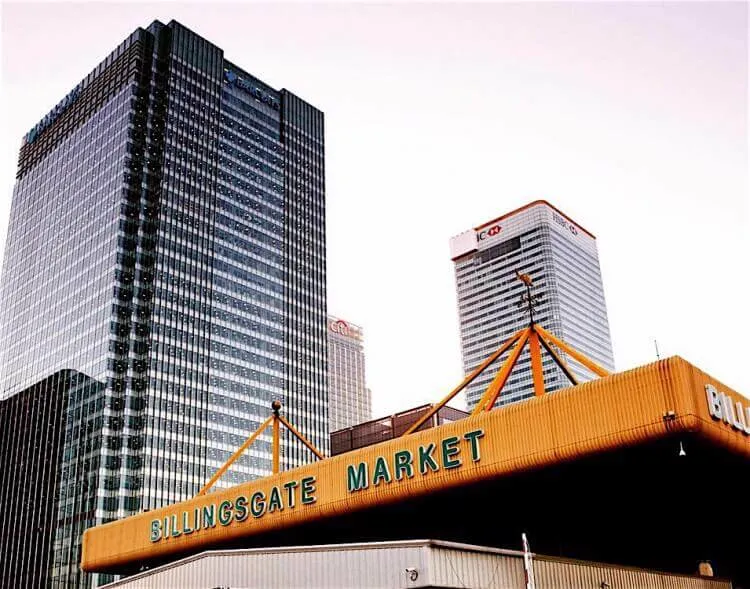
Billingsgate is where you can actually watch that happen, provided you're prepared to be up for it. No queue, no ticket, no curated experience built around the hour — just the ordinary, unglamorous mechanics of getting fish from boat to plate, running at full pace while the rest of London is still asleep.
A Different Starting Point
The market bell rang to open trading on 19 January 1982, moved from the old site on Lower Thames Street to a purpose-built 13-acre plot near Canary Wharf. It's the same bell that had opened trading there for over a century before that, at a building designed by the City Architect Horace Jones in 1876, once described as the largest fish market in the world.
The name predates both buildings by centuries. Fish has traded under it since before proper written record, through the docks, through Jones's Victorian hall, through the move east to the Isle of Dogs. Whatever building it's housed in, the market itself has simply carried on.
The Floor
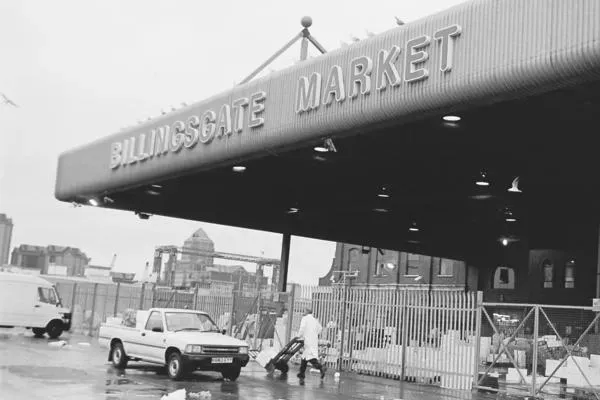
Four in the morning, Tuesday to Saturday, the gates open and the trade buyers get to work first — fishmongers, restaurant owners, the people this market actually exists for. Around a hundred stalls, thirty shops, wet concrete floors, and a noise level that has very little to do with the quiet you'd expect at that hour. Porters moving fast, traders calling prices, the particular sweary, familiar banter of a working market that's been doing this for generations.
The busiest hour is five to six, when the trade buying is at its height and the selection is at its widest. By half six, some traders are already packing away. By seven, what's left is winding-down stock and the bargains that come with it — prices dropping as the morning thins out, the market emptying just as the rest of London is properly getting up.
Non-slip shoes aren't a suggestion; the floor is genuinely wet and cold throughout. Under-12s aren't permitted on the market floor at all, a safety rule rather than a formality.
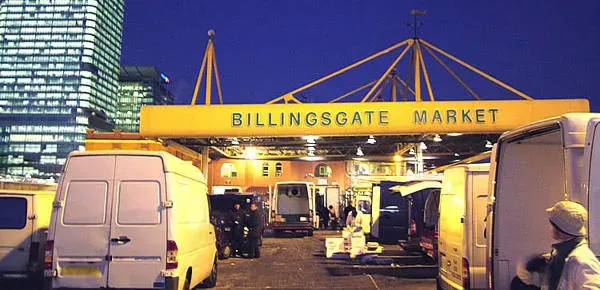
What's Actually There
Over 150 species pass through on a good morning — sea bass, sardines, prawns, salmon, mackerel, lobster, clams, oysters, whatever's come in that isn't already spoken for by the restaurants and fishmongers who arrived first. It's wholesale by design, but genuinely open to the public, and the trade language and pace don't soften for a visitor who's clearly not buying in bulk for a kitchen.
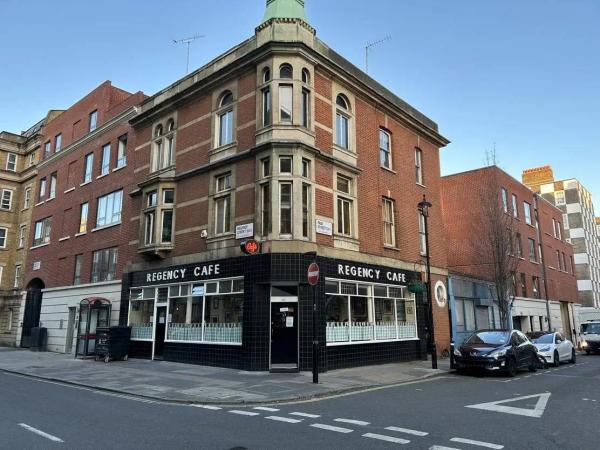
Piggy's Café sits on site, an institution in its own right, known by that name for years regardless of what's actually printed above the door — bacon and scallop baps, haddock and poached eggs, strong tea, the kind of proper breakfast that makes real sense after standing on wet concrete since before dawn. It keeps its own hours, tucked into the working rhythm of the market rather than run for passing trade.

Wider Context
This isn't the market's first move, and it won't be its last. Plans are already in motion for another relocation, to a new site in Newham by 2028, following the same pattern that took it from Lower Thames Street to the Isle of Dogs in 1982. The market bell will presumably make that journey too, as it made the last one.
Markets like this rarely make it onto a conventional London itinerary — the hours see to that, and most visitors simply aren't awake for it. But the ones that survive tend to survive precisely because they keep moving rather than standing still, relocating to wherever the city's freight and infrastructure actually need them to be, generation after generation, without ever losing the thing that makes them worth visiting in the first place.
Why It Earns Its Place
Because it's one of the few places left in London where you can watch the food supply chain happen in real time, rather than arrive after the fact at a restaurant table or a supermarket shelf with the work already done out of sight.
Loud, wet, unglamorous, entirely functional — and finished trading well before most of the city has had its first coffee. There's a particular satisfaction in seeing exactly where the day's fish came from, hours before anyone else has thought to ask.
More on the market itself at Billingsgate Market. On what an early start does to the rest of the day, the Vitae Resets take the same structure into a fortnight of practice.
Related reading: Richmond Park at Dawn — In for the Deer, Out for the View for the quieter version of the same hour, and Padel Social Club, Earl's Court — Courts From 6am for another London room already working before breakfast.
Vitae Lifestyle Scorecard
- Atmosphere9.4 / 10
- Authenticity9.7 / 10
- Accessibility8.6 / 10
- Overall experience9.1 / 10
Who it's for
- Early risers wanting to see London's food supply working rather than resting.
- Anyone after genuinely fresh seafood at trade-adjacent prices.
- Those who enjoy watching a working market at full pace, rather than a curated visitor experience.
Questions
What time does Billingsgate Market open, and when should you go?
The market opens at 4am, Tuesday to Saturday, and closes around 8am–8.30am. The busiest and best-stocked window is 5–6am, though some traders begin packing up from around 6.30am, with end-of-trading bargains sometimes available around 7am as the market thins out.
Is Billingsgate Market open to the public?
Yes. It's a wholesale market primarily serving fishmongers and restaurants, but members of the public are welcome to walk the floor and buy directly from stalls.
How do you get to Billingsgate Market?
It's in Poplar, near Canary Wharf. Nearest stations are Poplar or Blackwall on the DLR (around 5 minutes' walk) or Canary Wharf on the Jubilee and Elizabeth lines (around 10 minutes' walk).
What should you wear or bring?
Warm clothing and sturdy, non-slip shoes — the floor is wet and cold. Cash is useful for smaller stalls, and under-12s are not permitted on the market floor.
Is Billingsgate Market going to move again?
Yes. Following its move from Lower Thames Street to its current Isle of Dogs site in 1982, plans are in motion for a further relocation to a new site in Newham by 2028.
Is there somewhere to eat on site?
Yes — Piggy's Café, a genuine institution within the market, serving proper breakfasts including bacon and scallop baps and haddock with poached eggs, alongside strong tea and coffee.
This article appears in Edit No. 25 — London at 7am