Richmond Park at Dawn — In for the Deer, Out for the View
Place — Richmond Park
By James B. Stoney, Editor ·
Cambrian Gate before the park properly wakes, and a walk that ends at the only view in England protected by its own Act of Parliament.
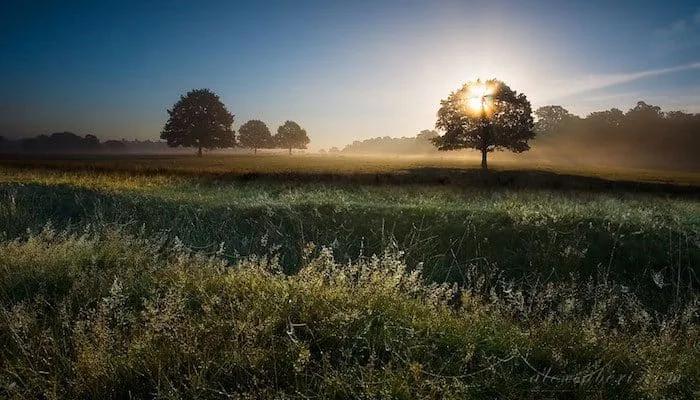
Deer are crepuscular.
Dawn and dusk, not midday. Arrive at Richmond Park after breakfast and you've missed the point of it.
A Different Starting Point
Cambrian Gate sits on the park's northeastern edge, close to Richmond Hill rather than the busier gates at Roehampton or Richmond itself. Quieter to enter through. Fewer cars.
At this hour, the only other people around are photographers and the occasional early runner. The deer, largely left alone, are out and moving.
The Deer
Richmond Park holds around 630 red and fallow deer, free-roaming since Charles I enclosed the land in 1637.
They graze and rest through the heat of the day. Dawn is when they're actually doing something — moving between areas, foraging, gathered in the open ground near the Flying Field and the Sports Pitches, where the morning light comes in low across the grass.
Pen Ponds, further into the park, is the other reliable spot. Deer at the water's edge, mist still sitting on the surface some mornings, swans and herons working the margins.
Fifty metres is the rule. They're wild, not tame, whatever the accustomed manner suggests.
Through the Park
No fixed route from Cambrian Gate. That's rather the point.
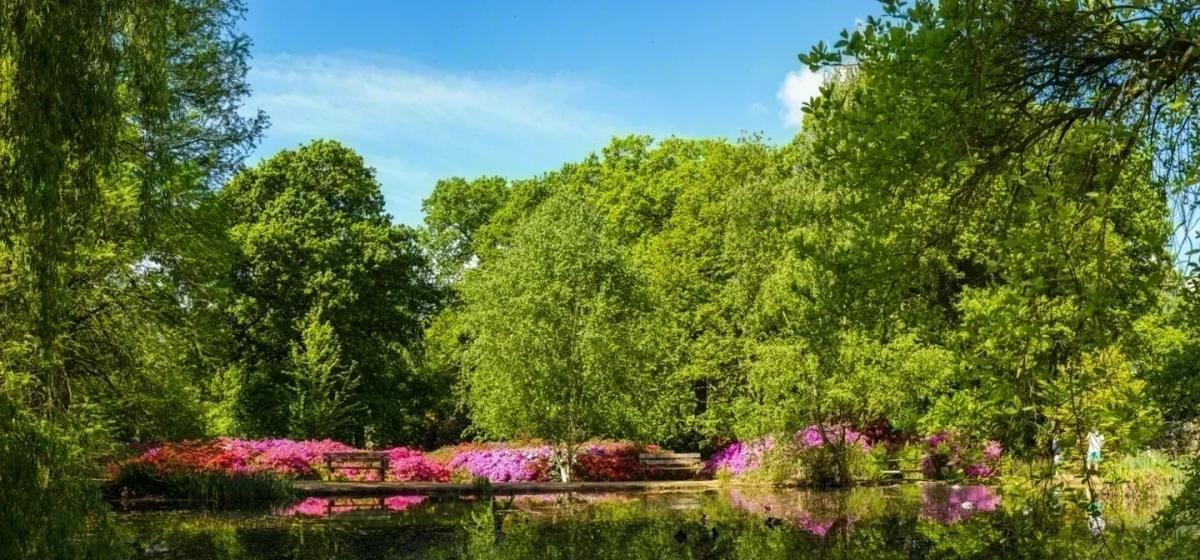
Isabella Plantation, if the timing allows — quieter still before the day's visitors, azaleas in season, a stream running through it that most of London has never seen. King Henry's Mound sits further west, the park's highest point, with a telescope trained on a gap deliberately kept clear in the tree line: St Paul's Cathedral, twelve miles off, a protected sightline that's stood since the cathedral's tercentenary.
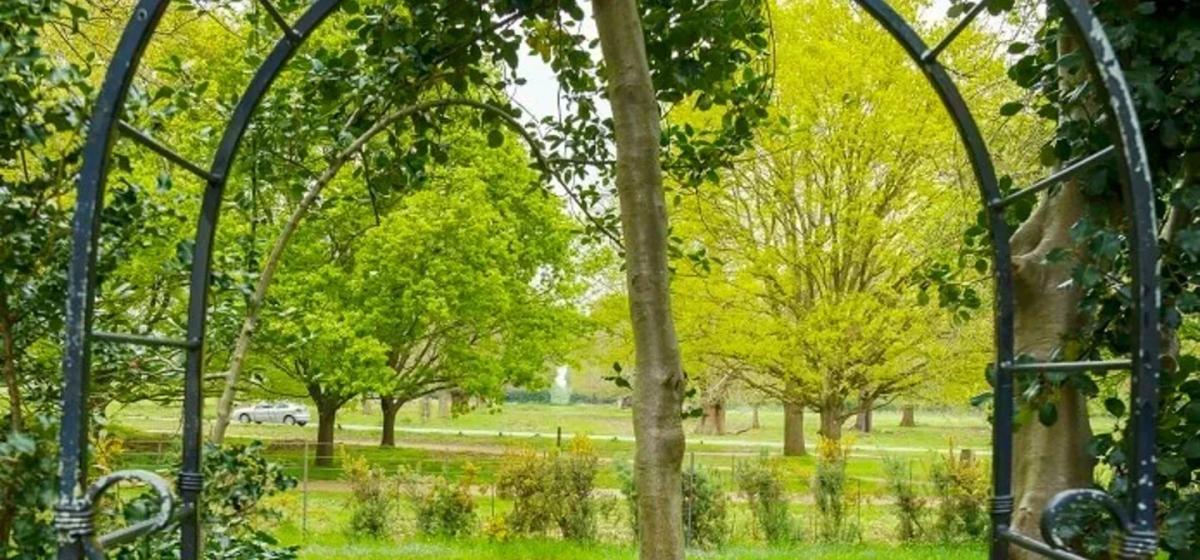
That view is impressive. It isn't the one this walk ends on.
Richmond Hill
Leave the park and climb to the Terrace on Richmond Hill.
The Thames below, Petersham Meadows on the near bank, Glover's Island sitting in the water. Further out: Twickenham Stadium, the odd tower block, on a clear day the control tower at Heathrow.
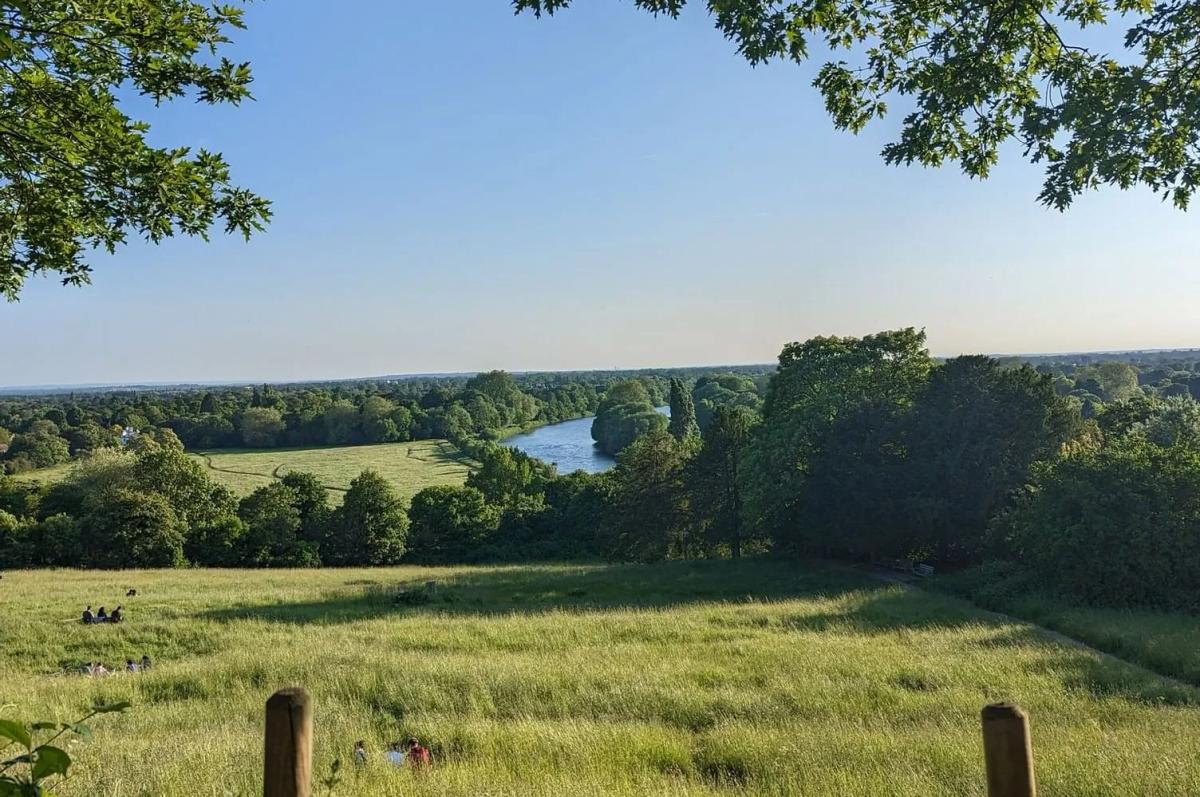
In 1902, this view was protected by an Act of Parliament — the Richmond, Petersham and Ham Open Spaces Act, brought about specifically to stop the riverbanks being built on. It's the only view in England to hold that particular legal status. Turner painted it. Reynolds painted it. A plaque on the Terrace lists everyone who fought to keep it as it was.
Standing there before 8am, before the tour groups arrive, the reason for the fight is obvious.
Wider Context
Richmond Park is the largest of the Royal Parks, and most visitors arrive well after the hours that make it worth arriving for.
The deer keep their own schedule regardless. Coming early means working around them, not the other way round — car parks open around sunrise in summer, which some mornings means walking or cycling in ahead of them.
Why It Earns Its Place
Because the park at dawn and the park at noon are close to different places.
Empty ground, moving animals, low light, and a view at the end of it that Parliament itself decided was worth legally defending. Twelve miles from the middle of London, and nothing about it suggests a city is there at all.
For anyone building early mornings into a week rather than treating them as an occasional effort, the Reset Series guides and the Reset Companion are a useful pairing for the sleep timing, light exposure and recovery that make a 6am start sustainable rather than punishing.
Related reading: Bingham Riverhouse — The Richmond Hotel That Stopped Behaving Like One · Tower House, Richmond — The Riverside Restaurant in the Old Clocktower · The Poppy Factory — A Hundred Years of Making Remembrance
Vitae Lifestyle Scorecard
- Setting9.7 / 10
- Wildlife & atmosphere9.5 / 10
- The view9.6 / 10
- Overall experience9.4 / 10
Who it's for
- Early risers and photographers wanting the deer active rather than resting.
- Anyone who wants Richmond Park without the crowds that arrive by mid-morning.
- Walkers happy to end on a climb — the Terrace sits above the park, not within it.
Questions
What time should you arrive to see the deer active?
Deer are crepuscular, most active at dawn and dusk. In summer, sunrise can be as early as 4–5am, so arriving shortly after the park opens for the day gives the best chance of seeing them foraging and moving rather than resting.
Where in the park are the deer most reliably seen?
The Flying Field, the Sports Pitches and the area around Duchess Wood are strong in the morning, particularly in spring and summer. Pen Ponds is reliable across the year, with deer often at the water's edge.
What is protected about the Richmond Hill view?
It's the only view in England protected by its own Act of Parliament — the Richmond, Petersham and Ham Open Spaces Act of 1902, passed specifically to stop development on the riverbanks below. The same view was painted by both Turner and Reynolds.
How is this different from King Henry's Mound?
King Henry's Mound, inside the park, holds a protected sightline to St Paul's Cathedral twelve miles away, kept clear through a gap in the tree line. Richmond Hill's view, just outside the park by Cambrian Gate, looks the other way across the Thames and is protected by separate, dedicated legislation.
Which gate is best for this walk?
Cambrian Gate, on the park's northeastern edge near Richmond Hill, is quieter than the main gates at Richmond or Roehampton and sits close to the Terrace, making it a natural entry and exit point for a route that starts with the deer and finishes at the view.
This article appears in Edit No. 25 — London at 7am