Are Strawberries the Healthiest Fruit?
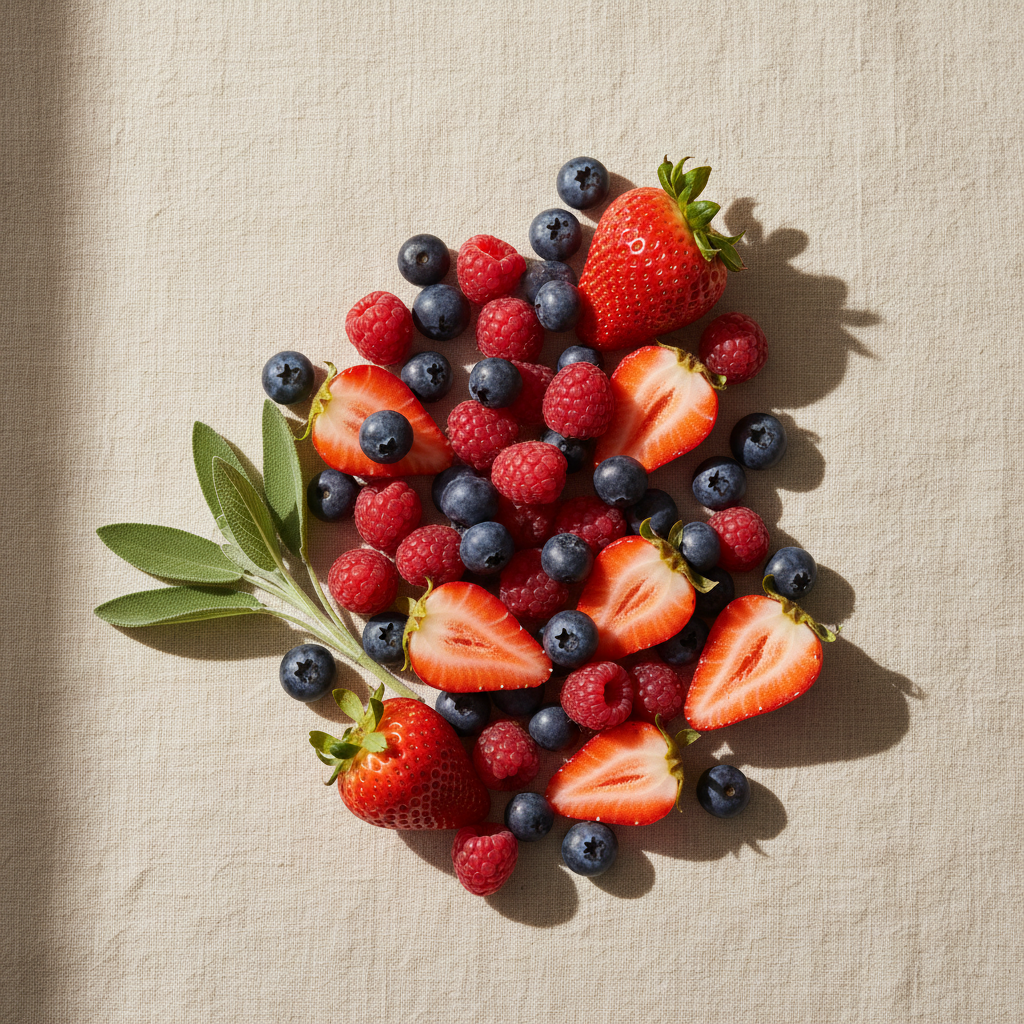
Strawberries score near the top of almost every fruit ranking going. Whether they're genuinely “the healthiest” turns out to depend entirely on what you're measuring — and no fruit wins on every metric.
Ask which fruit is healthiest and you'll get a confident answer from almost anyone. The honest answer is that the question contains a hidden assumption: that "healthiest" is one thing, measured one way. It isn't, and once you see how the rankings are actually built, strawberries' position becomes both more impressive and more specific than the headline suggests.
TL;DR
- Strawberries score very highly on nutrient density. The CDC's scoring system, which measures 17 key nutrients relative to calories, gives strawberries 17.59 — comfortably ahead of oranges (12.91) and blackberries (11.39).
- But they're not the outright leader. Aggregate Nutrient Density Index data ranks cranberries highest overall, with strawberries, blackberries, raspberries and blueberries close behind. Lemons and limes score higher still on the CDC system, though nobody eats them by the cupful.
- Against blueberries specifically, it's a split decision. Blueberries generally win on broad nutrient density — more fibre, far more vitamin K, roughly 20,800 antioxidant units per 100g by USDA testing. Strawberries win specifically on vitamin C and folate.
- The clinical evidence for strawberries is genuinely substantial. A 2024 review covering 60 studies — 47 clinical trials, 13 observational — found consistent cardiometabolic benefits, alongside separate research on inflammation, arthritis symptoms, and post-meal blood sugar response.
- One 100g serving covers roughly two-thirds of daily vitamin C, and a cup delivers more vitamin C than many citrus fruits per serving.
- Frozen strawberries are nutritionally equivalent to fresh — sometimes better. Frozen fruit is typically picked at peak ripeness and flash-frozen within hours, while "fresh" fruit may have travelled and sat for days, losing nutrients along the way.
- The honest answer to "healthiest fruit": there isn't a single one. Strawberries are a legitimate top-tier choice, but the crown moves depending on which nutrient or outcome you're optimising for.
What "Healthiest" Actually Means
The phrase does a lot of unearned work. Nutrition scientists don't have one healthiest-fruit league table — they have several overlapping scoring systems, each measuring something different, and fruits rank differently depending on which one you use.
Nutrient density measures vitamins and minerals relative to calories — how much nutritional value you get per bite. Glycemic index measures how quickly a food raises blood sugar, which matters more for some people than others. Phytochemical and antioxidant profiling looks at the plant compounds linked to reduced inflammation and other effects, which don't always track with vitamin and mineral content — the same class of compounds we covered in What Are Flavanols, and How Do You Get More?. Fibre-to-sugar ratio captures how much of a fruit's carbohydrate arrives with fibre attached, relevant to satiety and blood sugar both.

Want to Dive Deeper?
Our comprehensive wellness guides provide step-by-step protocols and actionable strategies for lasting health transformation.
Explore GuidesA fruit can lead on one of these and sit mid-table on another. Strawberries are a good example of exactly that pattern.
Where Strawberries Actually Rank
On the CDC's nutrient density scoring system, which measures 17 key nutrients against calorie content, strawberries score 17.59 — ahead of oranges at 12.91 and blackberries at 11.39. That's a genuinely strong result, reflecting a fruit that's low in calories (about 53 per 100g) while carrying a real nutritional payload: vitamin C, manganese, folate, potassium, and dietary fibre.
But two things complicate the "strawberries win" framing. Lemons and limes score even higher on the same system — 18.72 and 12.23 respectively — though as one analysis dryly notes, "most people aren't eating those by the cupful," which is really an admission that raw nutrient density isn't the whole story; practical, enjoyable consumption matters too. And on a separate, widely used system — the Aggregate Nutrient Density Index — fresh cranberries rank highest overall, with strawberries, blackberries, raspberries and blueberries following close behind rather than strawberries leading outright.
So: a genuine top-tier performer, consistently near the summit of these rankings, but not the undisputed number one on either major system.
Strawberries vs Blueberries, Specifically
This is the comparison people actually want, since both are marketed heavily as superfoods, and the honest result is a split decision rather than a clean winner.
Blueberries generally win on broad nutrient density. They contain more carbohydrate, protein, fat and dietary fibre than strawberries gram for gram, and roughly nine times more vitamin K. USDA testing puts blueberries at approximately 20,800 antioxidant units per 100 grams, a notably high figure among common fruits.
Strawberries win on specific, important nutrients. Vitamin C content in strawberries is substantially higher — around 98mg per 100g, covering roughly two-thirds of an adult's daily requirement, and by some measures more vitamin C per serving than many citrus fruits. Folate is another area where strawberries have the edge.
Neither fruit is straightforwardly "better." Someone prioritising immune-supporting vitamin C and folate has a reasonable case for strawberries. Someone prioritising overall micronutrient density and vitamin K has a reasonable case for blueberries. Both are excellent choices, and the marginal differences between them matter far less than either mattering more than the fruit most people are actually eating instead.
What Strawberries Do Have: Genuine Clinical Backing
Whatever their exact ranking position, the depth of research specifically on strawberries is worth taking seriously in its own right.
A comprehensive 2024 literature review examined 60 studies on strawberry intake and health outcomes — 47 clinical trials and 13 observational studies, published between 2000 and 2023 — with the majority reporting on cardiometabolic effects. That's a substantial and largely trial-based evidence base, stronger than the observational-only data underpinning many nutrition claims.
Specific findings across the literature include reductions in LDL cholesterol and inflammatory markers, improved post-meal blood sugar response in adults with obesity or excess weight, and — in one seven-week double-blind randomised crossover trial — enhanced immune cell responsiveness in obese adults consuming freeze-dried strawberry powder compared with a flavoured placebo. Separate research has found strawberry-derived polyphenols may help manage arthritis symptoms by targeting both pain and inflammation.
The compounds doing much of this work are ellagic acid and a cluster of flavonoids — anthocyanin, catechin, quercetin and kaempferol — with well-documented antioxidant activity, including inhibition of LDL-cholesterol oxidation and improved vascular function in laboratory and clinical settings.
The Practical Question: Fresh or Frozen?
A common assumption is that fresh is always better. The evidence doesn't support this, and it's genuinely useful to know.
Research comparing vitamin C, beta-carotene and folate levels in fresh versus frozen blueberries and strawberries found no significant difference in most comparisons — and where a difference did appear, frozen fruit sometimes outperformed fruit that had spent five days in the refrigerator. The explanation is straightforward: frozen fruit is typically picked at peak ripeness and flash-frozen within hours, locking nutrients in place, while "fresh" fruit at the shop may have already spent days or weeks travelling and sitting on shelves, losing nutritional value along the way.
For cost, convenience or out-of-season eating, frozen strawberries are a genuinely equivalent — and sometimes superior — choice to fresh, provided nothing's been added to them.
So, Are They the Healthiest Fruit?
The honest answer is that the question is slightly the wrong one to ask.
Strawberries are a legitimate, well-evidenced, top-tier fruit by essentially every measure nutrition science uses. They score highly on nutrient density, carry a genuinely substantial clinical research base including dozens of controlled trials, and deliver an unusually high dose of vitamin C and folate per calorie. That's a real and defensible claim to make.

Mental Wellness Bundle
Calm your mind, ease stress, and recover from burnout with three powerful guides designed to restore mental balance.
Get BundleWhat they aren't is the single, undisputed winner across every ranking system — cranberries edge them on aggregate nutrient density, blueberries edge them on broad nutrient content and vitamin K, and raspberries edge them on the specific combination of fibre-to-sugar ratio and phytochemical breadth once every factor is weighted together. Different systems, different winners, and strawberries land near the top of essentially all of them without quite topping any.
Which is arguably the more useful finding than a simple yes. The fruits worth building a habit around are the small cluster at the top of these rankings — berries and, more debatably, citrus — rather than any single one of them individually. Eating a rotation of strawberries, blueberries, raspberries and blackberries captures the strengths of each rather than betting everything on one — and the fibre that comes with them does its own work, as we set out in Why Most of Us Aren't Getting Enough Fibre — and How to Fix It.
Frequently Asked Questions
Are strawberries actually the healthiest fruit? They're consistently one of the healthiest, scoring near the top of major nutrient density rankings, but not the outright number one on either of the two most-used systems. The CDC's nutrient density score puts them ahead of oranges and blackberries, while the Aggregate Nutrient Density Index ranks cranberries highest overall, with strawberries close behind alongside blackberries, raspberries and blueberries.
Are strawberries or blueberries healthier? It depends what you're measuring. Blueberries generally have higher overall nutrient density, more fibre, and roughly nine times more vitamin K, plus very high antioxidant unit counts by USDA testing. Strawberries have notably higher vitamin C and folate content. Neither is definitively better; both are strong choices.
What makes strawberries nutritionally strong? A 100g serving provides around 98mg of vitamin C — roughly two-thirds of the daily requirement — alongside folate, potassium, manganese, fibre, and a range of polyphenols including ellagic acid, anthocyanins, catechin, quercetin and kaempferol, most with documented antioxidant and anti-inflammatory activity.
What does the clinical research actually show? A 2024 review covering 60 studies, including 47 clinical trials, found consistent evidence for cardiometabolic benefits from strawberry intake — improved cholesterol markers, reduced inflammation, and better post-meal blood sugar response in some populations. Separate trials have found benefits for arthritis symptoms and immune cell responsiveness.
Is frozen fruit less nutritious than fresh? No, generally not. Comparisons of fresh and frozen blueberries and strawberries found no significant nutrient differences in most cases, and frozen fruit sometimes outperformed fresh fruit that had spent several days refrigerated, since frozen produce is typically picked ripe and frozen within hours.
Which fruit should I actually eat? Rather than searching for a single best fruit, the evidence supports building in a rotation of berries — strawberries, blueberries, raspberries, blackberries — since each leads on different nutrients and compounds. Combined with citrus for additional vitamin C, this captures the benefits of the top tier rather than relying on any one fruit alone.
The Bottom Line
Strawberries deserve their reputation. The evidence base is unusually substantial for a single fruit — dozens of clinical trials, consistent cardiometabolic findings, genuinely high vitamin C and folate content, and a body of research on inflammation and blood sugar that goes well beyond marketing claims.
What they're not is a clean, singular answer to "which fruit is healthiest," because that question doesn't have one. Depending on the measure, cranberries, blueberries or raspberries can each make an equally strong case. The more useful lesson is that the entire top tier of fruit — berries in particular — clusters closely together in nutritional value, and the best strategy is eating a rotation across that group rather than crowning any single winner.
Strawberries earn their place in that rotation on genuine merit. They just don't need to be "the healthiest fruit" to be worth eating regularly — being reliably one of the best is already a strong claim, and it happens to be true.
If you want to put that fibre-and-polyphenol rotation to work on your digestion, The Gut Reset turns it into a structured plan.
This is general information rather than medical advice. If you have specific dietary concerns or a condition affected by fruit sugar or vitamin intake, speak to your GP or a registered dietitian.
Related reading
Tags
Further Reading
Found this helpful?
Share this article and help others discover valuable health insights!
Click to share via social media or copy the link

Fresh Start Bundle
Reset your body and mind with our most popular bundle. Includes Sleep Reset, Caffeine Reset, Junk Food Reset, Stress Reset, and Sugar Reset guides.
Get Bundle
Complete Wellness Guides
Discover our library of evidence-based health guides designed to optimize your wellness journey.
Browse Guides