Blog · Nutrition & Diet
Is a Plant-Based Diet Really Best During Menopause?
By Vitae Team ·
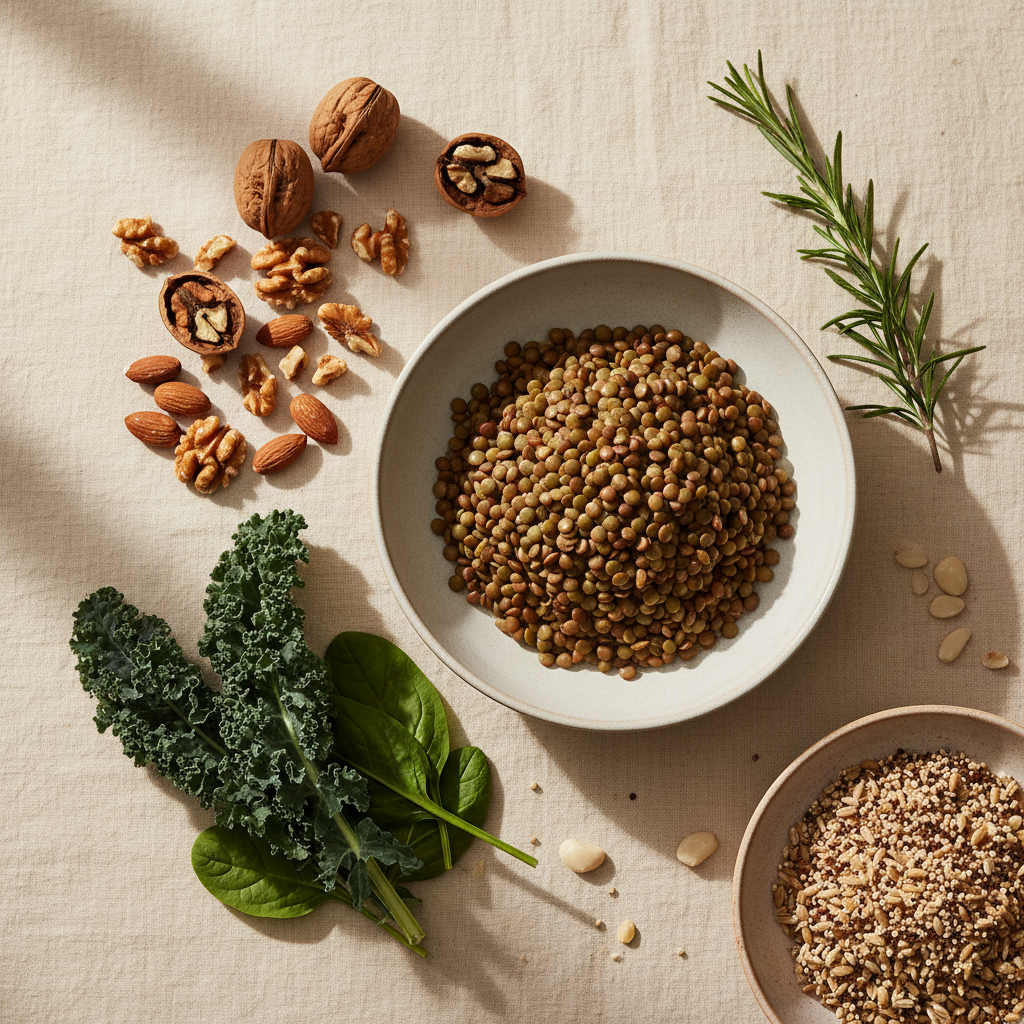
New research links plant-heavy diets to less weight gain and lower heart risk around menopause. But does plant-based really mean better?
Plant-based diets have acquired an increasingly powerful health halo. Now new research suggests that eating more plants may be particularly useful during and after menopause — associated with less weight gain in one major study and lower cardiovascular risk in another.
But "plant-based" hides an important distinction. A diet built around vegetables, legumes, whole grains and nuts is plant-based. So, technically, is one containing plenty of chips, refined grains and sugary foods.
That distinction turns out to matter. A large study published this year compared multiple dietary patterns in more than 38,000 women around the menopause transition. The Planetary Health Diet and a low-insulinaemic diet came out particularly well for weight management. So is a plant-based diet really best during menopause? Or are we giving the plants credit for a more specific combination of fibre, food quality, protein and metabolic effects?
TL;DR
Plant-heavy diets look promising during menopause, but "plant-based" on its own tells us surprisingly little about diet quality.
A 2026 study of 38,283 women found low-insulinaemic and Planetary Health dietary patterns were associated with the lowest weight gain and obesity risk around menopause.
The strongest-performing diets shared more than plants: they were rich in nuts, legumes, fruit, vegetables and whole grains, while being relatively low in red and processed meat, sodium, potatoes and French fries.
Separate research in almost 67,000 postmenopausal women linked high adherence to the Planetary Health Diet with around 28% lower cardiovascular disease risk.
The Mediterranean diet hasn't suddenly become obsolete. It shares much of the same foundation, and the newer evidence doesn't prove that eliminating animal foods is beneficial.
Protein deserves particular attention during menopause. A diet can be heavily plant-based and still be poorly constructed for maintaining muscle.
The emerging message is "more high-quality plants," not necessarily "no animal foods."
Why Menopause Changes the Nutrition Question
Menopause isn't simply a point at which periods stop. The years surrounding it involve substantial hormonal changes, occurring alongside the effects of ageing itself.
Changes in oestrogen are associated with shifts in fat distribution, particularly toward greater abdominal fat. Maintaining muscle becomes increasingly important. Cardiovascular risk also rises with age and after menopause.
This changes what a good diet needs to achieve. Weight matters, but so do metabolic health, cardiovascular risk, muscle and bone. That makes the usual debate about whether somebody should be "plant-based," "Mediterranean" or "low-carb" rather less useful than it initially sounds. The more interesting question is what characteristics of those diets produce better outcomes.
The Study That Compared the Diets
The most useful new evidence comes from a 2026 JAMA Network Open study using data from the Nurses' Health Study II. Researchers followed 38,283 women across the 12-year period surrounding menopause and compared their diets using a range of established dietary indexes.
Two approaches stood out. One was the Planetary Health Diet, a predominantly plant-forward dietary pattern emphasising vegetables, fruit, whole grains, legumes and nuts while limiting red and processed meat, refined foods and added sugar. The other was a low-insulinaemic diet, which places greater emphasis on foods associated with a lower insulin response — broadly favouring fibre-rich foods and suitable protein sources over refined carbohydrates.
The low-insulinaemic pattern was associated with the lowest weight gain, while low-insulinaemic and Planetary Health patterns were associated with particularly low obesity risk. That's more interesting than simply saying "plants are good," because the two diets were constructed around different ideas but ended up containing many of the same foods.
Perhaps It's the Quality of the Plants
This is the distinction often lost when diets are described simply as plant-based. Fruit is a plant. Lentils are plants. So are potatoes, refined flour and sugar. Their metabolic effects are clearly not interchangeable.
The dietary patterns performing particularly well in the menopause study were rich in nuts, legumes, fruit, vegetables and whole grains and relatively low in red and processed meats, sodium, potatoes and French fries. That suggests something more specific than "eat plants."
Fibre intake is likely to matter. So is energy density. Whole grains behave differently metabolically from refined carbohydrates. Legumes provide both fibre and protein. Nuts combine unsaturated fats, protein and micronutrients. And replacing processed meat with beans is nutritionally different from replacing fish or yoghurt with a highly processed vegan alternative — a distinction we explored in Is Your Plant Milk Actually Ultra-Processed?. The label alone cannot capture those distinctions.
What About Heart Health After Menopause?
A second large study provides another reason for interest in the Planetary Health Diet. Researchers examined 66,892 postmenopausal women in the Women's Health Initiative Observational Study and followed them for almost 20 years.
Women with the highest adherence to the Planetary Health Diet had around a 28% lower risk of cardiovascular disease than those with the lowest adherence. Even moderate adherence was associated with lower risk. At the time the findings were presented in July, they had not yet been peer-reviewed. There has since been an important development: the study is now listed as accepted/in press in the American Journal of Preventive Cardiology.
It remains observational research, however. Women weren't randomly assigned to eat one diet for two decades. People who eat healthier diets also tend to differ in other ways, and statistical adjustment cannot eliminate every possible source of confounding. So a 28% association should not be interpreted as a promise that adopting the diet will cut an individual's cardiovascular risk by precisely 28%. It's nevertheless consistent with a broader evidence base linking greater Planetary Health Diet adherence with lower cardiovascular risk.
Has the Mediterranean Diet Been Overtaken?
No — and framing the evidence as a contest probably misses the point.
The Mediterranean diet and Planetary Health Diet overlap substantially. Both favour vegetables, fruit, legumes, nuts, whole grains and unsaturated fats. Both generally minimise highly refined foods and processed meat. The Planetary Health Diet is more explicitly plant-forward and places tighter limits on some animal foods, partly because environmental sustainability was built into its design. The Mediterranean diet more readily incorporates fish, yoghurt, cheese and other traditional animal foods.
Even within the new menopause research, Mediterranean and DASH patterns were among the other promising dietary approaches. The evidence therefore doesn't tell us that animal foods need to disappear at menopause. It tells us that dietary patterns dominated by high-quality plant foods appear to perform well. Those are not quite the same thing.
Protein Is the Complication
There's another reason to be cautious about turning "plant-based" into the whole prescription.
Muscle matters increasingly with age. Loss of skeletal muscle affects strength and mobility, but also metabolic health — muscle is an important site for glucose disposal and contributes to insulin sensitivity. That means a menopause diet designed primarily around avoiding weight gain shouldn't neglect the composition of the weight being maintained or lost.
A well-designed plant-forward diet can provide plenty of protein through beans, lentils, soy, nuts, seeds and other foods. But simply removing meat and dairy doesn't automatically create one — see Could Eating Less Protein Slow Ageing? for how that balance shifts with age. And there's no reason the evidence discussed here requires women who enjoy fish, eggs, yoghurt or other nutrient-dense animal foods to eliminate them. The better question is whether protein is adequate and distributed sensibly within an otherwise high-quality diet.
What Does This Mean in Practice?
The research points toward something rather less dramatic than a new menopause diet.
Make vegetables, fruit, whole grains, beans, lentils, nuts and seeds a much larger part of the diet. Choose fibre-rich carbohydrates more often than refined ones. Use predominantly unsaturated fats. Limit processed meat, excessive added sugar and diets dominated by highly refined foods — a pattern also linked to inflammatory risk, as covered in The Complete Guide to Chronic Inflammation. But don't treat "plant-based" as a nutritional guarantee.
Protein still needs deliberate attention, and The Best Everyday Foods for Training and Recovery is a useful starting point. So do calcium and vitamin D, particularly as bone health becomes increasingly important around and after menopause — The Complete Guide to Dairy and Plant Milks covers how different milks compare on both. For some women that might produce an almost entirely plant-based diet. For others it may look much closer to a Mediterranean diet containing fish, yoghurt and other animal foods alongside a large quantity of plants. The research doesn't establish that one of those approaches is universally superior.
Frequently Asked Questions
Is a plant-based diet best during menopause? We don't know that it is the best diet. Recent research suggests plant-forward dietary patterns — particularly the Planetary Health Diet — are associated with favourable weight outcomes around menopause. A low-insulinaemic diet also performed particularly well. The important common feature appears to be a high intake of nutritious plant foods rather than the complete exclusion of animal products.
What is the Planetary Health Diet? It's a predominantly plant-based diet originally designed to support both human health and environmental sustainability. It emphasises vegetables, fruit, whole grains, legumes, nuts and unsaturated fats while limiting red and processed meat, refined grains and added sugars. It's plant-forward rather than necessarily vegan.
Is it better than the Mediterranean diet during menopause? The evidence isn't strong enough to say that. The new menopause study found particularly favourable associations for Planetary Health and low-insulinaemic diets, but Mediterranean eating also performed favourably. The diets also overlap substantially, making it difficult to attribute their benefits to one defining characteristic.
Will a plant-based diet prevent menopause weight gain? No diet can guarantee that. In the 2026 observational study, greater adherence to certain healthy dietary patterns was associated with less weight gain and lower obesity risk. That doesn't prove adopting one of those diets will prevent weight gain in an individual.
Do you need more protein during menopause? Protein becomes increasingly important as preserving muscle becomes a greater priority with age. That doesn't mean everyone needs an extreme high-protein diet. It does mean that protein adequacy deserves attention, particularly if someone is reducing calories or removing several traditional protein sources from their diet.
Do you need to become vegan? No. None of the research establishes that eliminating all animal foods improves menopause outcomes. The Planetary Health Diet itself isn't strictly vegan, and Mediterranean-style eating includes several animal foods.
The Bottom Line
The emerging evidence makes a good case for eating more plants during menopause. It makes a much weaker case for simply eating plant-based.
Food quality still matters. Fibre matters. Protein matters. Muscle preservation matters. A Mediterranean diet containing fish and yoghurt may be considerably more useful than a technically plant-based diet dominated by refined carbohydrates and highly processed foods.
What's striking about the dietary patterns performing well in the newer research is how much they converge: plenty of minimally processed plants, whole grains and legumes, adequate protein, fewer refined carbohydrates and relatively little processed meat. That's a more useful prescription than a label.
And perhaps that's the real shift in menopause nutrition: not finding a special diet for falling oestrogen, but paying closer attention to the quality of a diet at a stage of life when cardiovascular, metabolic, muscle and bone health increasingly matter together. If you'd like a structured way to rebuild those foundations, our Vitae Reset guides work through nutrition, sleep and metabolic health step by step.
This is general information rather than medical advice. If you're navigating dietary changes around menopause, particularly alongside existing health conditions, speak to your GP or a registered dietitian.