
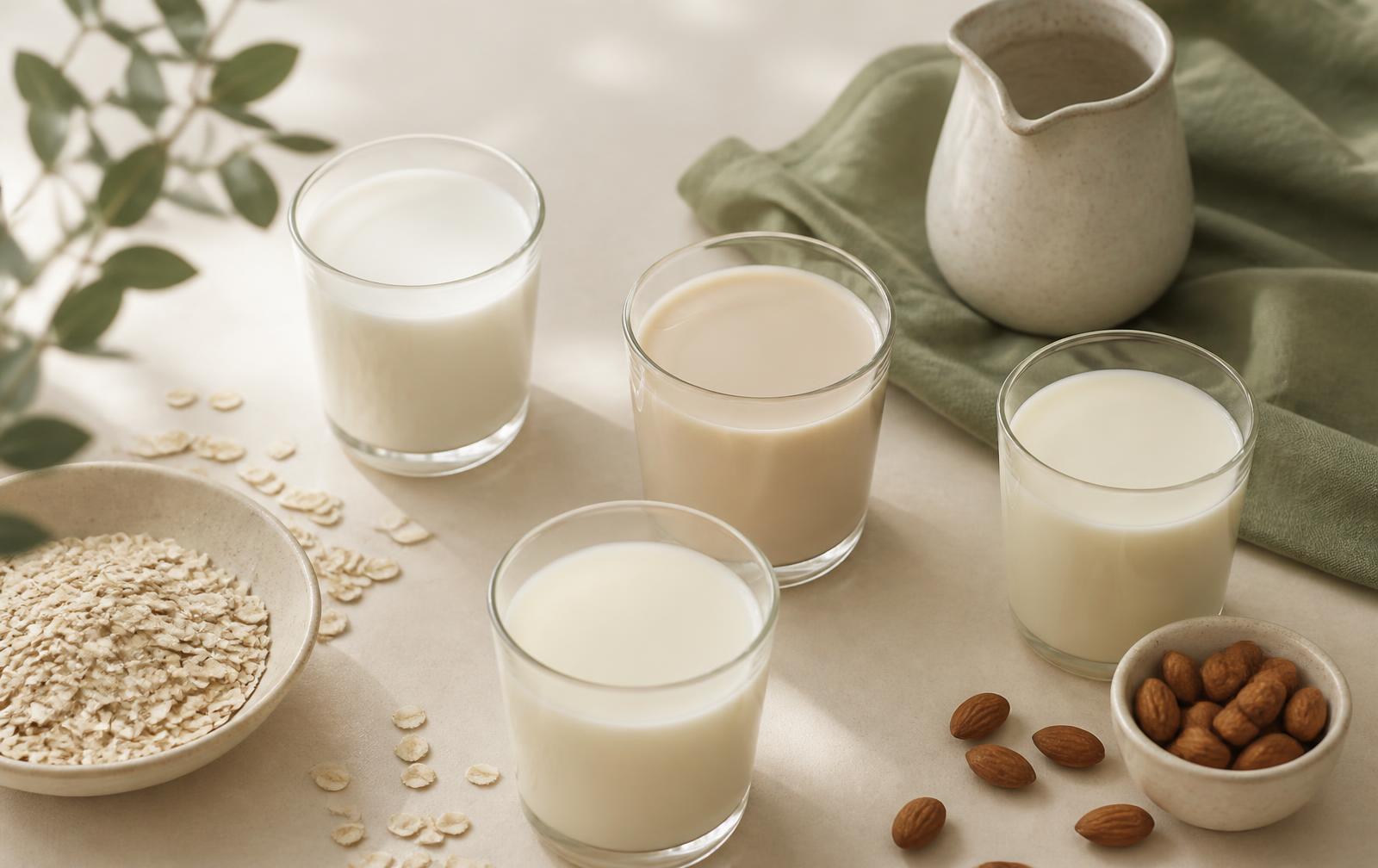
Why People Actually Gave Up Dairy
The popular story about plant milk's rise is usually about ethics, sustainability, or trend. All of those matter to some people. But the original, biological driver — the reason dairy-free options exist at all — is that a large share of the global adult population physically struggles to digest milk.
Human infants produce lactase, the enzyme that breaks down lactose, in abundance. In most mammals, including most humans historically, that production naturally declines after weaning, because there was no evolutionary need to keep digesting milk into adulthood. The exception is a genetic trait called lactase persistence, which evolved in populations with a long history of dairy farming — overwhelmingly concentrated in Northern Europe, and to varying degrees in a handful of other pastoral populations worldwide.
That single piece of evolutionary history explains almost everything about who tolerates dairy today, and it's the reason "just drink milk, humans have always done it" is a genuinely inaccurate claim at a global level. Most humans, historically and today, haven't.
Lactose Intolerance vs Milk Allergy
This is the distinction most commonly confused, including by people who have one condition and describe it using the other's name — and getting it right actually matters for how you manage it.
Lactose intolerance is a digestive issue. The small intestine doesn't produce enough lactase, so lactose passes undigested into the large intestine, where gut bacteria ferment it, producing gas, bloating, cramping and diarrhoea, typically 30 minutes to two hours after eating. The immune system plays no role at all. It's uncomfortable and inconvenient, but it is never dangerous, and many people with lactose intolerance can tolerate small amounts of dairy, or specific products like hard cheese and live yoghurt, without discomfort — tolerance is genuinely variable, not all-or-nothing.
Milk allergy is an entirely different mechanism: an immune response to proteins in milk, principally casein and whey, not to the lactose sugar at all. Reactions can include hives, swelling, vomiting, and in severe cases anaphylaxis, a life-threatening reaction requiring emergency treatment. Because of this severity, milk is legally classified as one of the UK's 14 major food allergens, with mandatory labelling requirements. It's also considerably rarer than intolerance — affecting roughly 0.5–3% of infants (most outgrow it by around age five) and around 0.5–2% of adults, though self-reported rates tend to run higher than what formal testing actually confirms.
Prevalence varies dramatically by ethnicity and geography, which is the part most people in the UK don't realise. Globally, an estimated 65–70% of adults have reduced lactase activity. In Northern Europe specifically — the UK, Ireland, Scandinavia — that figure drops to roughly 5–15% of the population, and UK-specific data puts white British adults at around 5–10%. But that low figure doesn't hold across the whole UK population: estimates suggest lactose intolerance affects up to 75% of non-white British adults, reflecting ancestry from parts of the world where lactase persistence never became widespread. In parts of Asia, population-level intolerance exceeds 90%.
The practical takeaway: if dairy consistently causes digestive discomfort, that is common and biologically unremarkable for most of the world's population — not a sign that something is unusually wrong, and not something requiring guesswork to identify, since GPs can test for it directly.
What Dairy Milk Actually Offers
Before comparing alternatives, it's worth being precise about what they're being compared against, because dairy milk's nutritional profile is genuinely difficult for any single alternative to fully replicate.
One cup of whole dairy milk provides roughly 8–10g of protein, a complete protein containing all essential amino acids. It naturally contains around 300mg of calcium (about 25% of the daily recommended intake) in a form the body absorbs efficiently — dairy is generally considered among the best-absorbed dietary sources of calcium available. It also provides around 25% of daily vitamin D, plus B-vitamins including B12, riboflavin and thiamin, and minerals including magnesium, phosphorus, potassium, selenium and zinc.
No single plant milk matches all of that simultaneously without fortification. This isn't a criticism of plant milks — it's simply the starting point for understanding why fortification, not just the base ingredient, is what determines whether a given plant milk is nutritionally comparable to dairy.
Oat Milk
Made from oats blended with water, then strained. Creamy texture, mild and naturally slightly sweet flavour, which has made it the default choice for coffee shops and home coffee alike.
Per cup (unsweetened, standard formulation): roughly 79–100 calories, 3–4g protein, 1.5g fat, 14g carbohydrate, and just under 2g fibre — meaningfully more fibre than most other plant milks, since it retains more of the oat itself. Naturally free of dairy, lactose, soy and nuts, which makes it one of the more broadly tolerated options for people managing multiple sensitivities. Standard formulations are typically fortified with calcium, vitamin D, vitamin A and riboflavin.
The trade-off: oat milk is notably higher in carbohydrate than most alternatives, and "barista" or "extra creamy" versions often contain added oil specifically to improve foaming, which increases the calorie count further. It froths well, which is largely why it dominates coffee shop menus, but it isn't a meaningful protein source.
Soy Milk
Made from soybeans, soy milk is the plant milk that comes closest to matching dairy's overall nutritional profile, and it's the most consistently recommended option among dietitians for that reason.
Per cup (unsweetened): roughly 80–100 calories, 7–9g protein, 4–5g fat, 4–5g carbohydrate. Crucially, soy protein is a complete protein, containing all essential amino acids — the same claim that can be made for dairy, and one most plant proteins can't match. Naturally rich in potassium and iron, and typically fortified with calcium and vitamin D.
One genuine caveat: soy milk's naturally occurring calcium is comparatively low, and soy contains phytates, natural compounds that can inhibit calcium absorption — meaning the body may not absorb all of the added, fortified calcium as efficiently as it absorbs calcium from dairy. This doesn't make fortified soy milk a poor calcium source, but it's a more nuanced picture than the label alone suggests.
Some people avoid soy due to allergy (soy is itself a major allergen) or concerns about phytoestrogens — plant compounds that weakly interact with oestrogen receptors. The evidence on phytoestrogens and human health is generally reassuring at normal dietary intakes, but it remains a common reason people choose an alternative regardless.
Almond Milk
Made by blending almonds or almond butter with water, then straining out the solids — a process that also removes most of the nut's natural fibre.
Per cup (unsweetened, standard formulation): roughly 39 calories, 1g protein, and very little else nutritionally without fortification. It's the lowest-calorie milk in this comparison by a wide margin, and contains heart-healthy unsaturated fats, but its protein contribution is close to negligible. Many commercial almond milks are also substantially diluted with water — sometimes containing only 2% actual almonds — meaning their nutritional value depends almost entirely on what's added back through fortification, typically calcium, potassium, and vitamins A, D and E.
Almond milk is genuinely useful for anyone specifically trying to minimise calories or sugar, and it has a pleasant, mild flavour many people enjoy. It should not be relied on as a meaningful protein or fibre source, and isn't a nutritionally adequate stand-in for dairy for anyone using milk as a significant part of their protein intake — including, notably, growing children.
Pea Milk
The newest widely available option in this group, made from yellow split pea protein isolate rather than whole peas, and increasingly recommended by dietitians as soy's closest rival.
Per cup: roughly 7–8g protein, close to matching dairy and soy, alongside a naturally creamy texture. Most brands fortify with vitamin D, vitamin A, calcium and potassium specifically to mirror dairy's nutrient profile as closely as possible. Its main practical advantage is allergen profile: pea milk avoids both the dairy and nut allergens, and avoids soy too, making it a genuinely useful option for anyone managing multiple food allergies simultaneously, without the compromise on protein that almond, oat or rice milk require.
Its main drawback is availability and price — it remains less widely stocked and often more expensive than the more established options, though this is changing as the category grows.
Rice Milk
Made from milled rice and water, rice milk has the mildest flavour and thinnest texture of the common plant milks, and is one of the most hypoallergenic options available — genuinely useful for anyone with multiple allergies to nuts, soy and dairy simultaneously.
Nutritionally, it's the weakest option in this comparison on most measures: the lowest protein content of any milk here, often under 1g per cup, and typically the highest in natural sugar and carbohydrate, since it's essentially a starch-water blend. Calorie content varies by brand but tends to run moderate to high relative to its minimal nutritional payload.
Rice milk's genuine use case is narrow but real: for someone with allergies to dairy, soy, nuts and peas simultaneously, it may be one of the few remaining options — but it shouldn't be treated as a nutritionally complete substitute for any of them without careful attention to getting protein and calcium from elsewhere in the diet.
Coconut Milk — Now Three Different Products
Worth separating clearly, because conflating these is one of the most common errors in this space, and the category has recently grown a genuine third type.
Tinned coconut milk (the cooking ingredient) is thick, creamy and concentrated, made for curries, sauces and laksa.
Standard coconut milk drink (the plain carton, sold as a dairy-free milk) is thin, made by blending coconut with a large amount of water, and is not interchangeable with the tinned version — the British Heart Foundation notes it's too thin for cooking and may split when heated. Per cup, this version provides roughly 45 calories, under 1g protein, and 4–5g fat, the large majority saturated. That saturated fat is primarily lauric acid, a medium-chain fatty acid the liver processes differently from most saturated fats and which raises HDL ("good") cholesterol — but it can still affect overall lipid profiles, and UK guidance from SACN and the British Heart Foundation both suggest treating standard coconut milk as an occasional choice rather than an everyday dairy replacement, particularly for anyone managing cardiovascular risk. It's naturally free of cholesterol and lactose, and free of added sugar in unsweetened form.
Barista-formulated coconut milk is the newer development, built specifically to compete with oat and almond in coffee shops. Califia Farms' Coconut Barista Blend is a clear example, engineered to steam, foam and hold latte art the way dairy does. It's worth being precise about how this is achieved: per the published ingredients, the improved protein content and texture come from added fava bean protein and stabilisers such as gellan and guar gum, not from coconut itself. Coconut remains naturally almost protein-free regardless of formulation — what's changed is that some brands now blend it with legume protein to give it the performance a barista wants.
This is distinct from a separate product sometimes mentioned in the same breath — Califia's "Complete," which is formulated for nutritional parity with dairy: 8g of protein, all nine essential amino acids, and levels of nine key nutrients matching or exceeding dairy, per the brand's published nutrition information. That product isn't coconut-based at all; it's made from a blend of pea, chickpea and fava bean protein. The barista coconut blend and Complete are different products solving different problems, and neither changes coconut's own underlying nutritional profile.
The broader pattern worth noting: coconut is increasingly used as a flavour and texture base that other ingredients are engineered onto, rather than coconut itself becoming more nutritious. For anyone choosing a coconut-flavoured drink specifically for its nutritional content rather than its taste, checking the full ingredient list and nutrition panel matters more than ever, since "coconut milk" on the front of a carton no longer guarantees one consistent product behind it.
The Other Direction: Three-Ingredient Plant Milks
Running alongside the trend toward more engineered, protein-boosted plant milks is a genuinely opposite one: brands stripping formulations back to as few ingredients as possible, in direct response to growing concern about ultra-processed food.
Califia Farms' "Simple and Organic" range — currently available as almond and oat milk — contains exactly three ingredients: water, the organic almonds or oats, and a small amount of sea salt. No oils, no gums, no stabilisers, no added fortification. The company has been explicit that this range was developed specifically because a majority of UK consumers say they want to avoid ultra-processed foods, even where there's genuine public confusion about which foods that label actually applies to. Other brands, including Mooala, have launched comparable three-ingredient formulations in response to the same consumer pressure.
The trade-off is real and worth understanding before choosing this route. Without oils or gums, these versions typically perform noticeably worse for coffee — less foam, less body, a greater tendency to split in hot drinks. Without added fortification, they also don't deliver the calcium, vitamin D or B12 levels that make standard commercial plant milks nutritionally closer to dairy. For someone using plant milk occasionally, in cereal or a cold smoothie, that trade-off may not matter. For someone relying on plant milk as a genuine daily dairy substitute and a meaningful source of calcium and vitamin D, an unfortified three-ingredient version is a materially different nutritional proposition from a standard fortified carton, however much simpler its label reads.
Neither approach is objectively correct. They're solving different problems: one for ingredient minimalism, the other for nutritional completeness, and it's worth being clear with yourself about which one you're actually optimising for before checking the label.
The Full Comparison
(Per 1 cup / 240ml, unsweetened, standard fortified formulation unless noted)
| Dairy (whole) | Oat | Soy | Almond | Pea | Rice | Coconut (carton drink) | |
|---|---|---|---|---|---|---|---|
| Calories | ~150 | ~80–100 | ~80–100 | ~39 | ~70–90 | ~110–130 | ~45 |
| Protein | 8–10g | 3–4g | 7–9g | ~1g | 7–8g | <1g | <1g |
| Complete protein | Yes | No | Yes | No | No | No | No |
| Calcium (fortified) | ~300mg (natural) | ~300mg | ~300mg (absorption reduced) | ~300mg | ~300mg | ~300mg | ~300mg |
| Saturated fat | Moderate–high | Low | Low | Very low | Very low | Very low | High (of total fat) |
| Lactose | Yes | No | No | No | No | No | No |
| Major allergen | Dairy | Gluten risk* | Soy | Tree nut | None common | None common | None common |
*Oats are naturally gluten-free but often cross-contaminated; look for certified gluten-free labelling if this matters.
Note: three-ingredient/"simple" formulations of almond and oat milk, and standard barista-style coconut blends with added legume protein, will differ meaningfully from these standard figures — always check the individual product's own nutrition panel.
Which Milk for Which Purpose
If you want the closest overall match to dairy: soy milk, for protein completeness and overall nutrient profile, or pea milk if avoiding soy specifically.
If protein matters most (smoothies, cereal, general nutrition): soy or pea. Oat is a distant third; almond, rice and standard coconut contribute negligible protein.
If you're managing multiple allergies: pea milk avoids dairy, nuts and soy simultaneously. Rice milk is the fallback if pea isn't available or tolerated either.
If coffee froth and texture matter most: oat milk (standard formulation, not the three-ingredient version), or a barista-style coconut blend fortified with added protein.
If minimising ingredients and processing matters most: a three-ingredient formulation such as Califia's Simple and Organic range, accepting the trade-off in fortification and barista performance.
If minimising calories and sugar is the priority: almond milk, accepting the trade-off in protein and overall nutrition.
If cooking (curries, sauces, laksa): tinned coconut milk, not the carton drink — they are not interchangeable.
Whichever you choose: check for fortification specifically, rather than assuming it. Unfortified plant milks, including most organic and "simple" varieties, fall well short of dairy's calcium, B12 and iodine content, and SACN specifically recommends choosing fortified, unsweetened versions for anyone using plant milk as a genuine dairy substitute rather than an occasional addition.
Frequently Asked Questions
- What's the difference between lactose intolerance and a milk allergy?
- Lactose intolerance is a digestive issue caused by insufficient lactase enzyme, producing bloating, gas and diarrhoea, with no immune system involvement and no risk of severe reaction. Milk allergy is an immune response to milk proteins (casein and whey), can cause severe reactions including anaphylaxis, and is considerably rarer — affecting around 1–2% of UK adults versus lactose intolerance's much higher and ethnically variable prevalence.
- Why are lactose intolerance rates so different across ethnic groups in the UK?
- Lactase persistence — the ability to digest lactose into adulthood — is a genetic trait that evolved in populations with a long history of dairy farming, concentrated in Northern Europe. White British adults have intolerance rates of around 5–10%, while non-white British adults can have rates up to 75%, reflecting different ancestral relationships with dairy farming globally.
- Which plant milk has the most protein?
- Soy milk and pea milk are closest to dairy, delivering roughly 7–9g of protein per cup. Soy protein is also "complete," containing all essential amino acids, matching dairy in this specific respect. Oat milk provides meaningfully less (3–4g), while almond, rice and standard coconut milk contain minimal protein, generally under 1–2g per cup.
- Is oat milk healthy?
- Oat milk is a reasonable choice, particularly for its mild flavour, fibre content, and broad allergen tolerance (naturally free of dairy, nuts and soy). Its main drawbacks are a higher carbohydrate content than most alternatives and, in "barista" formulations designed for better foaming, added oil that increases the calorie count.
- Is coconut milk bad for you?
- Standard coconut milk drink isn't inherently unhealthy, but its calorie content comes overwhelmingly from saturated fat, and it provides essentially no protein. UK health guidance suggests treating it as an occasional choice rather than an everyday dairy replacement, particularly for anyone managing cardiovascular risk. Newer barista-style coconut blends with added legume protein have a different nutritional profile and should be checked individually.
- Do I need to buy fortified plant milk?
- Generally, yes, if you're using plant milk as a genuine substitute for dairy rather than an occasional addition. Most plant milks naturally lack meaningful calcium, vitamin D, B12 and iodine, and fortification is what brings them closer to dairy's nutritional profile. Organic and "simple" three-ingredient varieties are often not fortified, which is worth checking before assuming a cleaner label means nutritionally equivalent.
- Are three-ingredient plant milks actually better?
- It depends what you're prioritising. Three-ingredient formulations genuinely contain fewer additives and no oils or gums, which suits anyone specifically concerned about ultra-processed ingredients. But they typically lack the fortification that gives standard plant milks their calcium, vitamin D and B12 content, and perform less well in coffee. Neither approach is objectively superior; they solve different problems.
- Can people with lactose intolerance eat any dairy at all?
- Often, yes. Tolerance varies considerably between individuals, and many people with lactose intolerance can manage small amounts of dairy, or specific products like hard cheeses and live-culture yoghurt, which naturally contain less lactose or include bacteria that help digest it. Blanket avoidance of all dairy isn't always necessary and is worth discussing with a GP rather than assuming.
Read next
- The Complete Guide to Antibiotics and Gut Health — how the gut microbiome works, and what disrupts it.
- The Gut Reset — our structured programme for rebuilding gut health, day by day.
This guide is for general education and information. It is not medical advice. If you suspect lactose intolerance or a milk allergy, particularly with severe symptoms, speak to your GP for proper testing rather than self-diagnosing or eliminating major food groups without guidance.