Learn · Gut Health · 11 min read
The Complete Guide to Antibiotics and Gut Health
What antibiotics do to the trillions of bacteria living in your gut, how recovery actually works, and what the evidence says about helping it along.
What the gut microbiome actually is
Before you can understand what antibiotics do to your gut, it helps to appreciate what's there in the first place — and it's more than most people picture.
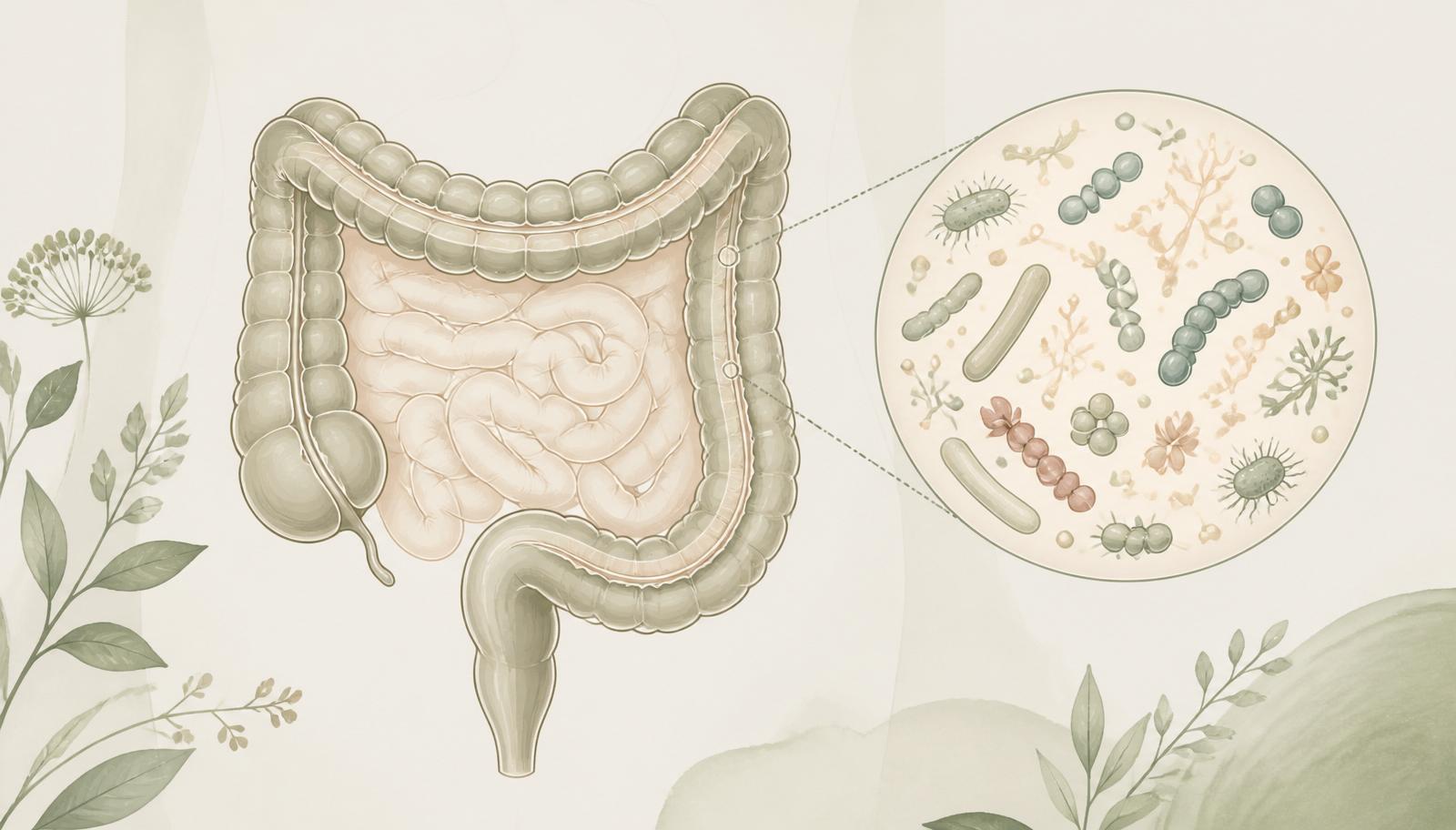
Your large intestine houses trillions of microorganisms, principally bacteria, collectively known as the gut microbiome. This isn't a passive population of freeloaders. It's closer to a working organ, performing jobs your own cells cannot. Gut bacteria ferment the fibre you can't digest, and in doing so produce short-chain fatty acids that nourish the cells lining your colon and help regulate inflammation. They synthesise certain vitamins. They help train and calibrate the immune system — a majority of your immune tissue sits in and around the gut. They help maintain the integrity of the gut lining itself, the barrier between what's inside your intestine and the rest of you. And they crowd out potential troublemakers simply by occupying the space and consuming the resources those organisms would need.
The single most useful concept for understanding gut health is diversity — the number of different bacterial species present. A diverse microbiome is a resilient one, with redundancy built in: if one species is knocked back, others can cover its functions. A depleted, low-diversity microbiome is fragile, more easily destabilised, and more vulnerable to an opportunistic organism taking hold. Diversity is what antibiotics take away.
Why antibiotics hit it so hard
An antibiotic is a chemical designed to kill or disable bacteria. That is precisely what it does. What it cannot do is distinguish between the bacterium causing your chest infection and the hundreds of species quietly running your gut.
So when you take a course, the drug circulates through your body and reaches the gut, where it kills susceptible bacteria indiscriminately. Diversity falls, sometimes sharply. Populations that took years to establish are knocked back within days. The ecosystem is, in a real sense, cleared.
The consequences follow from that loss. With fewer resident bacteria competing for space and food, opportunistic organisms have room to expand — which is why antibiotic-associated diarrhoea is so common, and why Clostridioides difficile (C. difficile) infection is a recognised risk after antibiotic use. With fewer bacteria fermenting fibre, production of the short-chain fatty acids that nourish the gut lining drops. And with the microbial community disrupted, its constant conversation with the immune system is disrupted too.
None of this is a reason to refuse antibiotics. It's the reason recovery deserves attention.
Not all antibiotics are equal
The scale of the disruption depends heavily on which drug, for how long, and who's taking it.
Spectrum matters most. Broad-spectrum antibiotics are designed to work against a wide range of bacteria, which makes them useful when the culprit is unknown or the infection is serious — and also means they cause far more collateral damage in the gut. Narrow-spectrum antibiotics target a smaller range and disrupt correspondingly less. This is one reason clinicians increasingly try to identify the specific organism and prescribe narrowly where they can.
| Dimension | Broad-spectrum | Narrow-spectrum |
|---|---|---|
| What it targets | A wide range of bacterial species | A specific, limited range |
| Typically used when | The infecting organism is unknown, or the infection is serious and needs immediate cover | The organism has been identified, or is strongly suspected |
| Impact on gut microbiome | Greater — kills a far wider range of beneficial gut bacteria | Less — more collateral bacteria survive |
| Effect on recovery | Slower, more pronounced loss of diversity | Faster, more contained disruption |
Duration matters. A longer course means a longer sustained assault, and generally a bigger dip in diversity.
Repetition matters. Repeated courses, particularly close together, appear to have a cumulative effect — the microbiome has less time to recover between hits, and the losses compound. Someone with a history of frequent antibiotic use may recover more slowly and less completely than someone taking their first course in years.
And you matter. Your starting microbiome — how diverse and robust it was to begin with — strongly shapes how well it bounces back. Age, diet, and general health all feed into this. A resilient ecosystem recovers; a fragile one struggles.
What recovery actually looks like
Here is the honest picture, and it's a mixture of reassuring and sobering.
The reassuring part: the gut microbiome is genuinely resilient, and for most healthy people it substantially rebuilds itself without any intervention at all. Research following healthy adults through a course of broad-spectrum antibiotics found their gut microbiota returned to close to baseline composition within around one and a half months. The body does most of the work.
The sobering part: "close to baseline" is doing some quiet work in that sentence. In the same research, nine common species that had been present in every participant before treatment were still undetectable in most of them 180 days later. Six months on, parts of the ecosystem simply hadn't come back. Other studies put full recovery anywhere from a few weeks to six months or beyond, depending on all the factors above.
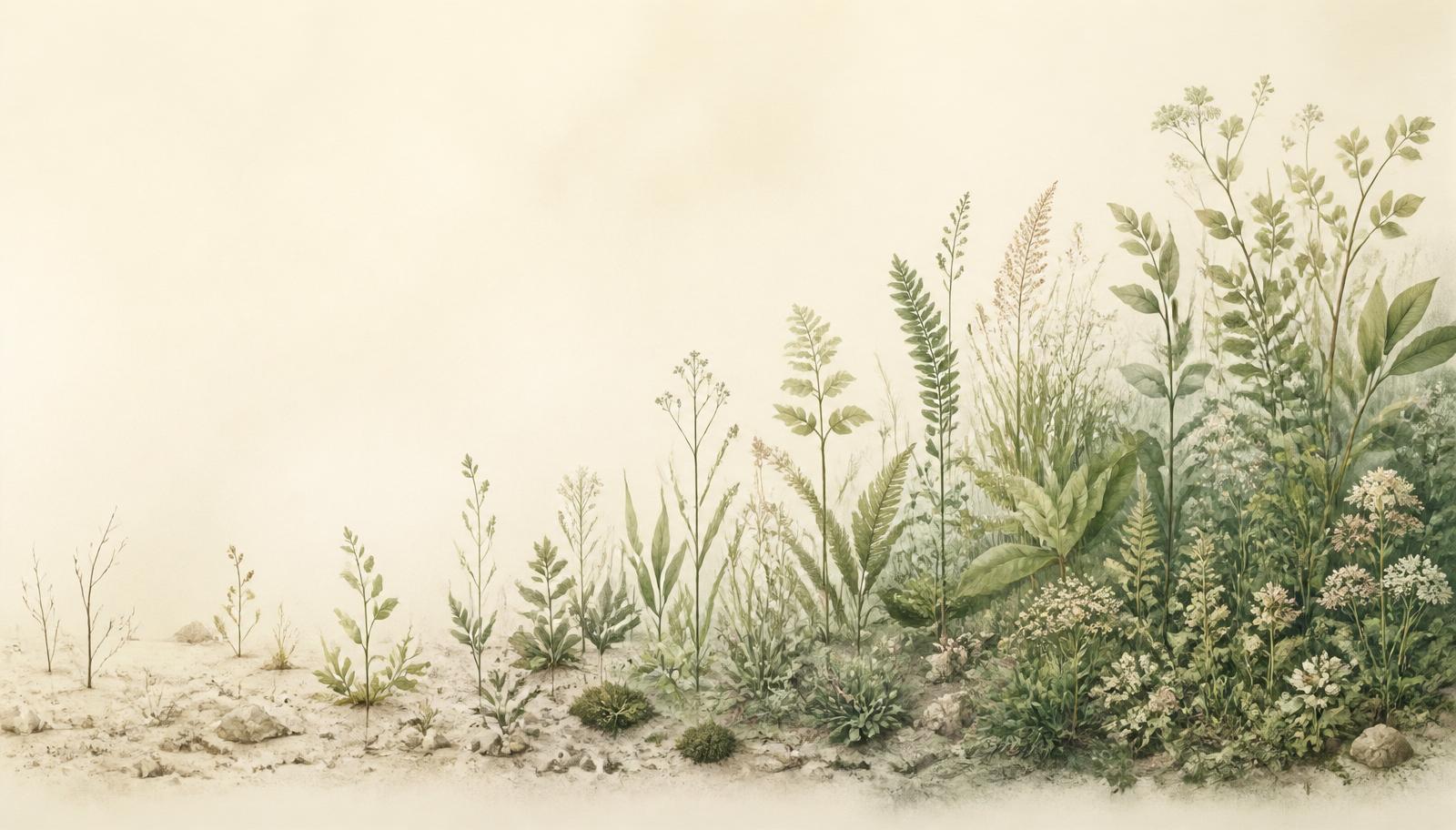
So the realistic model is this: a steep drop during the course, a substantial rebound over the following weeks and months, and then a long tail during which some residents return slowly, and a few may not return at all without help. Recovery is measured in months. It is not a matter of taking a supplement for a fortnight and calling it done.
The probiotics question, honestly
This is the part where the standard advice and the actual evidence part company, and it's worth being precise, because "take a probiotic" is the single most common thing people are told.
The evidence splits into two quite different questions.
Question one: do probiotics prevent antibiotic-associated diarrhoea? Here the answer is a reasonably confident yes. Reviews have found probiotics meaningfully reduce the risk — with reductions commonly reported in the region of a third to a half. Two things are essential to that finding. First, it is strain-specific: the best-supported are the yeast Saccharomyces boulardii and the bacterium Lactobacillus rhamnosus GG, and evidence for one strain does not transfer to another. A generic supplement is not automatically an evidenced one. Second, timing matters: in the trials, probiotics were generally started at the same time as the antibiotic and continued for around a week afterwards — not begun only once the course had finished.
Question two: do probiotics rebuild your microbiome? Here the answer is: much less certain than you've been told, and possibly the opposite.
A widely discussed 2018 study published in Cell compared people who, after antibiotics, took a probiotic, took nothing, or received a transplant of their own pre-antibiotic gut bacteria. The headline finding was counterintuitive: the probiotic group's native microbiome took longer to return than the group who did nothing. The probiotic strains appeared to colonise the gut and, in doing so, impede the return of the person's own resident species. Doing nothing beat taking a probiotic.
That finding needs careful handling rather than alarm. It was a small study — around eight people in the relevant arm — the authors themselves set out its limitations, and other researchers publicly criticised how the results were reported, arguing the conclusions were overstated and that different probiotic strains behave very differently from one another. It is a provocative, important result. It is not settled science, and it does not show that probiotics are harmful.
But it is enough to retire the confident, universal claim that a probiotic will "restore your gut" after antibiotics. The reasonable position on the whole body of evidence: probiotics have a real, specific, well-evidenced job — reducing diarrhoea, with the right strains, taken alongside the course — and a much shakier one, which is rebuilding the microbiome afterwards. Use them for the first. Don't rely on them for the second.
What the evidence supports instead
If supplements aren't the reliable route to rebuilding diversity, food is — and the logic is worth understanding, because it changes how you think about the whole problem.
The goal after antibiotics isn't really to add bacteria. It's to feed and support the survivors so they can multiply and repopulate the space. That reframing is the key. You're tending an ecosystem, not restocking a shelf.
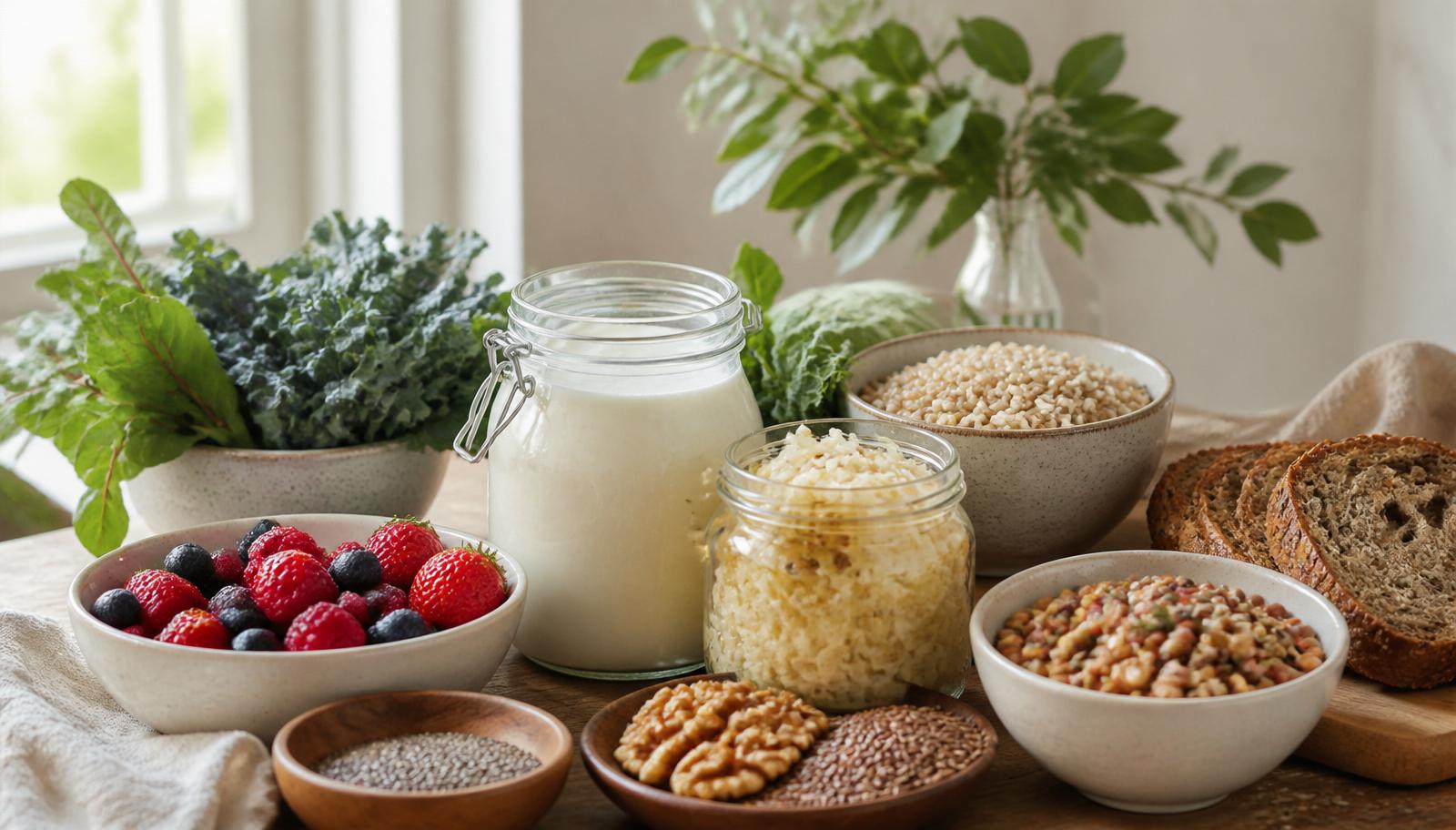
Fibre is the foundation. Gut bacteria live on the fibre your own enzymes can't break down. Fermenting it, they produce short-chain fatty acids that feed the cells of your colon lining and help regulate inflammation. Wholegrains, pulses, vegetables, fruit, nuts and seeds all contribute. If your gut is sensitive after a course, build fibre back gradually rather than all at once.
Variety matters as much as volume. Different bacterial species specialise in different plant fibres, so the wider the range of plants you eat, the broader the range of bacteria you sustain. The popular target of thirty different plant types a week is a rough rule of thumb rather than a scientific threshold, but the principle behind it is sound: variety builds diversity, and diversity is exactly what you lost.
Fermented foods deliver live cultures in food form. Live yoghurt, kefir, sauerkraut, kimchi and similar foods supply beneficial microbes within a food matrix rather than a capsule, and there is reasonable evidence that regular intake supports microbiome diversity. They are also cheap, pleasant, and free of the concerns raised about high-dose supplementation.
Polyphenols feed beneficial species. The compounds giving colour and bitterness to berries, olive oil, green tea, cocoa and coffee are metabolised by gut bacteria and appear to favour beneficial populations.
And beyond diet: sleep, physical activity, and stress all measurably influence the gut microbiome. They matter particularly during a recovery window, when the ecosystem is already under strain.
| Approach | What it's genuinely good for | Strength of evidence |
|---|---|---|
| Probiotics (specific strains, taken alongside the course) | Reducing antibiotic-associated diarrhoea | Good — reviews report meaningful reductions, but strain-specific (S. boulardii, L. rhamnosus GG best supported) |
| Probiotics (taken after, to rebuild the microbiome) | Uncertain — may even delay the return of native bacteria | Weak and contested — one small 2018 study found delayed recovery; debated, not settled |
| Dietary fibre | Feeding surviving bacteria; producing short-chain fatty acids that nourish the gut lining | Strong — the foundation of microbiome support |
| Plant variety | Rebuilding diversity, since different bacteria use different fibres | Strong in principle — variety supports a broader range of species |
| Fermented foods | Supplying live cultures in food form | Reasonable — regular intake appears to support diversity |
| Polyphenols (berries, olive oil, green tea, cocoa) | Favouring beneficial bacterial species | Reasonable and growing |
| Sleep, movement, stress management | Supporting the overall gut environment during recovery | Established as influencing the microbiome |
Antibiotic resistance and the bigger picture
There's a second reason gut bacteria and antibiotics matter together, and it reaches beyond your own digestion.
When antibiotics sweep through the gut, they don't only reduce bacterial numbers — they also select for the bacteria that can survive them. Those survivors carry antibiotic resistance genes, and the gut becomes a reservoir where such genes accumulate and can be exchanged between bacterial species. This is part of the mechanism by which antibiotic resistance builds, both in an individual and across a population.
This is the serious, structural argument for using antibiotics only when they're genuinely needed — not the individual inconvenience of a disrupted gut, but the collective erosion of the drugs' usefulness. Antibiotics don't work on viruses, which is why they do nothing for a common cold or most sore throats, and every unnecessary course contributes to the problem without helping the patient.
The corollary matters just as much: when antibiotics are needed, take the full course as prescribed. Stopping early because you feel better, or because you're worried about your microbiome, leaves the hardiest bacteria alive and actively contributes to resistance. Untreated infection is a far greater danger than temporary gut disruption.
When something is wrong
Most post-antibiotic gut disruption resolves on its own. Some doesn't, and the difference is worth knowing.
Seek medical advice if diarrhoea is severe, persistent, or bloody; if you develop a fever alongside it; or if symptoms worsen rather than improve after the course finishes. These can indicate C. difficile infection, which requires proper medical treatment. Equally, if digestive symptoms are still significantly affecting your life months afterwards, that warrants investigation rather than patience.
And the standing rule, which bears repeating: never stop, skip, or shorten a prescribed course of antibiotics out of concern for your gut. Speak to your doctor if you have concerns; don't act on them alone.
Understanding what antibiotics do to your gut is the foundation. Acting on it is the next step. If you've just finished a course and want the practical version — what to eat, whether to take a probiotic, how long to expect it to take — that's covered in our companion article, linked below. And if you want to go further, rebuilding gut health as an ongoing practice rather than a recovery from one event, that's what the Gut Reset is designed for: a structured, day-by-day programme rather than a set of principles.

Frequently Asked Questions
- What do antibiotics do to your gut bacteria?
- Antibiotics kill bacteria indiscriminately — they can't distinguish between the bacteria causing your infection and the trillions of beneficial bacteria in your gut. This sharply reduces microbial diversity, which is a key marker of gut health, and can leave the gut more vulnerable to opportunistic organisms such as C. difficile, as well as reducing production of the short-chain fatty acids that nourish the gut lining.
- How long does the gut microbiome take to recover from antibiotics?
- Research suggests the microbiome broadly returns towards its baseline composition within around 1.5 to 6 months, though this varies considerably. Notably, one study found that nine common bacterial species present in all participants beforehand were still undetectable in most of them 180 days later — so substantial recovery is not the same as full restoration.
- Why do broad-spectrum antibiotics cause more damage?
- Broad-spectrum antibiotics are designed to work against a wide range of bacteria, which makes them valuable when the infecting organism is unknown or the infection is serious — but it also means they kill a far wider range of beneficial gut bacteria. Narrow-spectrum antibiotics target fewer species and cause correspondingly less collateral disruption to the microbiome.
- Do probiotics rebuild your gut microbiome after antibiotics?
- The evidence is much weaker than commonly assumed. Probiotics do have good evidence for reducing antibiotic-associated diarrhoea when the right strains are used alongside the course. But their ability to rebuild the microbiome afterwards is uncertain, and a 2018 study found probiotics actually delayed the return of people's own native gut bacteria compared with taking nothing. That study was small and remains debated, but it's a reason not to assume probiotics restore your gut.
- What feeds gut bacteria back to health?
- Fibre is the foundation — gut bacteria ferment the fibre you can't digest, producing compounds that nourish the gut lining. Variety of plants matters as much as quantity, since different bacteria use different fibres. Fermented foods (live yoghurt, kefir, sauerkraut, kimchi) supply live cultures in food form, and polyphenol-rich foods like berries, olive oil, green tea and cocoa also support beneficial species.
- Can antibiotics cause permanent gut damage?
- For most people, no — the microbiome substantially rebuilds over months. However, some species may take a very long time to return, and repeated courses can have a cumulative effect, making recovery slower and less complete. This is an argument for using antibiotics only when genuinely necessary, not for refusing them when they're needed.
Read next
- How to Repair Your Gut After Antibiotics — the practical, evidence-led companion piece.
- The Gut Reset — our structured programme for rebuilding gut health, day by day.
This guide is for education and general information. It is not medical advice. Never stop, skip, or shorten a prescribed course of antibiotics without speaking to your doctor, and seek medical advice for severe, persistent, or bloody diarrhoea, fever, or symptoms that worsen after a course ends.