Is Your Plant Milk Actually Ultra-Processed?
Some plant milks contain a dozen ingredients. Others contain three. Here's how to actually tell an ultra-processed plant milk from a genuinely simple one.
"Ultra-processed" has become the most feared phrase in the supermarket, and plant milk sits uncomfortably in the firing line. The honest answer is that some plant milks genuinely qualify, and some genuinely don't — and the difference is entirely readable on the label, if you know what to check.
Plant milk built its reputation on being the wholesome alternative to dairy. Now it's regularly named in the same breath as the ultra-processed foods it was supposed to be an escape from. Both framings can be true, depending on the carton — and most people have no reliable way to tell which one they're holding.
TL;DR
- A majority of UK consumers say they want to avoid ultra-processed foods, but genuine confusion persists about which foods actually qualify — plant milk is one of the most contested cases.
- A standard commercial plant milk typically contains 8–12 ingredients: the base (oats, almonds, soy, peas), water, an oil for texture, one or more stabilisers or gums for consistency, salt, and added vitamins and minerals for fortification.
- A small but growing number of "simple" formulations contain just 2–3 ingredients: water, the base grain or nut, and a small amount of salt — no oils, no gums, no fortification.
- The trade-off is real. Stripped-back formulations perform noticeably worse in coffee (less foam, more splitting) and typically lack the added calcium, vitamin D and B12 that make standard plant milks nutritionally closer to dairy.
- Fortification itself isn't a processing red flag. Adding vitamins and minerals doesn't make a food ultra-processed on its own; the emulsifiers, gums and industrial additives used purely for shelf-stability and mouthfeel are the more relevant markers.
- The genuinely useful habit is reading the ingredients list, not the front-of-pack claims. "Natural," "clean" and even "organic" don't reliably indicate a short ingredients list.
Why This Question Is Genuinely Confusing
Part of the reason plant milk sits at the centre of the ultra-processed food debate is that the category spans an unusually wide range of actual formulations, more than most food categories people worry about.
At one end: a plant milk made from water, oats, and a pinch of salt — arguably less processed, ingredient-wise, than a loaf of shop-bought bread. At the other: a plant milk containing oil, three or four different stabilisers and gums, added sugar, flavourings, and a cocktail of synthetic vitamins — a genuinely industrial formulation by most reasonable definitions.

Want to Dive Deeper?
Our comprehensive wellness guides provide step-by-step protocols and actionable strategies for lasting health transformation.
Explore GuidesBoth are sold in near-identical cartons, in the same supermarket aisle, sometimes by the same brand. The "plant milk" label tells you almost nothing about which one you're buying. Our complete guide to dairy and plant milks works through what sits behind each type in full.
What Makes the Difference
Look past the base ingredient (oats, almonds, soy, peas, rice, coconut) and the real distinction sits in what's added around it.
Oils are common in "barista" and "extra creamy" formulations, added specifically to improve how the milk froths and mouths-feels in coffee. They increase the calorie count and, depending on the oil, the saturated fat content, but they're not inherently harmful — the concern from an ultra-processing standpoint is more about the degree of industrial formulation involved than the oil itself.
Stabilisers and gums — gellan gum, guar gum, locust bean gum, xanthan gum — are added to stop the product separating on the shelf and to give it a consistent, dairy-like texture. These are generally considered safe food additives, but their presence, particularly in combination, is one of the clearer markers used in most ultra-processed food classification systems, including the widely used NOVA system.
Fortification — added calcium, vitamin D, B12, and sometimes iodine — is arguably the most misunderstood ingredient category here. Adding vitamins and minerals to a food doesn't automatically make it ultra-processed; it's a deliberate nutritional intervention, and for anyone relying on plant milk as a genuine dairy substitute, it's the thing making the product nutritionally viable in the first place. Confusing fortification with ultra-processing risks throwing away the nutritional benefit while chasing a shorter ingredients list. The NHS guidance on calcium is a useful reference point for how much you actually need.
Emulsifiers, flavourings, and added sugar are the categories most consistently flagged as concerning in the broader ultra-processed food literature, and they're the ones genuinely worth checking for and limiting where possible.
What a Genuinely Simple Plant Milk Looks Like
In direct response to growing consumer demand, some brands have released formulations built to answer the ultra-processing question as plainly as possible.
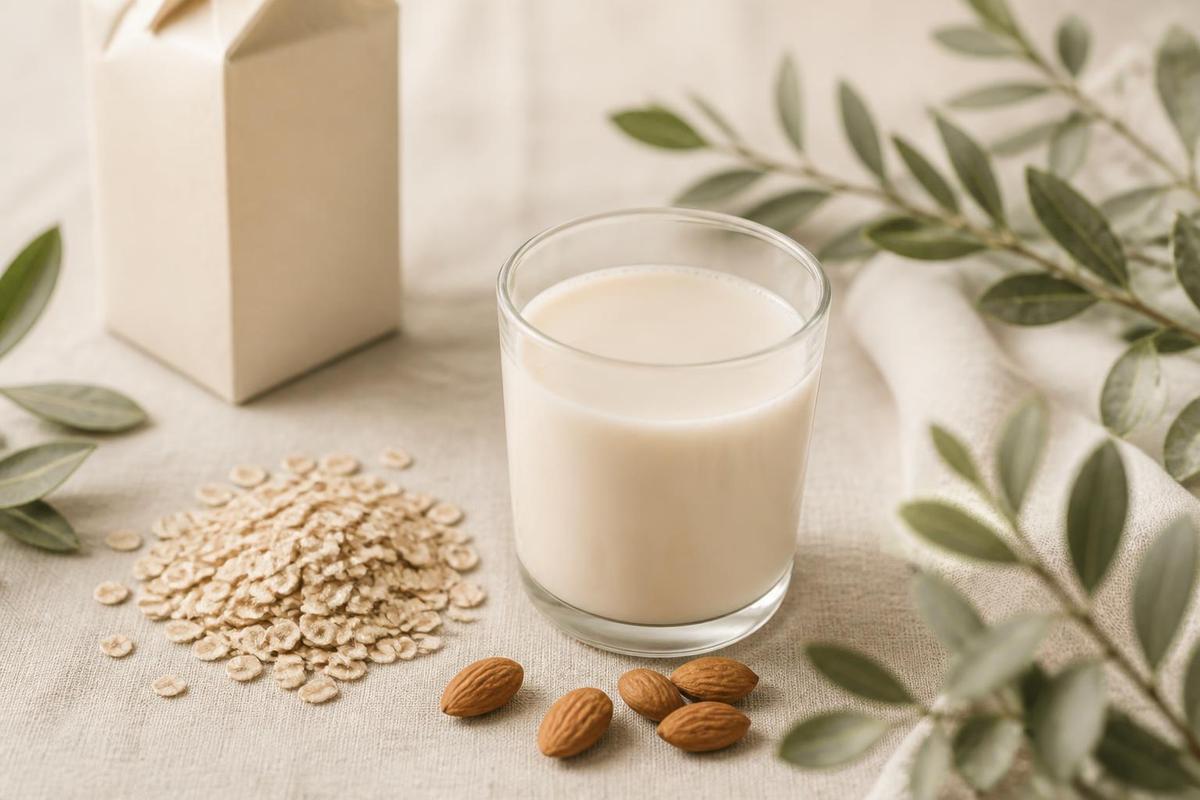
Califia Farms' Simple and Organic range, for example, contains exactly three ingredients in its almond and oat versions: purified water, the organic almonds or oats, and a small amount of sea salt. No oils. No gums. No added vitamins or minerals. Other brands, including Mooala, have released comparable three-ingredient formulations for the same reason — company statements around these launches have been explicit that the products exist specifically because a large share of consumers say they want to avoid ultra-processed foods, even amid genuine public confusion about what that term actually covers.
This is about as unambiguous as a plant milk formulation gets. Whatever standard you use to judge food processing, three whole-food ingredients with no additives sits at the minimally processed end of the spectrum.
The Trade-Off Nobody Mentions on the Front of the Pack
Here's the part that matters most for anyone actually choosing between these two approaches, and it's rarely stated plainly on the packaging of either.
Strip out the oils and gums, and coffee performance suffers — less foam, a greater tendency to split when hot liquid hits it, a thinner overall texture. If your plant milk is mainly going into a morning coffee and needs to hold a decent latte art pour, a three-ingredient version will likely disappoint compared with a standard barista-formulated carton.
Strip out fortification, and the nutritional picture changes more significantly still. A three-ingredient oat or almond milk with no added calcium, vitamin D or B12 is, nutritionally, a fairly thin product — genuinely simple, but also genuinely lacking the nutrients that make a standard fortified plant milk a reasonable dairy substitute in the first place. For someone splashing a bit into tea occasionally, that barely matters. For someone using plant milk as their primary daily milk, replacing dairy's meaningful contribution to calcium and vitamin D intake, it matters considerably more. Our plant milk comparison sets out how the different bases stack up on protein and calcium.
Neither formulation is straightforwardly "better." They're built for different priorities, and the honest choice depends on what you're actually optimising for — ingredient minimalism, or nutritional completeness — not on which carton has the cleaner-sounding marketing.
How to Actually Check
Skip the front-of-pack claims entirely and go straight to the ingredients list, which is required by law to be accurate regardless of what the marketing says.
Count the ingredients. Genuinely simple products will have somewhere between two and five. Standard commercial formulations typically run to eight or more.
Look for gums and stabilisers by name — anything ending in "gum," plus lecithin, carrageenan, and similar terms — if minimising additives specifically is your priority.
Check whether fortification is present, and don't treat its presence as automatically negative — for anyone using plant milk as a genuine daily dairy replacement, it's usually the more important consideration than additive count alone.

Mental Wellness Bundle
Calm your mind, ease stress, and recover from burnout with three powerful guides designed to restore mental balance.
Get BundleIgnore "natural," "clean" and even "organic" as reliable indicators. None of these terms guarantee a short ingredients list on their own, and organic certification in particular often has more to do with how the base crop was farmed than how many ingredients the final product contains.
If switching away from dairy is part of a broader change to how you eat, our Gut Reset guide covers how to make that transition without upsetting digestion, and it's worth knowing why dairy tolerance varies so widely across the UK before assuming plant milk is the necessary answer.
Frequently Asked Questions
Is oat milk ultra-processed?
It depends entirely on the specific product. Standard commercial oat milk, particularly "barista" formulations, typically contains added oil, stabilisers, and fortification, placing it in a more processed category. Three-ingredient formulations (water, oats, salt) sit at the minimally processed end of the spectrum. The "oat milk" label alone doesn't tell you which one you're buying.
Does fortification make plant milk ultra-processed?
Not on its own. Adding vitamins and minerals is a deliberate nutritional addition rather than an industrial processing technique, and it's generally viewed separately from additives like emulsifiers and stabilisers in most food classification systems. It's also usually the thing making a plant milk a nutritionally reasonable dairy substitute in the first place.
Are three-ingredient plant milks worth buying?
If minimising additives and ingredients is your priority, yes — they're about as straightforward as a plant milk formulation gets. The trade-off is generally worse coffee performance and a lack of the added calcium, vitamin D and B12 that make standard fortified plant milks closer nutritional substitutes for dairy.
How can I tell if my plant milk is highly processed?
Check the ingredients list rather than the front-of-pack marketing. A short list of recognisable whole foods (water, the base grain or nut, salt) indicates minimal processing. A longer list including oils, multiple gums or stabilisers, and flavourings indicates a more processed formulation, regardless of what terms like "natural" or "clean" suggest.
Which is better — simple or fortified plant milk?
Neither is objectively better; they serve different purposes. A simple, unfortified plant milk suits occasional use where ingredient minimalism is the priority. A fortified standard formulation better serves anyone using plant milk as a genuine daily substitute for dairy's nutritional contribution, particularly calcium and vitamin D.
The Bottom Line
"Is plant milk ultra-processed" doesn't have one answer, because plant milk isn't one product — it's a category spanning genuinely minimal three-ingredient formulations and genuinely industrial multi-additive ones, sold in near-identical packaging.
The useful shift is moving past the question of whether plant milk in general is processed, and toward checking the specific carton in your hand. A short ingredients list with recognisable whole foods sits at one end. A long list of oils, gums and stabilisers sits at the other. Both exist on the same supermarket shelf, and only the label — read properly, not glanced at — tells you which one you're buying.
This is general information rather than medical advice. If you have specific dietary concerns or food sensitivities, speak to a GP or registered dietitian.
Tags
Further Reading
Found this helpful?
Share this article and help others discover valuable health insights!
Click to share via social media or copy the link

Fresh Start Bundle
Reset your body and mind with our most popular bundle. Includes Sleep Reset, Caffeine Reset, Junk Food Reset, Stress Reset, and Sugar Reset guides.
Get Bundle
Complete Wellness Guides
Discover our library of evidence-based health guides designed to optimize your wellness journey.
Browse Guides