Garuda Wisnu Kencana: The Statue That Took 28 Years to Build

Experience — Garuda Wisnu Kencana Cultural Park, Ungasan

By James B. Stoney, Editor ·

Conceived in the 1990s. Halted by financial crisis. Inaugurated in 2018 by the Indonesian president. At 121 metres, one of the tallest statues in the world. Here's why GWK belongs on any serious Bali itinerary.
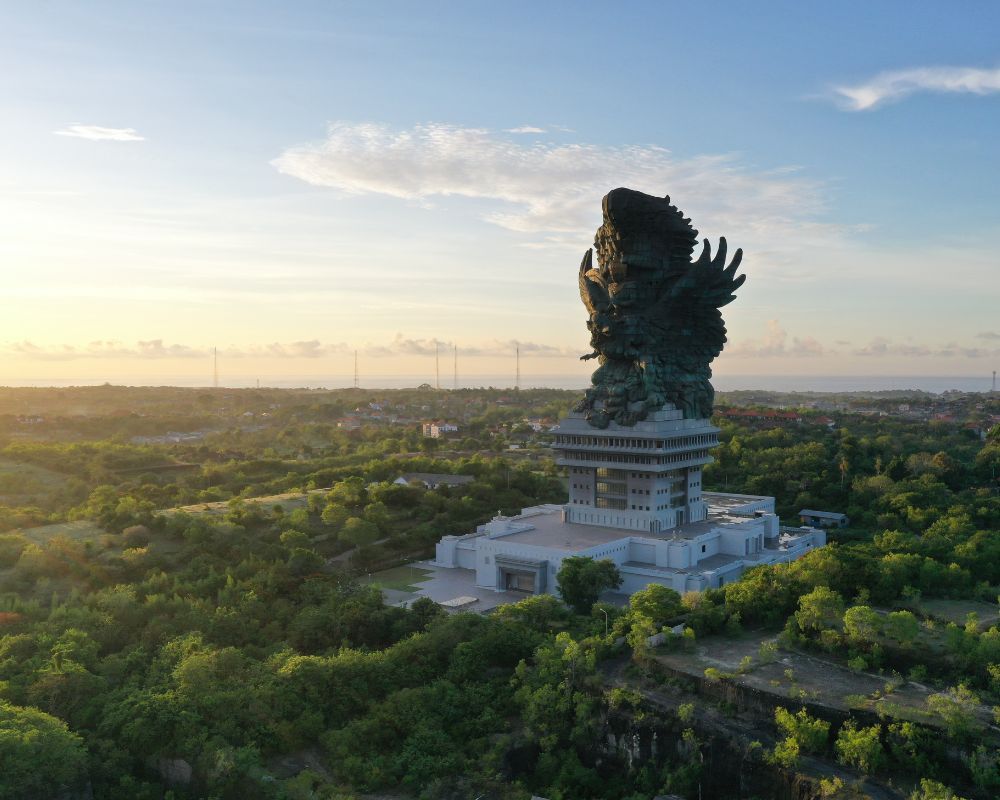
Garuda Wisnu Kencana statue at dawn — aerial view above the limestone hills of the Bukit Peninsula with the Indian Ocean beyond
Image: Garuda Wisnu Kencana Cultural Park

121 metres tall. 4,000 tonnes of copper and brass. A 64-metre wingspan. Conceived in the 1990s, halted by the Asian financial crisis, inaugurated on 22 September 2018 by the Indonesian president. One of the tallest statues in the world, on 60 hectares of Bukit Peninsula limestone, visible from the sea.

Garuda Wisnu Kencana Cultural Park sits in the limestone hills of Ungasan in the south of the Bukit Peninsula — a few minutes drive from Uluwatu, fifteen minutes from Jimbaran, visible as a silhouette from most of southern Bali on a clear day. The park covers 60 hectares. The statue stands at its centre.

Most things on the Bukit Peninsula are newer than they appear.

GWK took longer to arrive than almost anything in Bali.

The Story of the Statue

The idea came from I Nyoman Nuarta — a renowned Balinese sculptor born in Tabanan, co-founder of Indonesia's New Art Movement — in the early 1990s. The statue would depict Lord Vishnu, the Hindu god of preservation and harmony, riding Garuda — the mythical bird of loyalty and courage. In Balinese Hindu philosophy, their union represents the balance between humanity and nature. The statue was conceived not as a tourist attraction but as a symbol — of cultural identity, of devotion, of the relationship between the island and the belief system that defines it.

Garuda Wisnu Kencana statue front view — copper and brass Vishnu riding Garuda against blue sky
Image: Garuda Wisnu Kencana Cultural Park

Construction began. The 1997-98 Asian financial crisis arrived. The Indonesian economy collapsed. The rupiah lost most of its value. Funding evaporated. The project stopped.

It stopped for years. The partially completed structure stood on the limestone hilltop — present but unrealised, a monument to ambition that the economics of the time could not sustain. Other projects were abandoned in Bali during this period and never resumed. GWK was not abandoned. It waited.

Construction eventually resumed. The engineering challenges of completing a 4,000-tonne copper and brass structure in sections — each piece fabricated and then assembled on the hilltop — were considerable. The wingspan alone spans 64 metres. The pedestal adds significantly to the total height.

On 22 September 2018, President Joko Widodo officially inaugurated the statue. Twenty-eight years after conception. The third tallest statue in the world stood complete on the limestone hills of the Bukit Peninsula.

The Scale

Photographs do not prepare you for GWK.

Original Vishnu bust at Garuda Wisnu Kencana Cultural Park framed by trees on the Bukit Peninsula
Image: Garuda Wisnu Kencana Cultural Park

This is a consistent observation across every account of a first visit — that the statue is considerably larger in person than any image suggests. At 121 metres it stands taller than the Statue of Liberty. The wingspan of 64 metres would cover a significant portion of most city blocks. The copper and brass surface catches light differently across the day — gold at dawn, oxidised green in shade, bronze in the late afternoon when the sun comes from the west.

The park is 60 hectares — large enough to require a shuttle bus between sections if the heat and the scale are both being managed. The limestone landscape around the statue is dramatic in its own right: the geological formation that defines the Bukit Peninsula — the same limestone that produces the cliffs at Uluwatu, the bays at Bingin, the geological character of the entire southern peninsula — is the foundation on which the statue stands.

From the upper viewing levels, reached by lift inside the pedestal, the view extends across southern Bali to the coast and in clear conditions to the mountains in the north. The statue earns its hilltop.

The Cultural Performances

The park offers cultural performances throughout the day — Balinese dance, gamelan, the specific ritual performances that have been part of the island's cultural life for centuries.

Garuda Wisnu Kencana statue framed by the limestone rock cut at the cultural park's entrance plaza
Image: Garuda Wisnu Kencana Cultural Park

The Kecak dance at sunset is the centrepiece. The performance takes place in the open-air amphitheatre as the sun moves toward the Indian Ocean and the light changes across the limestone and the copper — the combination of the performance, the setting, and the light producing something that justifies the timing entirely. The Kecak — a performance that uses the rhythmic chanting of a large male chorus rather than instruments — tells the story of the Ramayana. At GWK, it tells it with the silhouette of Vishnu on Garuda visible above the stage.

The cultural performances are not incidental to GWK. They are the reason the park describes itself as a cultural destination rather than simply a monument. The distinction is real.

The Visit

GWK is best approached in the late afternoon.

The heat of the Bukit Peninsula midday does not make a 60-hectare park with significant walking distances comfortable. The late afternoon brings the temperature down, the light into its most dramatic register, and the timing right for the Kecak performance at sunset.

The park opens at 9am and closes at 9pm. The shuttle within the park is recommended — the distances between sections are manageable in the morning cool and considerably less so at midday in the dry season. Comfortable shoes and a hat are practical considerations rather than suggestions.

Visitors who come for an hour leave understanding the scale of the statue. Visitors who allow two or three hours — including the cultural performance — leave understanding what GWK is.

Vitae Lifestyle Scorecard

  • The statue9.5 / 10
  • The history9.5 / 10
  • The cultural performances9.0 / 10
  • The setting8.5 / 10
Overall9.1 / 10

Who it's for

  • Anyone in Bali who wants to understand the island's cultural identity rather than simply its surface.
  • Visitors to the Bukit Peninsula for whom the beach clubs are not the whole point.
  • Those who appreciate that the most significant things in any landscape are often the ones that took longest to arrive.

Questions

What is Garuda Wisnu Kencana Cultural Park?

A 60-hectare cultural park in Ungasan on the Bukit Peninsula in south Bali, home to the 121-metre Garuda Wisnu Kencana statue — one of the tallest statues in the world. The statue depicts Lord Vishnu riding the mythical bird Garuda and was conceived by Balinese sculptor I Nyoman Nuarta in the early 1990s. Construction was halted by the 1997-98 Asian financial crisis and the statue was completed and inaugurated by President Joko Widodo on 22 September 2018, 28 years after conception.

How tall is the GWK statue?

121 metres including its pedestal — taller than the Statue of Liberty. The wingspan spans 64 metres. The statue weighs 4,000 tonnes and is constructed from copper and brass. It is one of the tallest statues in the world.

What is the best time to visit GWK?

Late afternoon — when the heat has reduced, the light is at its most dramatic on the copper and limestone, and the timing is right for the Kecak dance performance at sunset. The park opens at 9am and closes at 9pm. Midday visits in the dry season require managing both the heat and the significant walking distances across the 60-hectare park.

What is the Kecak dance at GWK?

A traditional Balinese performance that uses the rhythmic chanting of a large male chorus — rather than instruments — to tell the story of the Ramayana. At GWK it takes place in the open-air amphitheatre at sunset, with the silhouette of the Garuda Wisnu Kencana statue visible above the stage. It is the cultural centrepiece of the park and the primary reason to time an afternoon visit around sunset.

Who designed the GWK statue?

I Nyoman Nuarta — a renowned Balinese sculptor born in Tabanan and co-founder of Indonesia's New Art Movement. He conceived the statue in the early 1990s as a representation of Hindu-Balinese cultural identity. The statue is constructed from copper and brass in sections assembled on the hilltop.

How long does a visit to GWK take?

An hour is enough to see the statue and understand its scale. Two to three hours allows the full park experience including cultural performances. The shuttle within the park is recommended for moving between sections. Visitors who include the Kecak dance performance at sunset consistently describe it as the most complete version of the visit.