The Best Foods for a Healthy Prostate
Cooked tomatoes, cruciferous vegetables, oily fish and a Mediterranean pattern have the strongest backing for prostate health. Here's what actually works — and what to limit.
Cooked tomatoes, cruciferous vegetables, oily fish, soy, and an overall Mediterranean eating pattern have the strongest evidence behind them for prostate health. Here's what the science actually shows — including why cooked tomatoes beat raw, why whole foods beat supplements, and what to cut back on.
Prostate cancer is the most common cancer in men in the UK, and diet is one of the few modifiable factors that appears to influence both the risk of developing it and the risk of it progressing. The evidence is not as clean as the supplement industry would like — single-nutrient pills have a long track record of failure in this area — but the broad dietary picture is consistent, well-studied, and genuinely useful.
The headline finding across decades of research is that no single food is a magic bullet, but a specific pattern of eating, built around a handful of well-evidenced foods, is associated with meaningfully lower risk. Here is what belongs in it.
TL;DR
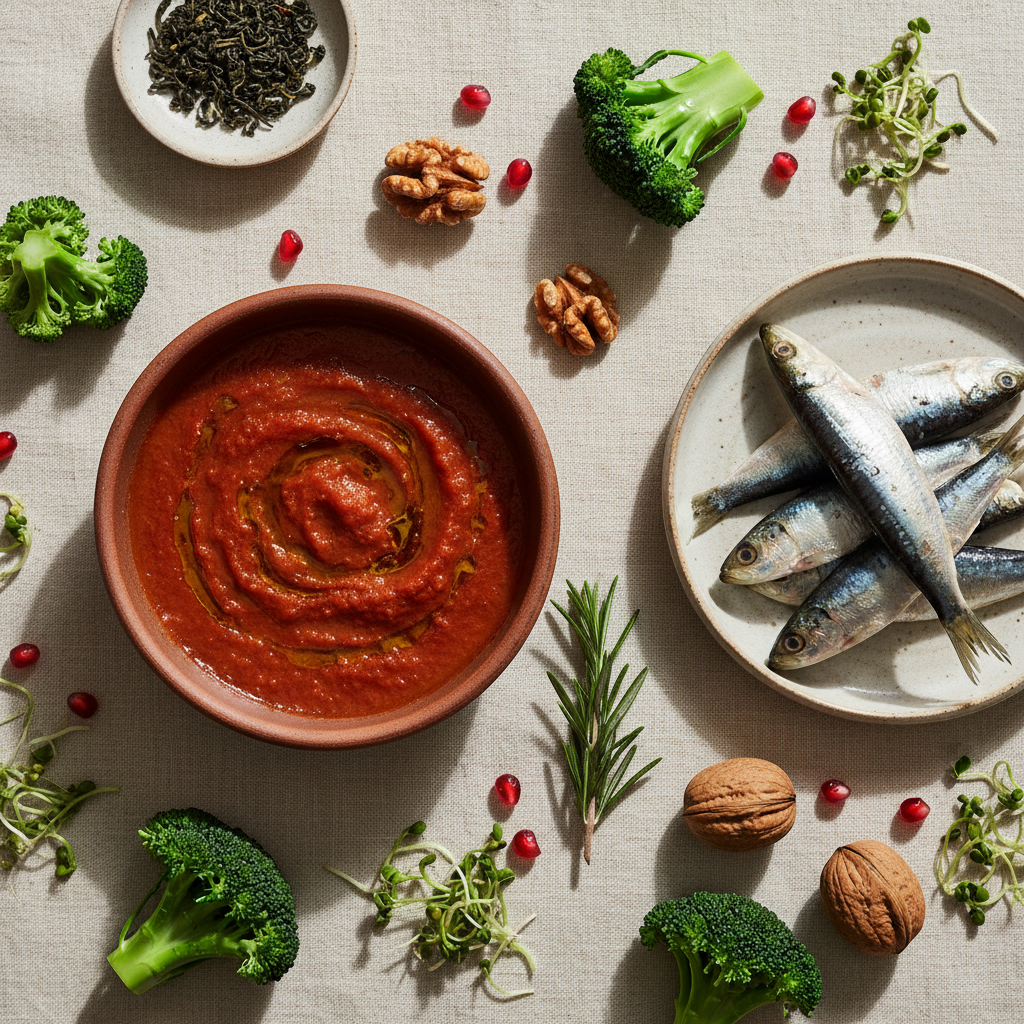
Cooked tomatoes are the most studied prostate food. Their key compound, lycopene, is far better absorbed from cooked and processed tomatoes — sauce, paste, soup — than from raw, and far better from whole food than from supplements. The Health Professionals Follow-up Study linked two to four servings of tomato sauce per week to roughly a 35% lower risk of total prostate cancer and 50% lower risk of advanced disease.
Cruciferous vegetables — broccoli, cauliflower, Brussels sprouts, cabbage, kale — contain sulforaphane, which disrupts androgen receptor signalling, a central driver of prostate cancer growth.
Oily fish — salmon, mackerel, sardines, herring — provide omega-3 fatty acids associated with reduced inflammation and potentially lower risk of high-grade prostate cancer.
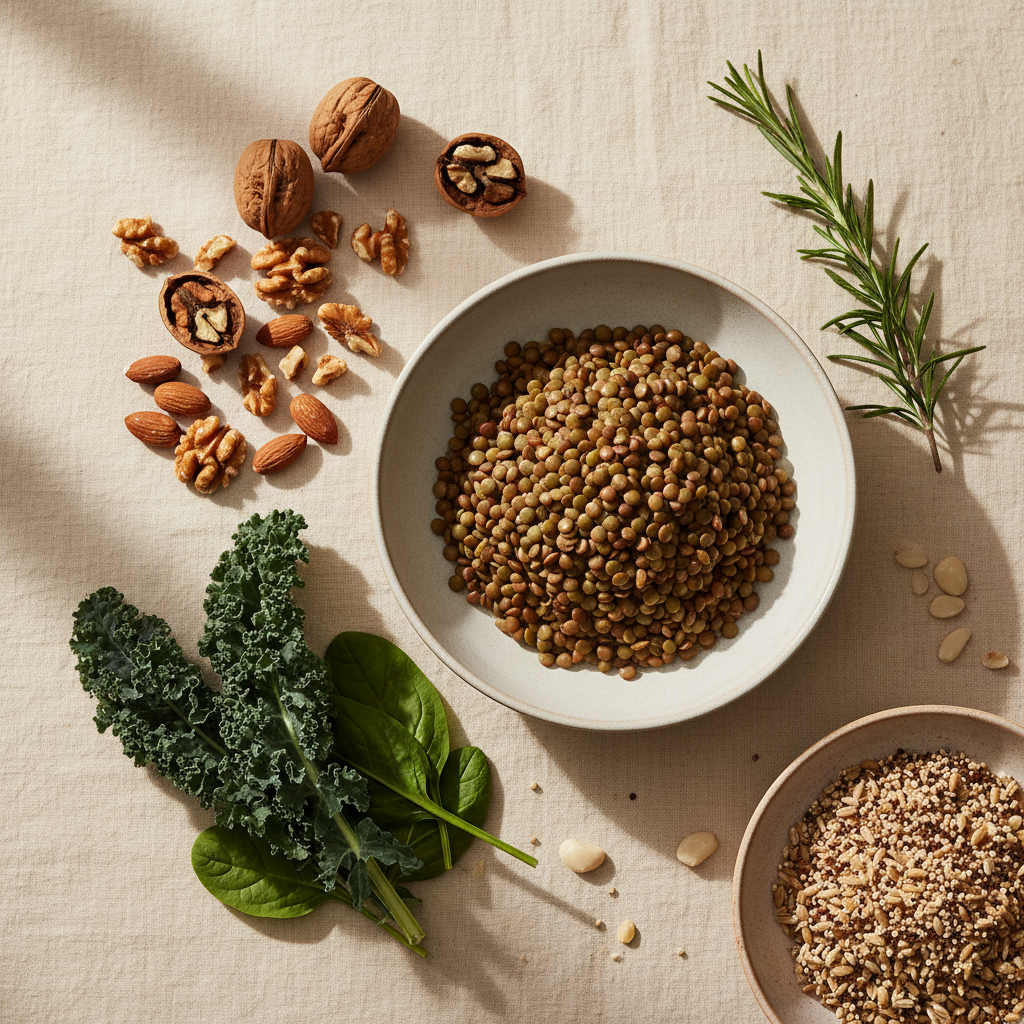
Soy foods, green tea, pomegranate, olive oil, nuts, and seeds all carry supporting evidence and work largely through antioxidant and anti-inflammatory mechanisms.
Whole foods consistently beat isolated supplements. High-dose lycopene supplements have repeatedly failed in trials and may even act as pro-oxidants at high doses. The protective effect appears to come from compounds working in combination, not in isolation.
What you limit matters too. Whole milk and full-fat dairy are linked to worse outcomes after a prostate cancer diagnosis, and high whole-egg intake is a concern due to choline. The overall Mediterranean pattern naturally displaces the high-fat, high-sugar Western foods associated with higher risk.

Want to Dive Deeper?
Our comprehensive wellness guides provide step-by-step protocols and actionable strategies for lasting health transformation.
Explore GuidesCooked Tomatoes: The Most Studied Prostate Food
If one food dominates the prostate health literature, it is the tomato — and specifically the cooked tomato.
The active compound is lycopene, the carotenoid that gives tomatoes their red colour and acts as a potent antioxidant, neutralising the free radicals that cause oxidative DNA damage in prostate tissue. Prostate tissue appears to be particularly vulnerable to this kind of damage, which is thought to play a role in all stages of cancer formation, so a compound that reduces it has a plausible protective mechanism.
The critical and frequently misunderstood detail is preparation. Lycopene is far more bioavailable from cooked and processed tomatoes than from raw ones. Cooking breaks down the tomato's cell walls and changes the structure of the lycopene molecule into a form the body absorbs more readily. Tomato paste delivers around two and a half times more absorbable lycopene than raw tomatoes. Pairing tomatoes with a healthy fat — olive oil in particular — increases absorption further still, because lycopene is fat-soluble. A raw tomato in a salad is good food; a tomato sauce cooked in olive oil is a far better lycopene delivery system.
The epidemiological evidence is among the strongest in prostate nutrition. The Health Professionals Follow-up Study, one of the largest and most respected datasets in the field, found that men eating two to four servings of tomato sauce per week had roughly a 35% lower risk of total prostate cancer and around a 50% lower risk of advanced prostate cancer. A systematic review of 66 studies found an 11% reduced risk among men with the highest lycopene intake, and a 17% reduction associated with the highest blood lycopene levels.
A small intervention study found that just three weeks of tomato sauce before prostate surgery reduced oxidative DNA damage in the prostate tissue itself by around 28% — direct biological evidence rather than population correlation.
Cruciferous Vegetables: The Androgen Receptor Connection
The second pillar of a prostate-supportive diet is the cruciferous vegetable family — broccoli, cauliflower, Brussels sprouts, cabbage, kale, and collard greens.
These vegetables contain glucosinolates, which the body converts into isothiocyanates including sulforaphane — the compound most responsible for their apparent anti-cancer activity. Broccoli sprouts contain particularly concentrated amounts. The mechanism here is more specific and more interesting than general antioxidant activity.
Sulforaphane disrupts androgen receptor signalling. The androgen receptor is a protein that responds to male hormones and plays a central role in prostate cancer development and growth — it is, in fact, the target of several prostate cancer drugs. Research published in the Proceedings of the National Academy of Sciences showed that sulforaphane disables an enzyme that normally keeps the androgen receptor stable, causing the receptor to be broken down more quickly and reducing its ability to drive cell growth. The isothiocyanates and indoles in these vegetables have also been shown to hinder the growth of prostate cancer cells and have been linked to reduced risk of recurrence and metastasis.
Preparation matters here too, in the opposite direction from tomatoes. Eating cruciferous vegetables raw or lightly cooked — steamed, sautéed, or stir-fried rather than boiled to death — preserves more of the enzyme myrosinase, which is needed to convert glucosinolates into active sulforaphane. Lightly steamed broccoli retains far more of its protective potential than overcooked broccoli.
Oily Fish and Omega-3
Fatty fish — salmon, mackerel, sardines, herring, and trout — supply the long-chain omega-3 fatty acids EPA and DHA, which have anti-inflammatory effects throughout the body.
The evidence linking omega-3 to prostate health is less definitive than the tomato or cruciferous data, but the broad picture is supportive. Higher omega-3 intake has been associated with a reduced risk of high-grade — that is, more aggressive — prostate cancer in several studies, and the anti-inflammatory mechanism is biologically plausible given the role chronic inflammation plays in cancer development. For a deeper look at where the evidence on EPA and DHA actually stands, see Omega-3: The Supplement That Keeps Surprising Science. Oily fish also displaces less favourable protein sources, particularly the processed and red meats associated with higher risk in the Western dietary pattern.
The practical guidance aligns with general health advice: two portions of fish per week, at least one of them oily. This is the same recommendation that supports cardiovascular and brain health, which is part of why it is such a sound dietary anchor.
The Supporting Cast: Soy, Green Tea, Pomegranate, Olive Oil
Several other foods carry meaningful supporting evidence and round out the prostate-supportive pattern.
Soy foods — tofu, edamame, tempeh, soy milk — contain isoflavones, plant compounds that interact with prostate cells in ways that may slow disease progression. Populations with high traditional soy intake have historically lower rates of prostate cancer, though the relationship is complex and confounded by other dietary factors.
Green tea provides catechins, antioxidant compounds that some studies associate with lower prostate cancer incidence. The evidence is promising rather than conclusive, but green tea is a low-risk addition with broad health benefits.
Pomegranate juice and extract offer antioxidants that have shown protective effects on prostate cells in laboratory and early clinical work, including some evidence around slowing PSA rises, though the strongest claims have outpaced the evidence.
Olive oil, nuts, and seeds supply the healthy fats and vitamin E that characterise the Mediterranean diet, and have been linked with lower prostate cancer risk. Olive oil also plays a functional role: it dramatically improves lycopene absorption from tomatoes, which is one reason Mediterranean cooking — tomatoes cooked in olive oil — is such an effective combination.
Why Whole Foods Beat Supplements
One of the most important and consistent findings in this entire field is that isolated supplements do not replicate the benefits of whole foods — and may sometimes do harm.
High-dose lycopene supplements have failed repeatedly in trials to prevent or treat prostate cancer. At the high concentrations achievable through supplementation, lycopene may even act as a pro-oxidant — the opposite of the protective antioxidant effect seen at dietary levels. This is a recurring theme across nutritional science: a compound that is beneficial within the complex matrix of a whole food can be ineffective or counterproductive when stripped out and concentrated into a pill. The same logic applies in reverse to aggressive dietary cuts — for example, the picture on why cutting out all sugar may be doing more harm than good is a reminder that biology rarely rewards extremes.
The explanation appears to be synergy. Tomatoes contain not just lycopene but beta-carotene, phytoene, phytofluene, polyphenols, and vitamin E, all of which accumulate in prostate tissue and appear to work together. Laboratory work has shown that individually ineffective doses of phytoene, phytofluene, and lycopene become significantly effective at suppressing prostate cancer cell growth when combined. The same synergy appears across foods — curcumin from turmeric, tomato compounds, and vitamin E from nuts each do little alone against prostate cancer cell growth signalling, but together suppress it by around 70%.

Fresh Start Bundle
Reset your body and mind with our most popular bundle. Includes Sleep Reset, Caffeine Reset, Junk Food Reset, Stress Reset, and Sugar Reset guides.
Get BundleThe practical message is unambiguous: eat the foods, not the extracts. The whole tomato, the whole broccoli floret, the actual fish — these deliver the combinations that the research supports. The supplement aisle does not.
What to Limit
What you reduce matters nearly as much as what you add, and a few categories have specific evidence against them for prostate health.
Whole milk and full-fat dairy are the most notable. Consuming whole milk after a prostate cancer diagnosis has been linked to increased risk of cancer progression and death from prostate cancer. Low-fat and non-fat dairy do not appear to carry the same consistent risk, suggesting the issue is related to the fat content or the hormones it carries. High overall calcium intake has also been associated with higher risk in some studies.
Whole eggs are worth moderating. The Prostate Cancer Foundation suggests limiting whole eggs to an average of two per week or fewer, with the concern centring on choline, which is concentrated almost entirely in the yolk and has been associated with prostate cancer progression in some research.
The broader Western dietary pattern — high in red and processed meat, refined sugar, and saturated fat — is associated with higher prostate cancer rates. One of the underappreciated benefits of building a diet around the foods above is that a Mediterranean-style pattern naturally displaces these foods. You do not have to wage a separate war on the harmful foods if the beneficial ones are already filling the plate.
Frequently Asked Questions
What are the best foods for prostate health? The strongest evidence supports cooked tomatoes (for lycopene), cruciferous vegetables like broccoli (for sulforaphane), oily fish (for omega-3), soy foods, green tea, pomegranate, and olive oil — all within an overall Mediterranean-style eating pattern. No single food is a magic bullet; the protective effect comes from the combination eaten consistently over time.
Are cooked or raw tomatoes better for the prostate? Cooked. Lycopene, the protective compound in tomatoes, is far more bioavailable from cooked and processed tomatoes — sauce, paste, soup — than from raw ones, because cooking breaks down cell walls and converts lycopene into a more absorbable form. Tomato paste provides around two and a half times more absorbable lycopene than raw tomatoes. Pairing tomatoes with olive oil increases absorption further, as lycopene is fat-soluble.
Should I take a lycopene supplement for prostate health? The evidence does not support it. High-dose lycopene supplements have repeatedly failed in trials and may even act as pro-oxidants at high concentrations — potentially counterproductive. The protective effect appears to depend on lycopene working alongside the other compounds naturally present in whole tomatoes. Eating cooked tomatoes is far better supported than taking lycopene pills.
How does broccoli help the prostate? Broccoli and other cruciferous vegetables contain sulforaphane, which disrupts androgen receptor signalling — a central driver of prostate cancer growth. Research has shown sulforaphane causes the androgen receptor to break down more quickly, reducing its ability to drive cell growth. Eating these vegetables raw or lightly cooked preserves more of the enzyme needed to produce active sulforaphane.
What foods should I avoid for prostate health? The clearest evidence is around whole milk and full-fat dairy, which are linked to increased risk of progression and death after a prostate cancer diagnosis — low-fat and non-fat dairy do not carry the same consistent risk. High whole-egg intake is also a concern due to choline in the yolk. More broadly, the high red meat, processed meat, refined sugar, and saturated fat of the Western diet is associated with higher prostate cancer risk.
Does diet actually prevent prostate cancer? Diet is associated with meaningfully lower risk and slower progression in large population studies, but it cannot guarantee prevention, and it is not a substitute for screening and medical care. The most consistent finding is that a Mediterranean-style pattern built around the foods above is linked to better prostate outcomes. Diet is one of the few modifiable risk factors, which makes it worth getting right alongside, not instead of, appropriate screening.
The Bottom Line
The science of eating for prostate health is less about any single miracle food than about a consistent, well-evidenced pattern. Cooked tomatoes in olive oil, lightly cooked cruciferous vegetables, oily fish twice a week, soy, green tea, pomegranate, nuts, and a broadly Mediterranean approach — these are the components the research keeps returning to.
The two most important principles cut against the way prostate nutrition is often marketed. First, whole foods beat supplements, consistently and sometimes dramatically — the benefit lives in the combination of compounds, not in any one extracted into a pill. Second, preparation matters: cook your tomatoes, lightly cook your broccoli, and pair them with healthy fats.
None of this replaces screening, particularly for men over 50 or those at higher risk. But diet is one of the few levers a man can actually pull himself, and the evidence that it matters — for prevention and for slowing progression — is strong enough to be worth acting on.
For more on prostate screening and risk, read our coverage of the UK's screening decision and what "aggressive but early" actually means: A High-Profile Prostate Cancer Diagnosis Just Reminded the UK to Get Checked. And for the broader dietary foundations that underpin this eating pattern, the Prostate Reset from the Reset Series covers the nutrition, lifestyle, and screening guidance most relevant to long-term prostate health.
Related reading
Tags
Further Reading
Found this helpful?
Share this article and help others discover valuable health insights!
Click to share via social media or copy the link
Fresh Start Bundle
Reset your body and mind with our most popular bundle. Includes Sleep Reset, Caffeine Reset, Junk Food Reset, Stress Reset, and Sugar Reset guides.
Get Bundle
Complete Wellness Guides
Discover our library of evidence-based health guides designed to optimize your wellness journey.
Browse Guides