
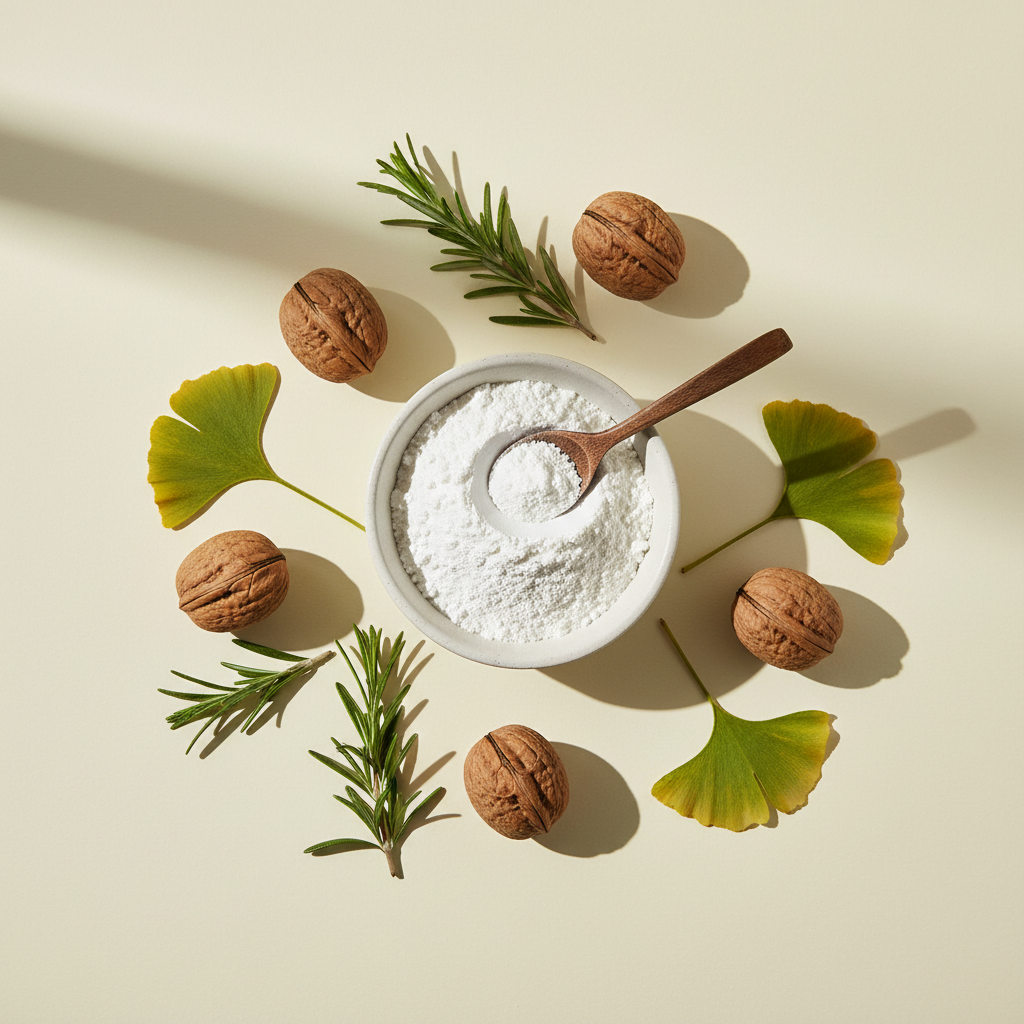
Is Creatine the Brain Supplement Nobody Told You About?
Most people know creatine for the gym. But emerging research suggests it may do something far more interesting — support memory, focus and long-term brain health.
Most people associate creatine with the gym. Bigger lifts. Faster recovery. A supplement for athletes and bodybuilders.
But a growing body of research is pointing somewhere else entirely.
Your brain is one of the most energy-hungry organs in the body. And creatine — the same compound found in most pre-workout tubs — may have a meaningful role to play in how well it functions.
Here's what the evidence actually shows.
TL;DR
- Creatine is not just a gym supplement — it is a naturally occurring compound that plays a direct role in how the brain produces and maintains energy
- The brain is one of the body's most metabolically demanding organs, consuming roughly 20% of total energy at rest — and creatine helps fuel that demand
- Emerging research links creatine supplementation to measurable improvements in memory, processing speed, attention and concentration
- Benefits appear strongest in people under significant cognitive pressure: those who are sleep-deprived, chronically stressed, or going through periods of high mental demand
- Vegetarians and vegans tend to have significantly lower creatine stores — because creatine is found almost exclusively in animal products — which may make supplementation particularly impactful for this group
- Older adults appear to benefit meaningfully, as natural creatine synthesis declines with age whilst cognitive demands remain high
- Women, particularly those in perimenopause and menopause, may have up to 80% lower creatine stores than men — an underappreciated gap that researchers are beginning to take seriously
- A pilot study in Alzheimer's patients found that eight weeks of creatine supplementation improved working memory and executive function, alongside an 11% increase in brain creatine levels
- Growing data also links creatine to reduced symptoms of depression, particularly when used alongside SSRIs
- The standard recommendation is 3–5g of creatine monohydrate daily — no loading phase required for cognitive benefit, and no need for expensive or specialist formulations
- The evidence is promising but not yet complete — creatine is not a cognitive cure-all, and larger trials are still needed
- Crucially, the safety record is exceptional: decades of research have found no harm to kidney function in healthy adults at standard doses
What Is Creatine, Actually?
Creatine is a naturally occurring compound found primarily in muscle tissue — but also in the brain.

Want to Dive Deeper?
Our comprehensive wellness guides provide step-by-step protocols and actionable strategies for lasting health transformation.
Explore GuidesIts core function is energy production. Specifically, creatine helps replenish ATP (adenosine triphosphate), the primary fuel source your cells use to function. When demand for energy is high — during exercise, during periods of intense focus, during stress — creatine steps in to keep supply stable.
The vast majority of your body's creatine stores (around 95%) sit in your muscles. The remaining 5% is distributed across the brain and other organs. When those stores run low, your body's ability to meet energy demand — whether physical or cognitive — begins to falter.
Why the Brain Needs Energy
The brain accounts for roughly 2% of body weight but consumes approximately 20% of the body's total energy at rest.
That is a significant demand — and it does not switch off.
Every thought, decision, memory retrieval and emotional response requires a continuous supply of ATP. When that supply is disrupted — through poor sleep, chronic stress, nutrient gaps or age-related decline — cognitive function can suffer.
This is precisely where creatine becomes interesting. By helping to replenish ATP in brain cells, it may support the very processes that underpin clear thinking, memory and mental resilience.
What the Research Actually Shows
The cognitive research on creatine is still emerging, but several findings are worth paying attention to.
Memory and processing speed
A review of studies involving nearly 500 adults found that creatine supplementation had positive effects on memory, attention span and processing speed. A separate study found that even a single dose of creatine produced measurable improvements in cognitive performance and processing speed under demanding conditions.
Sleep deprivation and stress
Some of the most compelling findings involve people under cognitive pressure. Research suggests creatine may help maintain memory and concentration specifically during sleep deprivation and periods of high stress — two states where brain energy demand spikes and creatine stores are depleted more rapidly.
Older adults
Benefits appear more pronounced in older adults, likely because natural creatine synthesis declines with age. The Mayo Clinic notes that creatine supplements might improve memory and thinking skills particularly in this group, though more research is needed.
Alzheimer's disease
A pilot study — the first of its kind — conducted at the University of Kansas Medical Center found that eight weeks of creatine supplementation produced moderate improvements in working memory and executive function in Alzheimer's patients, alongside an 11% increase in brain creatine levels. Researchers described the preliminary results as genuinely encouraging, whilst cautioning that larger trials are needed.
Depression
Growing data suggests that creatine supplementation may reduce symptoms of depression, particularly when used alongside SSRIs. Researchers believe this effect may be linked to creatine's influence on brain energy metabolism and neuroplasticity.
Who Appears to Benefit Most
The evidence is not uniform across all populations. Certain groups appear to see the most meaningful cognitive benefit.
Vegetarians and vegans — because creatine is found almost exclusively in animal products, those who do not eat meat or fish tend to have significantly lower baseline creatine stores, making supplementation particularly relevant. Some studies suggest this group shows the most pronounced cognitive improvements.
Older adults — natural creatine synthesis slows with age, and cognitive demands remain high. Supplementation may help bridge that gap and support the kind of working memory and processing speed that tends to decline earliest.
People under chronic stress or poor sleep — brain energy is depleted more rapidly during these states, and creatine may help sustain cognitive performance when the body is under pressure.
Women, particularly during perimenopause and menopause — research suggests women may have up to 80% lower creatine stores than men, partly due to lower muscle mass and hormonal differences. Fluctuating and declining oestrogen also affects how efficiently the body stores and uses creatine — making this an area of growing scientific interest that has been largely overlooked until recently.
The Gym Supplement Reputation Problem
One of the reasons creatine's cognitive potential has remained under the radar is its association with bodybuilding.
For decades, it was marketed almost exclusively at men looking to build muscle. That framing stuck.
But creatine is not a steroid. It is not a hormone. It is a naturally occurring compound the body already produces — primarily in the liver, kidneys and pancreas — and which is also obtained through diet.
The most common myths — that creatine damages the kidneys, causes fat gain or is only relevant to athletes — are not supported by current evidence. Studies have consistently found that long-term creatine supplementation does not impair kidney function in healthy adults, and any early weight change is typically temporary, caused by muscles retaining water rather than fat accumulation.
What About Dosing?
For most adults, 3–5 grams of creatine monohydrate per day is the standard recommendation — and the form most consistently supported by research.
Creatine monohydrate is the purest form available and typically the most affordable. Look for a product that is third-party tested.
Daily consistency matters more than timing. Benefits — both physical and cognitive — tend to become apparent after two to four weeks of regular use.
A loading phase (typically 20g per day for five to seven days) is sometimes used to saturate stores more quickly, but it is not necessary for most people and is not recommended for those using creatine primarily for cognitive support.
The Honest Picture
The cognitive research on creatine is genuinely promising — but it is not settled science.
Most studies to date are relatively small. Many have focused on specific populations — the sleep-deprived, the elderly, vegetarians — rather than the general healthy adult. And whilst improving a biomarker or scoring better on a cognitive test is meaningful, it is not the same as demonstrating long-term protection against cognitive decline.
What we can say with confidence is this: creatine is safe, well-studied and inexpensive. Its role in brain energy metabolism is well established. And the direction of the emerging research is consistently positive.
For a supplement with decades of safety data and an expanding evidence base, that is a compelling combination.
FAQs
Does creatine actually help with brain function?
The emerging evidence is encouraging. Multiple studies have found that creatine supplementation can improve memory, attention and processing speed — particularly in people under cognitive demand. It does not appear to be a dramatic effect in young, healthy adults at rest, but the benefits become more pronounced in those who are sleep-deprived, older, vegetarian or under significant mental stress. Research in this area is growing quickly, and the direction of the evidence is consistently positive.

Fresh Start Bundle
Reset your body and mind with our most popular bundle. Includes Sleep Reset, Caffeine Reset, Junk Food Reset, Stress Reset, and Sugar Reset guides.
Get BundleIs creatine safe to take long-term?
Yes, for healthy adults. Creatine is one of the most extensively studied supplements in existence, and long-term use has not been shown to harm kidney function in people without pre-existing kidney conditions. It is classified as generally recognised as safe. As with any supplement, those with underlying health conditions should consult a GP or healthcare professional before starting.
Which type of creatine is best for brain health?
Creatine monohydrate is the most studied, most widely recommended and typically the most affordable form available. Despite the proliferation of newer formulations — creatine HCL, buffered creatine, ethyl ester — none have been shown to outperform monohydrate in research. Look for a product that is third-party tested for purity, and avoid anything with unnecessary fillers or proprietary blends.
How long does creatine take to work?
For most people, physical benefits become noticeable within two to four weeks of consistent daily use. Cognitive effects are likely to follow a similar timeline as brain creatine levels gradually increase. There is no compelling evidence that timing your dose around meals or workouts makes a meaningful difference — daily consistency matters far more than when you take it.
Does creatine help with brain fog?
Possibly. Research suggests creatine may support cognitive function specifically during periods of mental fatigue, stress and sleep deprivation — three of the most common contributors to the kind of sluggish, unfocused thinking people describe as brain fog. It is not a cure, and the research is not yet definitive, but the mechanistic rationale — creatine helping maintain ATP supply in an energy-depleted brain — is well supported.
Can vegetarians and vegans benefit more from creatine?
Yes — and potentially significantly so. Because dietary creatine comes almost exclusively from meat and fish, those who avoid animal products tend to have considerably lower baseline creatine stores. Studies suggest this group shows some of the most pronounced cognitive improvements from supplementation, which makes creatine one of the more evidence-supported additions to a plant-based diet alongside vitamin B12 and omega-3s.
Is creatine relevant for women's brain health?
Increasingly, yes — and this is an area the research community is beginning to take seriously. Women tend to have significantly lower creatine stores than men, and oestrogen plays a role in how efficiently creatine is synthesised and stored. As oestrogen declines during perimenopause and menopause, that efficiency can decrease further. Given that cognitive symptoms — including memory changes and difficulty concentrating — are commonly reported during this life stage, creatine is attracting growing interest as a potentially relevant and accessible intervention.
Will creatine make me gain weight?
Possibly a small amount in the early weeks, but not from fat. Any initial weight increase is caused by muscles drawing in more water as creatine stores fill — a temporary and harmless effect. For those taking creatine primarily for cognitive support rather than muscle performance, this effect tends to be minimal and typically stabilises within the first two to three weeks.
Should I take creatine with food?
There is no strong evidence that taking creatine with or without food significantly affects its absorption or effectiveness. Some people find taking it with a meal reduces any mild gastrointestinal discomfort, which can occasionally occur at higher doses. At the standard 3–5g daily dose, most people tolerate it well regardless of timing.
Further Reading
- Does Creatine Actually Work for Women?
- Why Strength May Be One of the Best Predictors of Healthy Ageing — see How to Lose Fat Without Losing Muscle
- Is Biological Age More Important Than Chronological Age?
The Bottom Line
Creatine has spent decades being dismissed as a gym supplement — something for athletes chasing bigger numbers, not for anyone interested in long-term health.
But the emerging picture is more interesting than that reputation suggests. The brain is a metabolically demanding organ, and creatine plays a direct role in keeping it fuelled. Research now links supplementation to improvements in memory, processing speed and concentration — particularly in the people who arguably need cognitive support most: the sleep-deprived, the stressed, older adults, women navigating hormonal change and those who eat little or no meat.
The science is not complete. Most studies are still relatively small, and larger trials are needed before firm conclusions can be drawn. But creatine is not a new or experimental compound. It is one of the most studied supplements in existence, with a safety record that spans decades and a cost that makes it accessible to almost everyone.
For a compound this safe, this affordable and this well-researched, the cognitive case is becoming increasingly difficult to set aside. If the gym was never your reason to try it, brain health might be.
Tags
Further Reading
Found this helpful?
Share this article and help others discover valuable health insights!
Click to share via social media or copy the link
Fresh Start Bundle
Reset your body and mind with our most popular bundle. Includes Sleep Reset, Caffeine Reset, Junk Food Reset, Stress Reset, and Sugar Reset guides.
Get Bundle
Complete Wellness Guides
Discover our library of evidence-based health guides designed to optimize your wellness journey.
Browse Guides