The River as Stage: The Oxford Cambridge Boat Race — A First-Hand Account
Experience — The Boat Race
By James B. Stoney, Editor ·
First held in 1829, the Boat Race turns the Thames into a stadium — open, historic and embedded in the city itself.
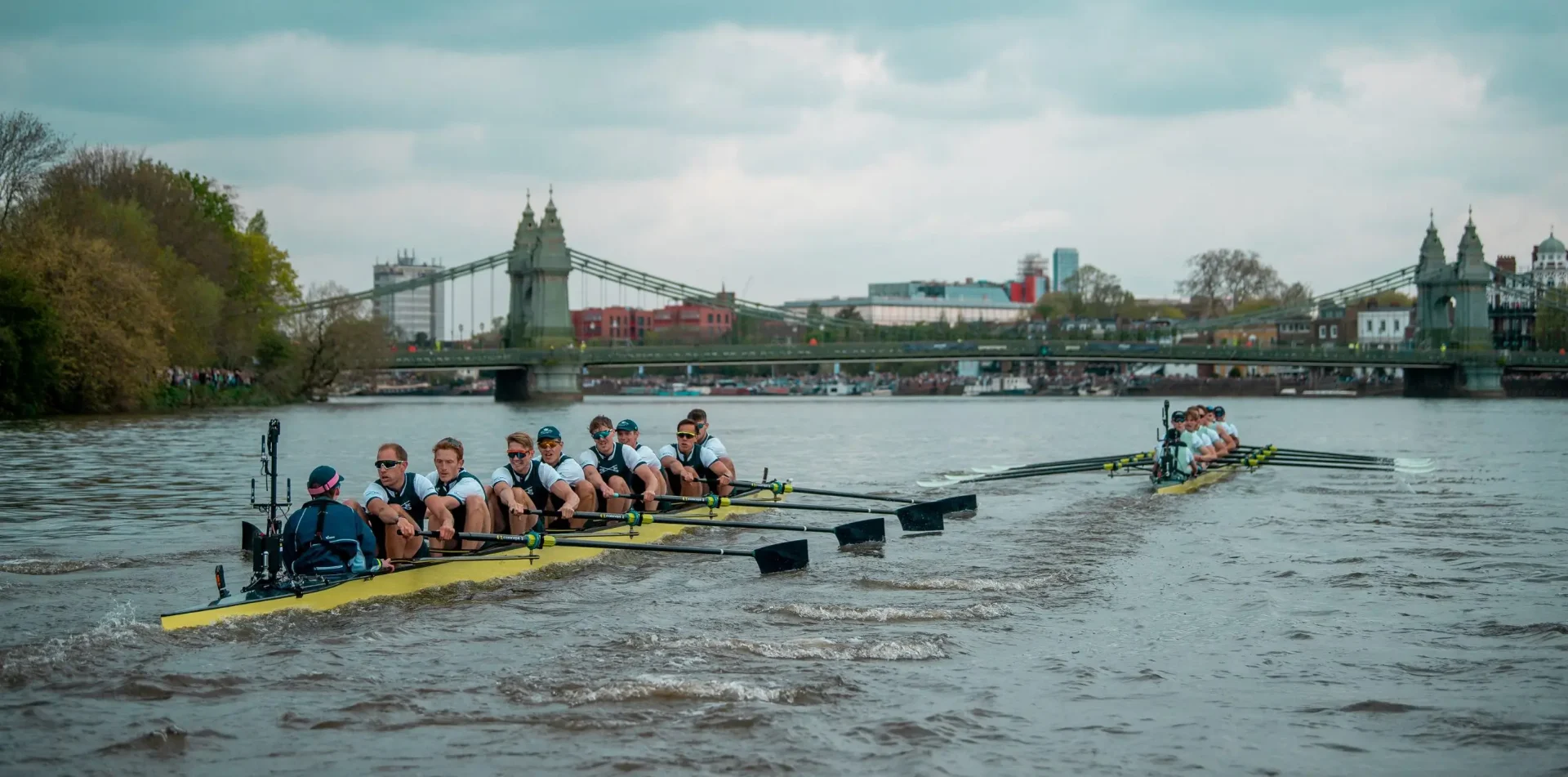
Some events belong to a city.
The Boat Race belongs to London.
First held in 1829, and raced on the River Thames since 1836, it is one of the oldest sporting events in the country. Yet what defines it is not just its history, but where it takes place.
The river does not separate the city.
It becomes the setting.
The Course
The race runs along the Tideway — a stretch of the River Thames between Putney and Mortlake.
It passes through parts of London that remain largely unchanged in character. Bridges, embankments and riverside buildings form a continuous backdrop, creating a course that feels embedded within the city rather than constructed for the event.
There is no stadium.
London itself becomes one.
History and Continuity
The race has evolved, but its structure has remained consistent.
Two crews. One course. The same stretch of river used year after year. That repetition gives it weight. It is not reinvented annually. It continues.
That continuity is what gives the event its identity.
Access
Despite its profile, the race remains remarkably open.
There are no barriers along most of the route. Spectators line the banks, stand on bridges, gather outside pubs and walk between vantage points as the race progresses.
It is possible to experience it fully without a ticket.
That accessibility sits in contrast to the institutions behind it — University of Oxford and University of Cambridge — and the broader perception of exclusivity that surrounds them.
On the river, that distinction fades.
Where to watch the Boat Race
The course runs from the University Stone near Putney Bridge to the finish line at Chiswick Bridge — a distance of approximately four and a quarter miles along the Tideway.
The most popular viewing points are Putney Bridge and embankment (near the start), Hammersmith Bridge and the surrounding riverside pubs, Barnes Bridge, and Chiswick Bridge (near the finish). Each offers a different experience — Putney gives you the start and the first burst of racing; Hammersmith provides the widest river view and typically the most atmosphere; Barnes and Chiswick are quieter and better suited to those who want to see the finish without the crowds.
Moving between points is possible but requires timing. The race is over in around 17 to 20 minutes — faster than most first-time spectators expect. Positioning yourself at a single good vantage point is usually more rewarding than attempting to follow the race on foot.
The Atmosphere
The atmosphere builds gradually.
Crowds gather early, then shift as the start approaches. When the race begins, movement follows the boats — along the embankment, across bridges, through the city itself.
It is less about a fixed viewpoint and more about being part of the flow.
Why It Earns Its Place
There are many sporting events.
Few are this integrated into their surroundings.
The Boat Race works because it does not sit apart from London. It moves through it — using the river as it has for nearly two centuries, and allowing the city to shape the experience around it.
Vitae Lifestyle Scorecard
- Setting9.6 / 10
- History9.5 / 10
- Accessibility9.4 / 10
- Overall experience9.5 / 10
Who it's for
- Those interested in London's history as much as sport.
- People who prefer open, accessible events over enclosed venues.
- Anyone looking to experience the city in motion.
Questions
What is the Oxford Cambridge Boat Race?
The Oxford Cambridge Boat Race is an annual rowing race between crews from the University of Oxford and the University of Cambridge, held on the River Thames in London. First raced in 1829 and on the current Tideway course since 1836, it is one of the oldest sporting events in Britain. The race runs from the University Stone near Putney Bridge to Chiswick Bridge — a distance of approximately four and a quarter miles.
When is the Boat Race held?
The Boat Race is held annually, typically in late March or early April, when tidal and daylight conditions on the Thames are most suitable. The exact date varies each year and is announced in advance on The Boat Race website at theboatrace.org.
Where is the best place to watch the Boat Race?
Hammersmith Bridge and the surrounding riverside pubs offer the widest river views and typically the most atmosphere. Putney Bridge provides the best view of the start, while Barnes and Chiswick are quieter and suit those who prefer to watch the finish. All vantage points along the Tideway are free and accessible without a ticket.
How long does the Boat Race take?
The race typically takes between 17 and 20 minutes to complete, depending on conditions. The Thames Tideway is tidal, and the direction and strength of the current on race day affects pace and strategy. The race is shorter than most first-time spectators expect — arriving early and positioning well at a single viewpoint is more rewarding than attempting to follow the boats on foot.
This article appears in Edit No. 09 — Controlled Movement, Considered Spaces


