Blog · Nutrition & Diet
Does Beetroot Juice Actually Lower Blood Pressure?
By Vitae Team ·
A University of Exeter trial found beetroot juice lowered blood pressure by 7mmHg in older adults — but not younger ones. The mechanism is the oral microbiome. Here's what the evidence shows.
Beetroot juice has occupied an unusual position in nutrition research for the past decade — simultaneously a genuine scientific area of interest and a wellness trend that has significantly outpaced the evidence. The claims made for it range from modest cardiovascular benefit to athletic performance enhancement to cognitive protection.
The most recent and most methodologically rigorous work cuts through the noise with a specific finding: beetroot juice lowers blood pressure in older adults through a mechanism involving the oral microbiome that does not operate in younger adults. The finding is both more precise and more clinically useful than the general claims that have surrounded beetroot juice for years.
TL;DR
- A University of Exeter randomised, placebo-controlled trial found that older adults who drank a concentrated beetroot juice shot twice daily for two weeks experienced an average blood pressure reduction of approximately 7mmHg — an effect not seen in the younger comparison group.
- The mechanism is the oral microbiome. Dietary nitrate in beetroot juice is converted to nitrite by bacteria in the mouth, then absorbed and converted to nitric oxide in the bloodstream. Nitric oxide relaxes blood vessel walls and lowers blood pressure.
- As people age, natural nitric oxide production declines and the oral microbiome shifts — reducing the efficiency of this nitrate-to-nitric oxide pathway. Beetroot juice appears to counteract this by suppressing harmful oral bacteria including Prevotella and increasing beneficial nitrate-converting bacteria including Neisseria.
- A 2026 pilot study confirmed that the oral microbiome is central to the mechanism — and that antibacterial mouthwash use may neutralise the blood pressure benefit of dietary nitrate entirely.
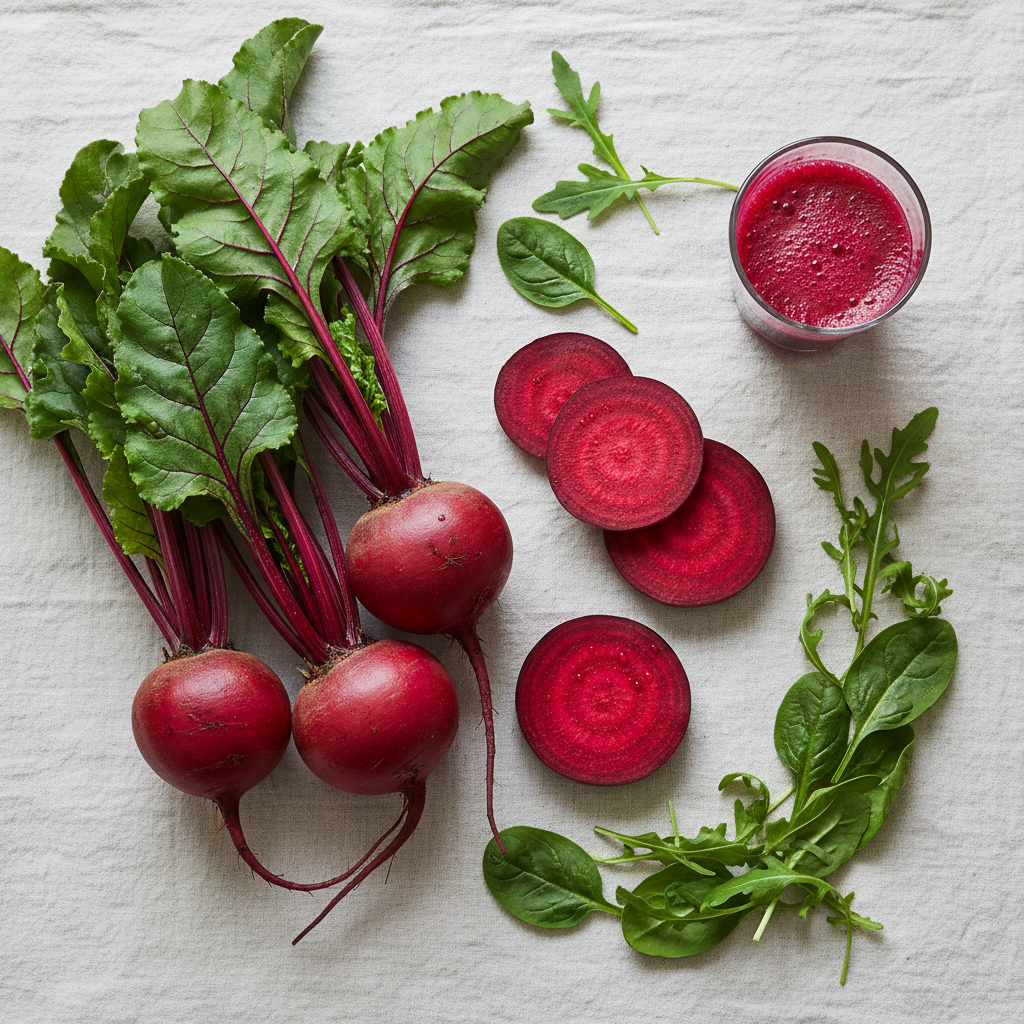
- Beetroot is not the only nitrate-rich option — spinach, rocket, fennel, celery, and kale contain comparable nitrate levels.
- The effect is specific to older adults with elevated blood pressure at baseline — not a general cardiovascular intervention for all ages.
The Oral Microbiome Mechanism: Why It Matters
The conventional understanding of beetroot juice's cardiovascular benefits focused on dietary nitrate being absorbed in the stomach and small intestine, converted in the body to nitric oxide, and thereby relaxing blood vessels. This model suggested the gut was the primary site of action.
The University of Exeter research tells a more precise story. An imbalance between beneficial and harmful oral bacteria can decrease the conversion of nitrate — abundant in vegetable-rich diets — to nitric oxide. Nitric oxide is key to healthy functioning of the blood vessels, and therefore the regulation of blood pressure.
The pathway works as follows. Dietary nitrate consumed from beetroot juice or other nitrate-rich vegetables is initially absorbed in the upper digestive tract and then concentrated in saliva. Bacteria on the tongue and in the oral cavity convert this salivary nitrate to nitrite. The nitrite is swallowed and further converted to nitric oxide in the stomach and bloodstream. This enterosalivary cycle — in which the mouth plays a critical role in processing dietary nitrate — is the mechanism through which beetroot juice produces its cardiovascular effects.
The implications are direct. If the oral microbiome is disrupted — through antibacterial mouthwash, antibiotic use, or age-related microbial shifts — the conversion of nitrate to nitrite in the mouth is impaired, and the downstream blood pressure benefit is reduced or eliminated.
A 2026 pilot study highlighted the importance of the mouth in nitrate biology and confirmed that the oral microbiome is the critical variable in whether dietary nitrate produces meaningful cardiovascular effects. Research has shown that twice-daily antibacterial mouthwash use eliminates the blood pressure benefit of a high-nitrate diet in healthy adults — a finding that has direct practical relevance for anyone using commercial mouthwash while also consuming beetroot juice for its cardiovascular effects.
The University of Exeter Trial: What It Found
The University of Exeter study, published in Free Radical Biology and Medicine, is the largest study of its kind and the most methodologically rigorous examination of the age-specific effects of dietary nitrate on blood pressure.
Researchers at the University of Exeter conducted the study, comparing responses between a group of older adults to that of younger adults. When the older adults drank a concentrated beetroot juice shot twice a day for two weeks, their blood pressure decreased — an effect not seen in the younger group. The trial recruited 39 adults aged under 30 and 36 adults in their 60s and 70s through the NIHR Exeter Clinical Research Facility.
The older adults experienced an average reduction in blood pressure of approximately 7mmHg — a clinically meaningful reduction. For context, a sustained 5mmHg reduction in systolic blood pressure is associated with a 14% reduction in stroke risk and a 9% reduction in coronary heart disease risk. The 7mmHg reduction observed in the Exeter trial, if sustained through consistent dietary nitrate intake, would represent a meaningful cardiovascular risk reduction.
Using gene sequencing, researchers observed that beetroot consumption reduced levels of certain bacteria associated with inflammation and elevated blood pressure, including Prevotella, while increasing beneficial nitrate-converting bacteria such as Neisseria. These bacterial shifts improved nitric oxide availability, which corresponded with the observed drop in blood pressure.
The younger adults showed oral microbiome changes after consuming the beetroot juice — but these changes were different in character from those in the older group, and did not translate into measurable blood pressure reduction. The Exeter team concluded that the blood pressure response depends on the starting point: older adults with higher baseline blood pressure and altered oral microbiomes respond to dietary nitrate in ways that younger adults with healthy nitric oxide production and different baseline microbiomes do not.
Why Older Adults Specifically
The age-specificity of the beetroot juice blood pressure effect reflects two converging biological realities of ageing.
Professor Anni Vanhatalo of the University of Exeter said: "We know that a nitrate-rich diet has health benefits, and older people produce less of their own nitric oxide as they age. They also tend to have higher blood pressure, which can be linked to cardiovascular complications like heart attack and stroke."
The first reality is declining endogenous nitric oxide production. Nitric oxide is synthesised by endothelial cells lining blood vessels through an enzyme-dependent pathway. This pathway becomes less efficient with age — producing lower baseline nitric oxide availability, less vascular relaxation, and higher resting blood pressure. Dietary nitrate through the oral microbiome pathway provides an alternative, enzyme-independent route to nitric oxide production that partially compensates for this age-related decline.
The second reality is the age-related shift in oral microbiome composition. The balance between nitrate-converting bacteria and harmful bacteria in the mouth changes with age — influenced by dietary patterns, medication use, dental health, and general immune changes. When this balance shifts unfavourably, the oral pathway for converting dietary nitrate to nitrite becomes less efficient. Beetroot juice appears to temporarily restore a more favourable bacterial balance by suppressing Prevotella — a genus associated with inflammation and cardiovascular risk — and increasing Neisseria, which actively participates in the nitrate-to-nitrite conversion.
The Mouthwash Warning
The most practically important finding from the broader dietary nitrate research literature is the mouthwash interaction — and it is one that most people consuming beetroot juice for cardiovascular benefit are unaware of.
Antibacterial mouthwashes — including chlorhexidine-based products and alcohol-containing commercial mouthwashes — kill the oral bacteria that are responsible for converting dietary nitrate to nitrite. Research has consistently shown that twice-daily antibacterial mouthwash use eliminates or substantially reduces the blood pressure-lowering effect of a high-nitrate diet.
The mechanism is straightforward: the beneficial bacteria that process dietary nitrate in the mouth are bacteria, and antibacterial agents cannot selectively spare them. Regular mouthwash users who are consuming beetroot juice for cardiovascular benefit may be simultaneously consuming the product that converts dietary nitrate to nitric oxide and using a product that destroys the oral bacteria responsible for that conversion.
This does not mean abandoning dental hygiene. It means understanding that mechanical oral hygiene — brushing, flossing — does not carry this risk, while antibacterial mouthwash use specifically interferes with the nitrate-nitric oxide pathway. For those using mouthwash as a standard part of their oral hygiene routine, this is worth discussing with a dentist.
Other Nitrate-Rich Foods
Beetroot juice has become the default vehicle for dietary nitrate supplementation — but it is not the only or necessarily the most practical option for consistent intake.
Professor Vanhatalo noted: "If you don't like beetroot, there are many nitrate-rich alternatives like spinach, rocket, fennel, celery and kale."
The nitrate content of vegetables varies considerably by part of the plant, growing conditions, and preparation method. Leafy greens — particularly rocket, spinach, and Swiss chard — are among the highest dietary nitrate sources available. Fennel and celery are moderate sources. Cooking reduces nitrate content modestly; raw or lightly cooked vegetables preserve more.
Beetroot juice concentrates have become popular because they provide a standardised, measurable dose of nitrate in a convenient form — the concentrated shots used in research typically contain 400 to 500mg of nitrate. Achieving equivalent nitrate intake from whole vegetables requires more planning but is nutritionally preferable given the additional fibre, polyphenols, and micronutrients whole vegetables provide. For more on why most of us still fall short, see Why Most of Us Aren't Getting Enough Fibre — and How to Fix It.
What This Does Not Show
The counterintuitive finding — that beetroot juice lowers blood pressure in older but not younger adults — is worth taking seriously as a qualifier on the broader claims made for beetroot juice.
The evidence does not support beetroot juice as a general cardiovascular intervention for all ages. It does not show meaningful blood pressure reduction in younger adults without elevated blood pressure at baseline. The evidence for athletic performance benefits — which has driven considerable commercial interest in beetroot juice products — operates through different mechanisms and involves different populations than the blood pressure research.
A 2025 randomised, double-blind, placebo-controlled crossover study of older adults with treated high blood pressure found that beetroot juice selectively changed the oral microbiome but did not produce sustained improvements in blood pressure in that specific treated hypertension group — suggesting that the response depends on health status, medications, baseline microbiome composition, and study design. The effect is real for untreated or mildly elevated blood pressure in otherwise healthy older adults. It is not universally applicable.
Frequently Asked Questions
Does beetroot juice lower blood pressure?
In older adults with elevated blood pressure at baseline, yes — a University of Exeter randomised trial found an average reduction of approximately 7mmHg following two weeks of concentrated beetroot juice consumption. The effect was not seen in younger adults. The mechanism involves the oral microbiome converting dietary nitrate to nitrite, which is then converted to nitric oxide in the bloodstream — relaxing blood vessel walls and reducing blood pressure.
Why does beetroot juice lower blood pressure in older adults but not younger?
Two reasons. First, older adults produce less of their own nitric oxide through the enzyme-dependent pathway — making the dietary nitrate route through the oral microbiome proportionally more important. Second, the oral microbiome in older adults typically shows a shift toward bacteria less efficient at nitrate conversion, which beetroot juice consumption appears to partially correct by suppressing harmful bacteria including Prevotella and increasing beneficial nitrate-converting bacteria including Neisseria.
Does mouthwash affect the blood pressure benefits of beetroot juice?
Yes — antibacterial mouthwash use kills the oral bacteria responsible for converting dietary nitrate to nitrite, which is the first step in the pathway through which beetroot juice produces its blood pressure effects. Research has shown that twice-daily antibacterial mouthwash use can eliminate the cardiovascular benefit of a high-nitrate diet. Mechanical dental hygiene — brushing and flossing — does not carry this risk.
What is the nitrate-nitric oxide pathway?
Dietary nitrate consumed from vegetables is absorbed, concentrated in saliva, and converted to nitrite by bacteria in the mouth. This nitrite is swallowed and further converted to nitric oxide in the stomach and bloodstream. Nitric oxide relaxes blood vessel walls and reduces blood pressure. This enterosalivary pathway — in which the oral microbiome plays a critical role — explains both the cardiovascular benefits of nitrate-rich vegetables and why antibacterial mouthwash can eliminate those benefits.
Is beetroot the only nitrate-rich food?
No — spinach, rocket, fennel, celery, kale, and Swiss chard are all high in dietary nitrate. Rocket and spinach are among the most concentrated sources available from whole foods. Consuming a variety of nitrate-rich vegetables provides additional benefits — fibre, polyphenols, and micronutrients — beyond what concentrated beetroot juice shots deliver.
Should I take beetroot juice for my blood pressure?
If you are an older adult with mildly elevated blood pressure and are not using antibacterial mouthwash, the evidence from the University of Exeter trial supports twice-daily concentrated beetroot juice as a meaningful dietary intervention. It is not a replacement for prescribed blood pressure medication. For younger adults without elevated blood pressure at baseline, the blood pressure evidence does not support a specific recommendation. Discuss with your GP before making changes to blood pressure management.
The Bottom Line
The beetroot juice blood pressure story is more specific — and more interesting — than the general wellness narrative around it suggests. It is not a universal cardiovascular superfood. It is a dietary nitrate source that produces meaningful blood pressure reduction in older adults through an oral microbiome mechanism that younger adults do not rely on to the same degree.
The practical implications are precise. Older adults with mildly elevated blood pressure who consume concentrated beetroot juice twice daily — and who are not simultaneously using antibacterial mouthwash — are likely to see a meaningful blood pressure benefit. The same intervention in a younger adult with normal blood pressure is unlikely to produce the same result.
The broader lesson applies beyond beetroot juice: the gut microbiome gets most of the attention in nutrition research, but the oral microbiome is increasingly recognised as a critical determinant of how dietary compounds are processed — and how effectively they produce their intended effects.
For the dietary diversity foundations that support both the oral and gut microbiomes, the Gut Reset from the Reset Series™ covers the plant food variety and fibre intake that determines the microbial environment in which dietary nitrate is processed.