Blog · Nutrition & Diet
Why Water Alone Isn't Enough in the Heat
By Vitae Team ·
Drinking water without replacing electrolytes can make dehydration worse — not better. A December 2025 study found agricultural workers in Mediterranean heat lost 4,932mg of sodium per day, with hyponatremia a real risk from water-only rehydration.
Drinking water in the heat is essential. Drinking only water — without replacing the electrolytes lost through sweating — can make dehydration worse rather than better. Here's what the evidence shows about what the body actually loses in hot weather, and what to do about it.
The standard advice for hot weather is to drink plenty of water. It is correct as far as it goes — dehydration in the heat is a genuine and serious risk. But it is incomplete in a way that matters, particularly for anyone spending extended time in a hot climate, exercising outdoors in summer, or travelling to a country where temperatures are significantly higher than those they are accustomed to.
The body does not lose water in isolation when it sweats. It loses water and electrolytes simultaneously — and replacing only the water without replacing the electrolytes produces a physiological imbalance that the body cannot self-correct by drinking more water. In some cases, drinking large amounts of water without electrolyte replacement actively worsens the situation.
TL;DR
Sweat contains water, sodium, chloride, potassium, magnesium, and calcium — not just water. Replacing fluid without replacing electrolytes creates an imbalance the body cannot correct by drinking more.
A December 2025 study published in Healthcare examined agricultural workers exposed to extreme Mediterranean heat over nine consecutive days. Participants lost an average of 3.91 litres of sweat per day, with sodium losses of 4,932mg and potassium losses of 646mg — losses that water alone cannot replace.
Hyponatremia — dangerously low blood sodium caused by drinking large volumes of water without sodium replacement — is more common in hot conditions than most people realise. Symptoms include nausea, headache, confusion, and in severe cases seizure and coma. It is occasionally fatal.
Thirst is not a reliable indicator of electrolyte status. You can feel adequately hydrated while being significantly depleted in sodium, potassium, or magnesium.
The most important electrolyte in hot weather is sodium — it regulates fluid balance, nerve conduction, and muscle contraction. The body cannot retain water without adequate sodium.
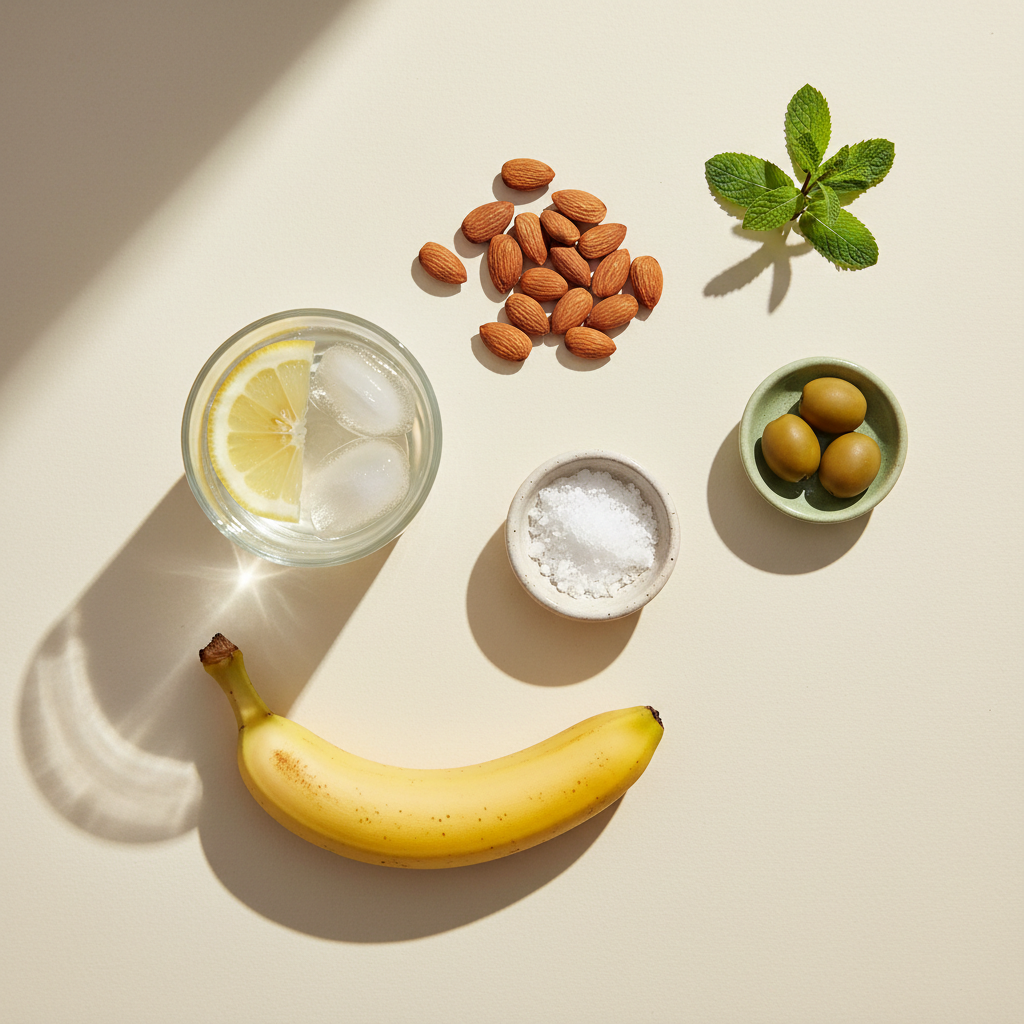
Food is the most effective and most underrated electrolyte source — salty foods, bananas, nuts, dairy, and leafy greens provide the full electrolyte profile that most commercial drinks replicate only partially.
Commercial electrolyte drinks vary enormously. Many contain too much sugar and too little sodium to be effective for heat stress. The evidence-based formulation for non-exercising individuals in heat is different from the sports drink formulation designed for athletes.
What Sweat Actually Contains
Sweat is not simply water with a little salt in it.
The composition of sweat reflects the body's attempt to regulate temperature while losing the minimum possible amount of essential minerals. The primary components are water and sodium chloride — but sweat also contains potassium, magnesium, calcium, zinc, and various other trace minerals in amounts that vary significantly between individuals, exercise intensity, heat acclimatisation status, and diet.
Sodium is the dominant electrolyte in sweat — typically 400 to 2,000mg per litre, with significant individual variation. Potassium is present at lower concentrations — typically 150 to 400mg per litre. Magnesium and calcium are present in smaller amounts. The total mineral loss from sustained sweating in heat is considerable, and it accumulates across hours and days in a way that a single glass of water does not address.
The December 2025 study published in Healthcare, which tracked agricultural workers exposed to extreme heat across the Mediterranean over nine consecutive days, quantified this precisely. Participants lost an average of 3.91 litres of sweat per day — with a range of 1.9 to 6.4 litres reflecting the significant individual variation in sweat rate. Sodium losses averaged 4,932mg per day. Potassium losses averaged 646mg per day. These figures represent the actual electrolyte burden of sustained heat exposure in real-world outdoor conditions — and they substantially exceed what most people replace through normal eating and drinking when the heat reduces appetite.
The Hyponatremia Risk: The Most Counterintuitive Finding
The most important and least understood risk of heat exposure is not dehydration from insufficient fluid intake. It is hyponatremia — low blood sodium — from drinking large volumes of water without adequate sodium replacement.
Sodium regulates the osmotic balance between intracellular and extracellular fluid. When blood sodium falls below normal — whether through sodium loss via sweating or through dilution from drinking large amounts of low-sodium fluid — the body cannot maintain this balance. Water moves into cells to equalise the osmotic gradient, causing them to swell. In the brain, this swelling produces the symptoms of hyponatremia: nausea, headache, confusion, disorientation, and in severe cases seizures, coma, and death.
Hyponatremia is better known as a risk in endurance sport — marathon runners and triathletes who drink excessive amounts of water during prolonged exertion are a well-established at-risk group. But it also occurs in non-exercising individuals in sustained heat — particularly older adults, those with kidney conditions affecting fluid regulation, and anyone drinking large volumes of water over extended periods in hot conditions without eating adequately.
The hydration needs of people passively undergoing the influence of environmental heat are different from those of people exercising in the heat — a distinction that most hydration guidance does not make. Passive heat exposure produces lower sweat rates than exercise but sustained sodium loss over longer periods. The electrolyte formulation appropriate for passive heat stress differs from the sports drink formulation designed for athletes — specifically requiring relatively reduced sodium supplementation compared to sports drinks, increased potassium, and increased magnesium.
What Each Electrolyte Does
Understanding what each electrolyte does explains why each matters in hot weather and why the combination is more important than any single one.
Sodium is the primary regulator of fluid balance in the body. It determines how much water the kidneys retain and how much they excrete. Without adequate sodium, the body cannot retain fluid effectively — drinking water in the absence of sodium leads to increased urine output rather than rehydration. Sodium also regulates nerve impulse transmission and muscle contraction. The fatigue, weakness, and cramping associated with heat stress are partly sodium depletion effects.
Potassium works in concert with sodium across cell membranes — the sodium-potassium pump that maintains the electrical gradient required for nerve and muscle function depends on both. Potassium deficiency produces muscle weakness, fatigue, cardiac arrhythmia in severe cases, and the particular heaviness that many people experience in sustained heat. Potassium is found in high concentrations inside cells rather than in blood — which means blood tests do not reliably reflect total body potassium status, and depletion can occur before it is measurable.
Magnesium is involved in over 300 enzymatic reactions including energy production, protein synthesis, and muscle and nerve function. It is lost in sweat in smaller amounts than sodium but is frequently already insufficient in people eating Western diets. Magnesium deficiency exacerbates muscle cramping, disrupts sleep — relevant for hot nights — and impairs the glucose metabolism that heat stress already challenges.
Calcium regulates muscle contraction and nerve signalling alongside sodium and potassium. It is lost in sweat in modest amounts. Sustained heat exposure without adequate calcium replacement can contribute to the muscular fatigue and weakness that heat stress produces.
Food: The Underrated Electrolyte Source
The electrolyte drink market has expanded considerably on the back of genuine consumer awareness of electrolyte needs — but it has also produced a commercial category in which many products are not particularly effective for their stated purpose.
Food is the most complete and most bioavailable source of electrolytes available, and it is significantly underutilised by most people managing heat hydration. The appetite suppression that heat produces — a real physiological effect of elevated core temperature on hypothalamic appetite signals — means that people in hot conditions often eat less than they would at cooler temperatures, precisely when electrolyte intake from food matters most.
The most useful foods for electrolyte replacement in heat:
Sodium — salted nuts, olives, pickles, miso, cheese, anchovies, and most savoury foods containing salt. A small handful of salted nuts alongside water provides meaningful sodium replacement. In hot countries, the traditional foods of the local cuisine — typically saltier and more mineral-rich than the tourist diet of salads and smoothies — often reflect generations of adaptation to the heat.
Potassium — bananas, avocado, sweet potato, spinach, white beans, and dairy. A banana provides approximately 420mg of potassium. An avocado provides approximately 700mg. These are practical and accessible sources in most hot destinations.
Magnesium — dark chocolate, nuts, seeds, leafy greens, and whole grains. Almonds provide approximately 80mg per 30g serving. Dark chocolate provides approximately 64mg per 30g. Both travel well and require no refrigeration.
Calcium — dairy, fortified plant milks, sardines, tofu, and leafy greens. The tourist diet in hot countries frequently reduces dairy intake — a practical source of calcium that is worth maintaining.
What to Look for in an Electrolyte Drink
Commercial electrolyte drinks vary enormously in their formulation — from products that are essentially flavoured water with trace minerals to clinically formulated rehydration solutions designed for heat stress and illness.
The most commonly cited problems with commercial electrolyte drinks for heat use are too much sugar, which delays gastric emptying and slows absorption, and too little sodium — many products contain 200 to 400mg of sodium per serving, which is insufficient to replace meaningful sweat losses in sustained heat.
For non-exercising individuals in hot conditions, the evidence-based electrolyte formulation differs from the sports drink designed for endurance athletes. Sodium remains the priority but at lower concentrations than sports drinks — which are designed for high sweat rates during exercise. Potassium should be relatively higher. Magnesium is specifically relevant for passive heat stress. Sugar should be minimal — carbohydrate loading is not necessary for hydration in the absence of exercise.
Oral rehydration solutions — such as those used medically for illness-related dehydration — are better calibrated for heat stress than most sports drinks. Coconut water provides a moderate potassium source with low sugar, though its sodium content is too low for standalone heat rehydration. Milk — counterintuitively — is one of the most effective rehydration beverages identified in research, providing sodium, potassium, calcium, and protein alongside fluid.
The honest caveat: for most people in most hot conditions — a beach holiday, a city break, outdoor dining in summer — eating normally, including salty foods, and drinking water throughout the day is sufficient. The specific need for electrolyte supplementation increases with exercise, very high temperatures, heavy sweating, and reduced food intake.
Frequently Asked Questions
Why is water alone not enough in hot weather? Sweat contains sodium, potassium, magnesium, calcium, and chloride as well as water. Replacing fluid without replacing electrolytes creates an imbalance the body cannot correct by drinking more. In some cases — particularly with large volumes of water and very low sodium intake — drinking water without electrolytes can actively worsen the situation by diluting blood sodium.
What is hyponatremia and can it happen on holiday? Hyponatremia is dangerously low blood sodium — caused either by excessive sodium loss through sweating or by dilution from drinking large volumes of low-sodium fluid. Symptoms include nausea, headache, confusion, and in severe cases seizure and coma. It is better known as a risk in endurance sport but also occurs in non-exercising individuals in sustained heat, particularly older adults and those drinking large amounts of water without eating adequately.
What are the best foods for electrolytes in hot weather? Sodium: salted nuts, olives, cheese, and most savoury foods. Potassium: bananas, avocado, sweet potato, and white beans. Magnesium: almonds, dark chocolate, and leafy greens. Calcium: dairy, sardines, and tofu. Eating the local food in hot countries — typically saltier and more mineral-rich than the tourist diet — is one of the most practical electrolyte strategies available.
How much do you sweat in hot weather? Significantly more than most people assume. A December 2025 study of agricultural workers in extreme Mediterranean heat found average daily sweat losses of 3.91 litres — with a range of 1.9 to 6.4 litres — and average sodium losses of 4,932mg per day. Physical activity substantially increases these figures. Even passive heat exposure produces sustained mineral loss that accumulates across hours and days.
Are electrolyte drinks worth buying for holidays? For most people on a typical holiday — eating normally, not exercising heavily — food and water are sufficient if salty foods are included in the diet. The need for electrolyte supplementation increases with heavy exercise, very high temperatures, reduced appetite, and heavy sweating. When supplementation is warranted, look for products with meaningful sodium content — at least 500mg per serving — minimal sugar, and potassium and magnesium alongside sodium.
Can you drink too much water in hot weather? Yes — drinking very large volumes of water without adequate sodium replacement can dilute blood sodium to dangerous levels, a condition called hyponatremia. This is rare in normal holiday conditions but has occurred in individuals who drink excessive water in sustained heat without eating adequately. Thirst is generally a reliable guide to fluid intake — drinking beyond thirst, particularly without food, is the main risk factor.
The Bottom Line
Hydration in hot weather is not simply about fluid volume. It is about fluid and electrolytes together — and the ratio between them matters as much as the total amount consumed.
Sodium is the priority: without adequate sodium, the body cannot retain water effectively and the risk of both dehydration and hyponatremia increases. Potassium, magnesium, and calcium are the supporting cast — each with specific functions that heat stress challenges and sustained sweating depletes.
The practical approach is simpler than the biochemistry suggests. Eat salty foods alongside water. Maintain a normal varied diet even when the heat suppresses appetite. Add an electrolyte supplement when exercising or sweating heavily. Choose local food in hot countries rather than retreating to familiar tourist options — it is usually better calibrated to the climate than you are.
For the gut health foundations that determine how efficiently electrolytes and fluids are absorbed — and that travel and heat stress together disrupt — the Gut Reset from the Reset Series™ covers the dietary diversity and intestinal integrity that underpin effective hydration as much as electrolyte intake itself.