Blog · Nutrition & Diet
Jamu: The Traditional Indonesian Remedy Going Global — What It Is and Whether It Works
By Vitae Team ·
Jamu is a traditional Indonesian herbal drink gaining global attention. Here's what it is, what's in it, what the science actually shows — and how to make it at home.
Across Indonesia, jamu is not a trend.
It is part of daily life — prepared fresh, often by hand, consumed as routine rather than remedy. Jamu sellers, known as Mbok Jamu, are common in Indonesian cities and villages, carrying bamboo baskets filled with colourful bottles of herbal drinks — women who learned about jamu from their mothers and grandmothers, keeping the tradition alive across generations.
More recently, jamu has begun appearing far beyond Indonesia — in wellness cafés, Bali juice bars, and social media feeds — framed as a natural solution for inflammation, gut health, and energy. In December 2023, jamu wellness culture was officially recognised as UNESCO Intangible Cultural Heritage of Indonesia, a distinction that reflects both its cultural depth and the global attention it has attracted.
The appeal is obvious. The reality is more measured. Here is what the science actually shows.
TL;DR
- Jamu is not a single drink but a broad system of traditional Indonesian herbal preparations, each formulated for a specific purpose.
- Indonesia has approximately 7,000 medicinal plant species, and jamu draws on this extraordinary botanical diversity — with recipes varying by region, purpose, and family tradition.
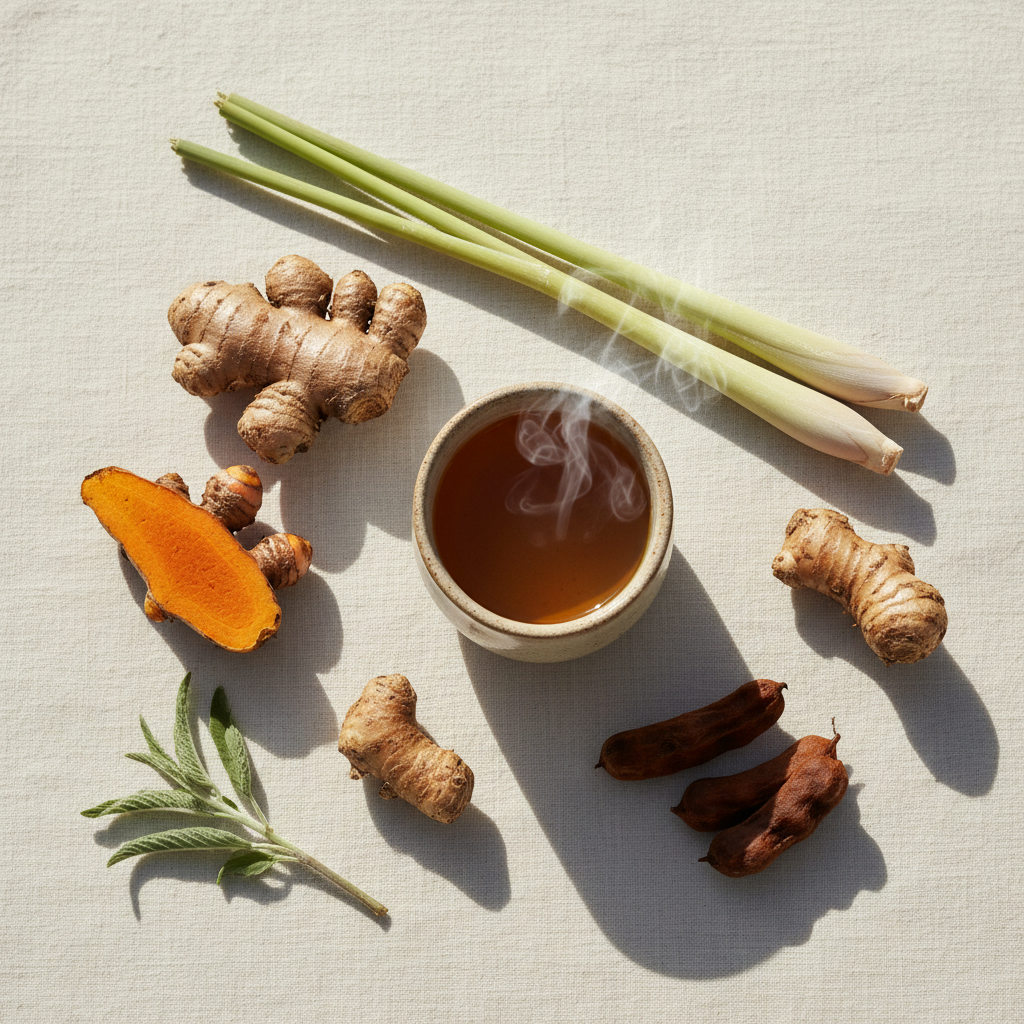
- Core ingredients — turmeric, ginger, tamarind, galangal, lemongrass — each have evidence for specific effects including anti-inflammatory, digestive, and antioxidant activity.
- Benefits are gradual and depend on consistency. Jamu is not a targeted treatment.
- You can make the most common version, kunyit asam, at home in under 30 minutes.
- The bioavailability of key compounds matters — and most Western adaptations miss this.
What Jamu Actually Is
Jamu is the Indonesian traditional herbal medicine that has been practised for many centuries in the Indonesian community to maintain good health and to treat diseases. The word jamu is of Javanese origin, deriving from the Javanese words for "Javanese" and "mixing or gathering ingredients" — roughly translating as "concoction made by the Javanese."
Jamu's history is rooted more than a thousand years ago in the royal courts and rural villages of Java. Archaeological discoveries at ninth-century temples in Central Java show its usage as a herbal remedy to maintain both mental and physical wellbeing.
It is not standardised. The recipes of jamu are mostly unwritten, passed orally through generations, with many areas in Indonesia developing their own adapted versions based on the availability of natural ingredients in their surroundings.
This is important to understand before evaluating any health claims around it. Jamu is a category — like soup, or tea — not a formula. Different preparations target different concerns, and the variation between them is significant.
The Most Common Types of Jamu
The most popular Indonesian traditional herbal drinks include kunyit asam, beras kencur, sinom, wedang uwuh, wedang jahe, and wedang pokak — each highlighting different bioactive compounds such as curcumin, gingerol, and brazilin, known for their antioxidant and anti-inflammatory properties.
Kunyit Asam — the most widely known outside Indonesia. A bright yellow drink combining turmeric and tamarind, traditionally used to support digestion, ease menstrual discomfort, and reduce inflammation. This is the version most commonly found in Western wellness cafés and the one most people mean when they say "jamu."
Beras Kencur — a creamy, earthy preparation made from rice and kencur (lesser galangal), traditionally used for energy and appetite. Often given to children or people recovering from illness. Mild and slightly sweet.
Wedang Jahe — a warming ginger-based drink, served hot. Widely consumed during cold weather and illness. The simplest and most accessible of the common preparations, with strong evidence behind its primary ingredient.
Sinom — a cooling, slightly bitter preparation made from young tamarind leaves. Refreshing and traditionally served chilled, particularly during hot weather.
Wedang Uwuh — a more complex spiced preparation including cloves, cinnamon, ginger, and secang wood, which gives it a distinctive reddish colour. Richer and more warming than the others.
What the Ingredients Are Actually Doing
While jamu preparations vary considerably, their core components are well understood from a pharmacological perspective.
Turmeric and Curcumin
Turmeric is the defining ingredient of kunyit asam and the compound most associated with jamu in global wellness culture. Its active compound, curcumin, has been extensively studied for anti-inflammatory and antioxidant effects — and the evidence is genuinely interesting, though often overstated in popular media.
Curcumin inhibits several inflammatory pathways including NF-κB, a key regulator of immune response and chronic inflammation. Multiple randomised controlled trials have shown meaningful effects on inflammatory markers in conditions including osteoarthritis, metabolic syndrome, and inflammatory bowel disease.
The critical caveat: curcumin has notoriously poor bioavailability in isolation. It is rapidly metabolised and poorly absorbed from the gut, meaning that large quantities consumed without anything to enhance absorption produce relatively little effect at the tissue level. Traditional jamu preparations address this in ways that most Western adaptations miss entirely — which is discussed in more detail in the bioavailability section below.
Ginger and Gingerol
Ginger is one of the best-evidenced botanical ingredients in human nutrition research. Its active compounds — gingerols and shogaols — have well-established anti-nausea effects, meaningful support for digestive function and gut motility, and anti-inflammatory activity that complements turmeric's mechanisms.
Multiple meta-analyses have confirmed ginger's efficacy for pregnancy-related nausea, chemotherapy-induced nausea, and postoperative nausea — the strongest evidence base of any of the core jamu ingredients. Evidence for digestive support and pain relief in conditions including dysmenorrhoea is also reasonably well established.
Tamarind
Less studied than turmeric and ginger, but with a long history of use for digestive support. Tamarind contains tartaric acid, which contributes to its distinctive sour flavour and has mild antioxidant properties. It also provides potassium and B vitamins in meaningful quantities, which partly explains the traditional association with energy support.
Galangal and Lemongrass
Both are aromatic rhizomes with anti-inflammatory and antimicrobial properties in preliminary research. The evidence base is considerably smaller than for turmeric and ginger, but both ingredients contribute bioactive compounds including flavonoids and terpenoids to traditional preparations.
The Bioavailability Problem — and How Jamu Solves It
This is the aspect of jamu that most Western adaptations miss, and it matters considerably for whether the drink actually works.
Curcumin — turmeric's active compound — has a bioavailability problem. On its own, it is poorly absorbed from the gut, rapidly metabolised, and quickly eliminated. Studies have shown that the plasma concentration of curcumin after oral consumption is extremely low without something to enhance its absorption.
The solution used in pharmaceutical research is piperine — a compound found in black pepper — which increases curcumin bioavailability by approximately 2,000% by inhibiting the enzymes responsible for its rapid metabolism. Traditional Indonesian jamu preparations frequently include black pepper, both as a flavour component and — presumably through accumulated empirical observation over generations — as an absorption enhancer.
Similarly, fat increases curcumin absorption, as it is lipophilic. Some traditional jamu preparations include coconut milk or are consumed alongside meals, which supports bioavailability.
The practical implication: jamu made simply with turmeric and water, as many commercial preparations are, will deliver considerably less active curcumin than the same preparation with black pepper and a source of dietary fat. The traditional version is pharmacologically smarter than most modern adaptations.
How to Make Jamu Kunyit Asam at Home
Kunyit asam is the most accessible starting point and the version with the strongest evidence base behind its primary ingredients. This recipe follows the traditional preparation described in a 2025 Springer review of jamu compositions.
Ingredients (makes 4 to 6 servings):
- 100g fresh turmeric root, peeled (or 2 tablespoons turmeric powder as a substitute)
- 30g fresh ginger root, peeled
- 10g tamarind paste
- 25g pandan leaves, tied in a knot (optional but traditional)
- 1 litre water
- 2 tablespoons honey or palm sugar, to taste
- ¼ teaspoon black pepper (essential for bioavailability — do not omit)
- Juice of half a lime
Method:
- Blend the turmeric and ginger with 200ml of the water until smooth.
- Transfer to a saucepan with the remaining water, tamarind paste, pandan leaves, and black pepper.
- Bring to a gentle simmer and cook for 20 minutes, stirring occasionally.
- Remove from heat, allow to cool slightly, then strain through a fine mesh sieve or muslin cloth.
- Stir in honey or palm sugar and lime juice to taste.
- Serve hot or allow to cool and refrigerate for up to five days.
Practical notes:
Fresh turmeric will stain surfaces, hands, and clothing permanently. Use gloves and be cautious. Turmeric powder is a viable substitute — use approximately one teaspoon per 30g of fresh root. The drink can be batch-prepared and refrigerated, which makes daily consumption considerably easier to sustain.
Why Consistency Matters More Than Potency
Jamu's approach to health is fundamentally different from the Western supplement model, which tends toward high-dose, isolated compounds taken intermittently.
Jamu works because it is consistent, not because it is trendy. Like stretching, flossing, or showing up to therapy — it is a habit.
The bioactive compounds in turmeric, ginger, and the other core ingredients accumulate effects over time rather than producing immediate, dramatic changes. Research on curcumin and gingerol consistently shows that meaningful effects on inflammatory markers require weeks to months of regular consumption, not single doses.
This also means that the ritual aspect of jamu — the fact that it is consumed daily, often at the same time, as part of a deliberate health routine — contributes to its effectiveness independently of the specific pharmacology. Hydration, regular herbal intake, and the psychological benefits of a consistent daily practice all compound over time.
Jamu vs Other Trending Wellness Drinks
Jamu is often compared to golden milk, turmeric shots, and adaptogen lattes. The differences are meaningful.
Golden milk — a Western adaptation of Indian haldi doodh — typically combines turmeric with warmed milk and spices. The fat content of milk improves curcumin bioavailability, making it pharmacologically reasonable. The addition of black pepper makes it more so. Golden milk is essentially a dairy-based approximation of one element of jamu.
Turmeric shots — typically high-dose turmeric in a small volume of juice, often without black pepper or fat. Visually striking and popular in wellness cafés, but likely delivering less bioavailable curcumin than a properly prepared jamu with black pepper included.
Adaptogen lattes — mushroom or ashwagandha-based drinks targeting stress and energy. Different mechanisms and different ingredients from jamu, though the daily ritual logic is similar.
Kombucha — fermented tea with a microbiome angle. Entirely different mechanism from jamu, though both are positioned as daily gut-support habits.
Jamu's advantage over most of these is breadth: a well-made kunyit asam delivers anti-inflammatory, digestive, antioxidant, and mild circulatory support from multiple ingredients working together, rather than the single-ingredient focus of most commercial wellness drinks.
What Jamu Won't Do
As jamu has gained global visibility, the claims around it have expanded beyond what the evidence supports. It is sometimes positioned as a detox, a weight-loss aid, or a cure for chronic conditions. None of these framings are accurate.
As Indonesia's National Food and Drug Agency has noted, jamu represents local wisdom supported by scientific research — but the agency also stresses the need for rigorous clinical trials to bridge traditional use with modern medical standards.
The biological activity ascribed to jamu is largely based on empirical data passed through generations, and more research is needed to scientifically prove efficacy and assure safety at a clinical level.
Jamu is not a medical treatment and does not replace one. It operates at lower intensity — supporting digestion, general inflammation balance, and daily routine — but is unlikely to produce dramatic outcomes in isolation. Its value is as a consistent, low-friction daily habit rather than a targeted intervention.
One practical safety note: reports of adulterated jamu products containing undisclosed pharmaceutical ingredients — including NSAIDs and corticosteroids — have been documented internationally. When purchasing commercial jamu products rather than making your own, buy from reputable brands with transparent ingredient lists and third-party testing where available.
Frequently Asked Questions
What is jamu and where does it come from?
Jamu is a traditional Indonesian herbal medicine system with over a thousand years of history, originating in the royal courts and villages of Java. It refers to a broad category of herbal preparations — not a single drink — each formulated from combinations of plants including turmeric, ginger, tamarind, galangal, and lemongrass for specific health purposes. In 2023 it was officially recognised as UNESCO Intangible Cultural Heritage of Indonesia.
What does jamu taste like?
Kunyit asam — the most common type — is earthy, slightly bitter, tangy from the tamarind, and warming from the ginger, with a gentle sweetness from honey or palm sugar. It is distinctive but not unpleasant. The flavour is considerably more complex than a standard turmeric shot. Served chilled, it is refreshing. Served warm, it is comforting. Most people find it easier to drink than they expect.
What are the health benefits of jamu?
The core health benefits associated with regular jamu consumption — particularly kunyit asam — include anti-inflammatory support from curcumin and gingerol, digestive support from ginger and tamarind, antioxidant activity from multiple ingredients, and mild immune support. These effects are gradual and cumulative rather than immediate. Jamu is not a treatment for any specific condition but supports general health as part of a consistent daily routine.
How do you make jamu at home?
The most accessible version is kunyit asam: blend 100g fresh turmeric and 30g ginger with a small amount of water, then simmer with the remaining water, tamarind paste, pandan leaves, black pepper, and honey for 20 minutes. Strain and serve hot or cold. The black pepper is essential — it increases curcumin absorption by approximately 2,000% and should not be omitted. The drink keeps refrigerated for up to five days.
Is jamu the same as a turmeric shot?
No. Turmeric is one component of jamu, and a turmeric shot is a simplified, high-dose extraction of a single ingredient. Traditional jamu combines multiple ingredients working together — turmeric, ginger, tamarind, black pepper, and others — which produce broader and more bioavailable effects than isolated turmeric alone. Many commercial turmeric shots also omit black pepper, which significantly reduces curcumin absorption.
How often should you drink jamu?
Traditionally, jamu is consumed daily — often in small amounts at the same time each day. This consistency is considered more important than the dose. Most research on the active compounds in jamu shows that effects accumulate over weeks and months of regular consumption rather than producing immediate results from occasional use.
Are there any side effects or risks?
At normal culinary doses, jamu ingredients are well tolerated by most adults. High doses of turmeric may cause gastrointestinal discomfort in some people. Ginger at high doses can interact with anticoagulant medications. People with gallbladder disease should be cautious with high-dose turmeric. If purchasing commercial jamu products, buy from reputable brands — adulterated products containing undisclosed pharmaceutical ingredients have been documented internationally.
The Bottom Line
Jamu's appeal in the global wellness space is well founded, provided the expectations are properly calibrated. This is not a miracle drink. It is a thousand-year-old daily habit built around plant ingredients that have genuine, if modest, effects on inflammation, digestion, and general health — consumed consistently enough to accumulate those effects over time.
The Western wellness industry has discovered jamu and, as it tends to do, has begun stripping it down to single-ingredient shots and high-dose capsules. The original version — made at home, consumed daily, with black pepper included — is pharmacologically more sophisticated than most of those adaptations and considerably cheaper.
If you want to weave a daily jamu habit into a broader approach to gut health and inflammation, the Gut Reset and Detox Reset from the Reset Series™ cover the dietary and lifestyle foundations that work alongside it.