Blog · Lifestyle & Wellness
Why Exercising at Altitude Is So Much Harder
By Vitae Team ·
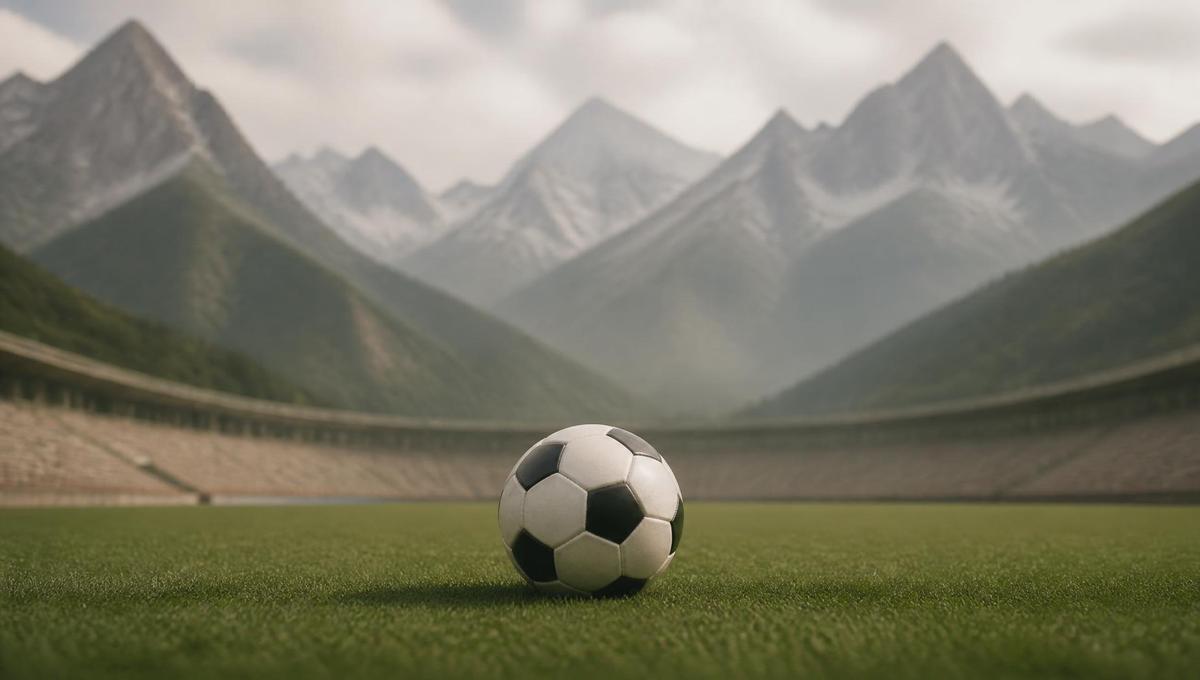
The thin air of Mexico City's 2,240-metre Estadio Azteca is an opponent England can't prepare for in time — and the reason is pure physiology.
England's manager Thomas Tuchel called it "impossible" to properly adapt to the altitude of Mexico City in the three days between matches — and the science backs him up. At 2,240 metres, the thin air impairs even the fittest athletes on earth. Here's why.
TL;DR
- At altitude, the air contains the same 21% oxygen as at sea level — but the lower air pressure means each breath delivers fewer oxygen molecules into the body. This is the root of every altitude effect.
- Less oxygen reaching the blood means lower oxygen saturation, which directly reduces VO2 max — the maximum rate at which the body can use oxygen, and the single best measure of endurance capacity.
- To compensate, the heart beats faster and breathing deepens at any given effort level. Exercise that feels easy at sea level feels hard at altitude, and fatigue arrives sooner.
- For sports built on repeated sprints — football especially — altitude is particularly punishing, because the muscles re-oxygenate more slowly between efforts, so each successive sprint is compromised.
- Real acclimatisation takes weeks, not days. The body responds to altitude by producing more red blood cells (via the hormone EPO), but this process needs around two to three weeks to make a meaningful difference.
- Teams can mitigate the disadvantage — through hydration, pacing, and prior altitude or simulated-altitude preparation — but there is no way to erase it in a few days. Fitness alone cannot substitute for adaptation.
- Altitude has shaped World Cup history before: at the 1970 tournament in Mexico, lack of acclimatisation was seen as a contributing factor in some teams' struggles.
The Root Cause: Less Oxygen Per Breath
The most common misconception about altitude is that the air "has less oxygen." Strictly speaking, it doesn't — the air at the top of a mountain is still 21% oxygen, the same proportion as at sea level. What changes is the pressure.
As altitude increases, atmospheric pressure falls. The air becomes less dense, the molecules more spread out. So while the percentage of oxygen stays the same, the actual number of oxygen molecules in any given breath drops. At 2,240 metres, the air pressure is roughly three-quarters of what it is at sea level, meaning each lungful delivers around a quarter fewer oxygen molecules into the body. The lungs are doing the same work and taking in the same volume of air, but extracting less oxygen from it.
This single fact — fewer oxygen molecules per breath — is the origin of every other effect altitude has on the exercising body. Everything that follows is the body's attempt to cope with, or compensate for, that reduced oxygen supply.
What Happens in the Blood
Oxygen's job is to get from the air into the blood, and from the blood into the working muscles. Altitude disrupts the very first step of that journey.
In the lungs, oxygen crosses into the bloodstream and binds to haemoglobin in red blood cells. The degree to which the haemoglobin is loaded with oxygen is called oxygen saturation — at sea level, a healthy person runs at around 97 to 99%. Because the pressure gradient driving oxygen into the blood is weaker at altitude, that saturation falls. The blood leaving the lungs simply carries less oxygen than it would at sea level.
There is a close, well-documented relationship between oxygen saturation and VO2 max — the maximum rate at which the body can take up and use oxygen, and the gold-standard measure of aerobic fitness. When saturation drops, VO2 max drops with it. This is why endurance capacity falls measurably at altitude even in superbly conditioned athletes: the ceiling on how much oxygen their muscles can use has been lowered by the environment, regardless of how fit they are. An elite footballer's engine is still an elite engine — it is just being starved of fuel.
Why Everything Feels Harder
Faced with less oxygen arriving in the blood, the body does the obvious thing: it works harder to move what oxygen there is around. This is the acute response, and it kicks in within minutes of arriving at altitude.
Heart rate rises. At any given running speed, the heart beats faster at altitude than it would at sea level, because it is trying to circulate blood — and its diminished oxygen cargo — more quickly to meet the muscles' demand. Breathing rate and depth increase too, as the body attempts to draw in more air to offset the thinner supply. The consequence is that a given effort simply costs more. A jog that feels comfortable at sea level feels taxing; a sprint that could be repeated many times becomes something the body can sustain far less often.
The subjective experience is of everything being harder than it should be — higher heart rates, heavier breathing, and fatigue arriving earlier and more steeply than expected. For an athlete whose whole career has calibrated their sense of their own effort and capacity, this recalibration is disorienting as well as limiting. The body's internal gauges are suddenly reading wrong.
Why Football Is Especially Affected
Not all exercise is equally compromised by altitude, and football sits in one of the most vulnerable categories. The reason lies in the specific demands of the sport.
Football is not a steady-state endurance activity like a long-distance run. It is built on repeated high-intensity efforts — sprints, accelerations, changes of direction — separated by short recovery periods of jogging or walking. This is called repeated-sprint ability, and research into football at altitude has shown it to be particularly impaired. The problem is what happens between the sprints. After a maximal effort, the muscles need to re-oxygenate to be ready for the next one. At altitude, with less oxygen available, that re-oxygenation happens more slowly. Each recovery period does less recovering, so each successive sprint starts from a more depleted state.
The research is specific about this. Under low-oxygen conditions, the reduced oxygen available during repeated sprints results in lower oxygen consumption and premature fatigue, and the rate at which muscles re-oxygenate during the recovery intervals between sprints is a key determinant of how well an athlete sustains repeated efforts. Studies have also found that the oxygenation of the brain's cortex during sprinting is a factor — meaning altitude may affect not just the legs but the central drive to keep going. Interestingly, athletes with higher VO2 max tend to preserve their sprint endurance in low oxygen better than less aerobically fit athletes, so elite conditioning helps at the margins — but it does not close the gap created by the environment.
For a ninety-minute match built on the ability to sprint, recover, and sprint again, dozens of times, an environment that specifically degrades sprint recovery is close to a worst-case scenario.
Why You Can't Adapt in a Few Days
The body is not helpless at altitude. Given time, it adapts — and adapts impressively. The problem for a team with three days between matches is that the adaptation that matters most is slow.
The headline adaptation is an increase in red blood cells. Sensing the reduced oxygen, the kidneys release a hormone called erythropoietin — EPO — which stimulates the bone marrow to produce more red blood cells. More red blood cells mean more haemoglobin, which means more oxygen-carrying capacity, which partly restores the VO2 max that altitude took away. This is the same adaptation endurance athletes deliberately chase with altitude training camps, and the reason such camps are effective.
But it is not fast. This red-blood-cell response takes around two to three weeks of altitude exposure to produce a meaningful improvement. There are quicker adjustments — breathing and heart rate ramp up immediately, and blood plasma volume changes within days — but the substantial, performance-restoring adaptation is measured in weeks. This is the physiological basis for Tuchel's "impossible." Three days is enough for the body to register that it is struggling, and nowhere near enough for it to do much about it. A team that has not spent the preceding weeks at altitude arrives essentially unadapted, and plays that way.
What Teams Actually Do About It
If the full adaptation is out of reach in a few days, elite teams are far from powerless. There is a whole playbook of mitigation, and it operates on two timescales: the months before, and the match itself.
The gold-standard preparation happens long in advance. Teams that know they face a high-altitude fixture base themselves at altitude for two to three weeks beforehand, giving the red-blood-cell response time to do its work — the "live high" approach. Where that isn't logistically possible, many use simulated-altitude technology at home in the months prior: hypoxic tents to sleep in, or low-oxygen training chambers, both of which mimic the thin-air stimulus and trigger some of the same adaptations without leaving sea level. Some World Cup squads stationed themselves at elevation weeks ahead of the tournament for exactly this reason.
On the day, when acclimatisation hasn't been possible, the tactics shift to managing the disadvantage rather than removing it. Hydration becomes a priority, because altitude accelerates fluid loss through faster, deeper breathing, and dehydration compounds the fatigue. Pacing changes — a team may consciously control the tempo, keep possession to force the opposition to chase, and avoid the sustained high-intensity pressing that altitude punishes most severely. Substitutions become more valuable and are often used earlier, since fresh legs matter more when everyone fatigues faster. Some teams employ pre-cooling and careful warm-up management to limit unnecessary early oxygen cost. None of these erase the gap that acclimatisation would close, but collectively they can narrow it — turning a potentially overwhelming disadvantage into a manageable one.
The honest limit, though, remains the blood. All the tactical intelligence in the world cannot manufacture the extra red blood cells that only time at altitude produces. Mitigation buys margins; it does not buy adaptation.
Altitude at the World Cup: A Recurring Story
This is not the first time altitude has loomed over a World Cup, and the history is instructive.
The 1970 World Cup was also held in Mexico, and at altitude, and it left its mark on the results. Czechoslovakia — a strong footballing nation of the era — lost all three of their group-stage matches, against Brazil, Romania, and England, and their lack of acclimatisation to the altitude was widely seen as a contributing factor in their struggles. The heat and thin air of that tournament are remembered as much as the football, and the sight of players visibly labouring became one of its defining images.
Mexico's own record tells the other side of the same story. The national team's deepest World Cup runs have historically come on home soil, at altitude, in front of their own crowd — the 1970 and 1986 tournaments both hosted in Mexico, the latter reaching the quarter-finals. That home advantage is not sentiment; it is at least partly physiological. A team that lives and trains at 2,240 metres carries a genuine, blood-level edge over visitors who don't, which is why the altitude of the Azteca is sometimes described, only half-jokingly, as the twelfth man. The stadium has hosted two World Cup finals and countless historic matches, and the thin air has been a quiet protagonist in a good number of them.
What This Means for the Rest of Us
The elite-sport version of this story is dramatic, but the same physiology applies to anyone who has ever felt unexpectedly breathless walking uphill in a mountain town, or found a gentle hike far harder than its sea-level equivalent.
For a recreational visitor to altitude, the practical takeaways follow directly from the biology. Expect exercise to feel harder and fatigue to come sooner, and scale back intensity accordingly for the first several days. Give the body time — even a few days of gentle acclimatisation before attempting anything strenuous makes a real difference, as the faster adaptations begin to take hold. Stay well hydrated, as altitude increases fluid loss through faster breathing and can compound the fatigue. And be aware that at higher elevations than the Azteca, the reduced oxygen can produce altitude sickness — headache, nausea, dizziness — which is a separate and more serious concern requiring proper caution and, sometimes, descent.
The reassuring part is that the same adaptive machinery that elite athletes exploit works for everyone. Spend long enough at altitude and your body will build the extra red blood cells to cope with it. It simply won't do it in three days — for a World Cup team or for anyone else.
Frequently Asked Questions
Why is it harder to exercise at altitude? Because the air pressure is lower, so each breath delivers fewer oxygen molecules into your body, even though the air is still 21% oxygen. Less oxygen reaches your blood and muscles, which lowers your maximum aerobic capacity (VO2 max), forces your heart and lungs to work harder at any given effort, and makes fatigue arrive sooner. Everything simply costs more physiologically than it does at sea level.
How high is the Estadio Azteca, and does altitude really affect the football? The Estadio Azteca in Mexico City sits at roughly 2,240 metres (about 7,200 feet) above sea level — high enough to measurably impair athletes who haven't acclimatised. Football is especially affected because it relies on repeated sprints, and altitude slows the muscle re-oxygenation between them. It's why teams travelling from sea level face a genuine physiological disadvantage, and why Mexico's home altitude is often described as an extra advantage.
Why can't England just adapt in the days before the match? Because the key adaptation — producing more red blood cells to carry oxygen, driven by the hormone EPO — takes around two to three weeks of altitude exposure to make a meaningful difference. Faster adjustments like increased breathing and heart rate happen immediately, but they don't restore lost performance. Three days is enough to feel the altitude but nowhere near enough to adapt to it, which is what England manager Thomas Tuchel meant by calling it "impossible."
Why is altitude especially hard for footballers? Football depends on repeated high-intensity sprints with short recoveries between them — "repeated-sprint ability." At altitude, muscles re-oxygenate more slowly during those recovery periods because less oxygen is available, so each successive sprint begins from a more depleted state. An environment that specifically degrades sprint recovery is particularly punishing for a sport built on sprinting, recovering, and sprinting again for 90 minutes.
What do teams do to cope with altitude? The best preparation is arriving weeks early to acclimatise, or using simulated-altitude tents and chambers at home beforehand to trigger red-blood-cell production. On match day, teams manage the disadvantage through careful hydration, controlling the tempo, keeping possession to make opponents chase, using substitutions earlier, and avoiding sustained high-intensity pressing. These narrow the gap but cannot fully close it without genuine acclimatisation.
Can elite fitness overcome the effects of altitude? Only partly. Fitter athletes with higher VO2 max do preserve their sprint endurance in low-oxygen conditions somewhat better than less fit individuals, so conditioning helps at the margins. But altitude lowers the oxygen available to everyone regardless of fitness, so even the fittest athletes are meaningfully impaired without prior acclimatisation. Fitness reduces the penalty; it does not remove it.
Has altitude affected World Cups before? Yes. The 1970 World Cup was also held in Mexico at altitude, and Czechoslovakia lost all three group games — against Brazil, Romania, and England — with lack of acclimatisation seen as a contributing factor. Mexico's own strongest World Cup performances have come at home, at altitude, which underlines how much of a genuine advantage the thin air can be for a team accustomed to it.
The Bottom Line
The difficulty of exercising at altitude comes down to one fact and its consequences: lower air pressure means less oxygen per breath, and everything else — the lower endurance ceiling, the racing heart, the early fatigue, the compromised sprint recovery — flows from the body's struggle to cope with that shortfall. It is not a matter of willpower or conditioning. It is physics meeting physiology.
For England at the Estadio Azteca, the significance is real and unavoidable. Their opponents live and train at altitude; they arrive from near sea level with three days to spare, which the biology says is nowhere near enough. They can mitigate it — through hydration, game management, and the fitness they bring — but they cannot erase it. It is why the effect is sometimes described as the twelfth man for teams that host at elevation. The visiting side is playing the home team and the thin air at once, and the air does not tire.
For the rest of us, the same lesson applies on a gentler scale: respect altitude, give your body time to adjust, and don't be surprised when the mountain makes easy things hard. The body will adapt if you let it — but only on its own timescale, which is measured in weeks, and never in days.
Related reading: What Creatine Actually Does — and Who Should Take It · Understanding Blood Pressure: What Your Numbers Actually Mean · Electrolytes: Why Water Alone Isn't Enough in the Heat