Garmin fēnix 8 Pro AMOLED: The Watch That Left the Phone Behind
Product — Garmin
By James B. Stoney, Editor ·
Garmin's flagship adds satellite messaging and built-in LTE, removing the phone from the equation entirely.
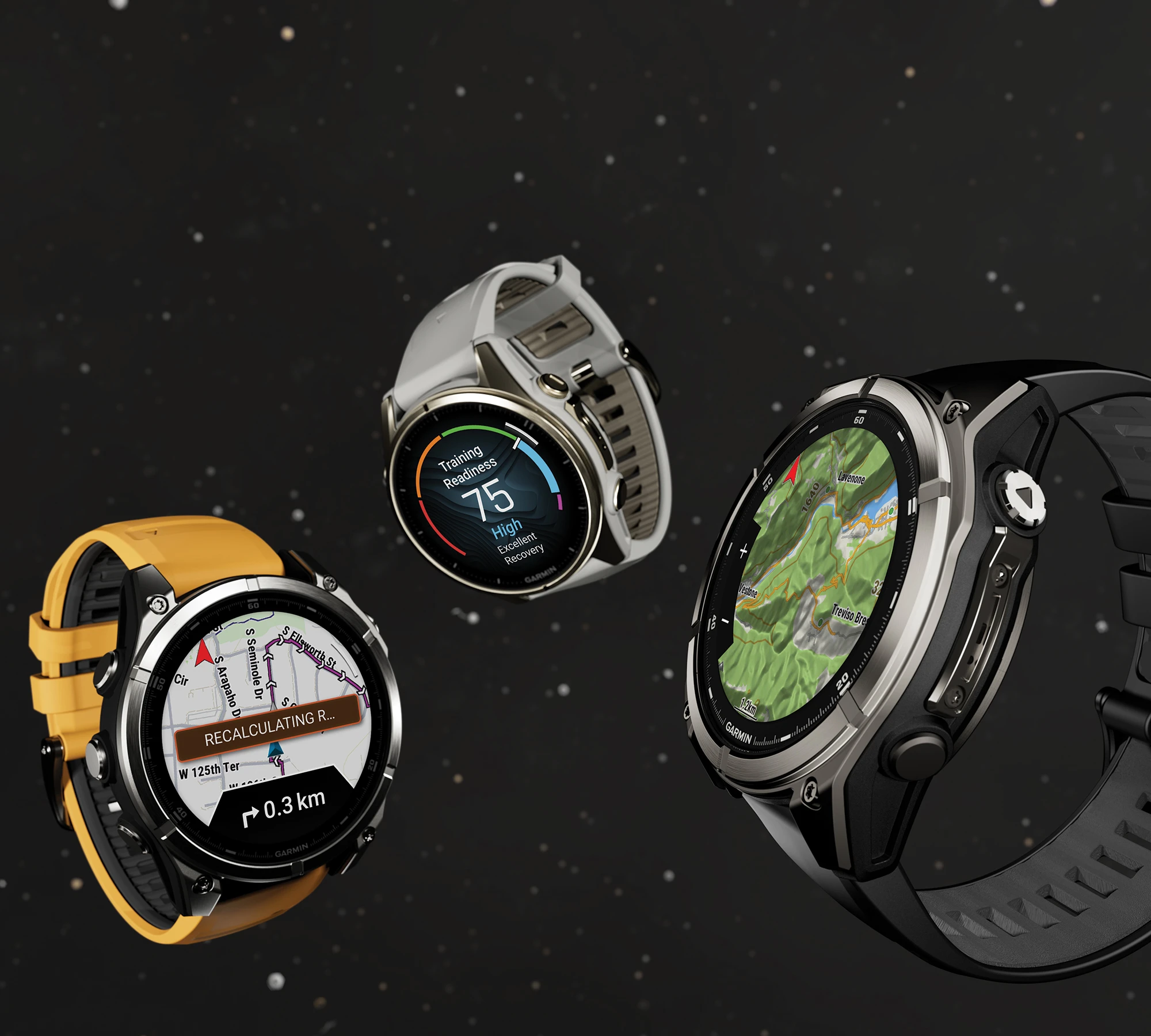
Most smartwatches are accessories.
They track, display and notify — but almost everything useful they do depends on a phone being within range. Remove the phone and the device contracts to a step counter.
The fēnix 8 Pro removes that dependency.
A Different Starting Point
The Pro carries its own LTE connection and, above it, Garmin's inReach satellite network.
It can send a message, place a call, or broadcast a live track with no phone present. When the mobile network runs out — as it does on most routes worth taking — the satellite layer continues.
This is not an improvement to an existing function. It removes a condition the category was built on.
What That Changes
The scenarios are specific rather than dramatic.
A run where the phone stays behind. A walk where the battery dies. A route far enough out that coverage disappears in the second hour.
In each case the older arrangement failed at exactly the point it mattered. Someone at home could no longer see where you were.
That is what the Pro addresses. Not speed, not accuracy — availability.
The Display
The AMOLED panel runs to roughly 2,000 nits, double the standard fēnix 8.
In full sun the difference is immediate.
Garmin has also made a position clear: there is no memory-in-pixel version of the Pro. For a watch built for distance from a power source, that is a real trade — a brighter, more modern screen against the reassurance of a display that would run for a month.
In the 47mm case the compromise holds. Around eight days with the display always on, considerably longer with it asleep.
The Cost of Carrying It
The reservation is physical.
At 16mm thick and 56g in titanium, the Pro is noticeably larger than the standard fēnix 8. During the day this disappears. Overnight it does not.
Everything that makes the watch capable — radios, battery, case — is mass. Garmin has chosen capability. It is the right decision for what this is, but it is a decision.
Wider Context
Satellite connectivity has arrived across the category. Apple and Google now offer emergency satellite messaging on their own hardware, without charge.
Garmin does not.
inReach requires a paid subscription, including for SOS. The network is more capable — two-way messaging, established infrastructure, genuine coverage — but on a watch beyond £1,000, gating the emergency function behind a recurring fee is the one element that reads as commercial rather than engineered.
Why It Earns Its Place
For most people the standard fēnix 8 is the better purchase. Slimmer, cheaper, nearly the same work.
The Pro justifies itself in one circumstance: when being contactable and locatable without a phone has actual value. Mountains, long solo distances, open water, anywhere coverage thins.
For that use it resolves something the category has carried for years. The most capable outdoor watch on the market was still, finally, an accessory.
This one is not.
Vitae Lifestyle Scorecard
- Build9.4 / 10
- Display9.5 / 10
- Capability9.6 / 10
- Overall experience9.3 / 10
Who it's for
- Those who train, walk or travel beyond reliable mobile coverage and want to remain contactable without a phone.
- People who will genuinely use navigation and training analysis at the deepest end of the market.
- Not the casual wearer — the standard fēnix 8 is slimmer, cheaper and does most of the same job.
Questions
What is the Garmin fēnix 8 Pro?
Garmin's flagship multisport watch, differing from the standard fēnix 8 principally through connectivity: built-in LTE and inReach satellite communication allow messaging, calls and live location sharing without a paired phone. It comes in 47mm and 51mm cases only.
How is it different from the standard fēnix 8?
Connectivity — LTE and satellite, which the standard model lacks — and display brightness, roughly 2,000 nits against 1,000. The Pro is also thicker and heavier, and is not offered in the 43mm size. Sports tracking, navigation and training analysis are broadly comparable.
How long does the battery last?
In the 47mm case, around eight days with the always-on display enabled, substantially longer with the display set to sleep. The 51mm holds a larger cell and runs longer. Sustained GPS, LTE or satellite use reduces this considerably.
Does it require a subscription?
Yes, for satellite features. inReach messaging and SOS both require a paid plan, and LTE requires a mobile subscription. This is a legitimate criticism, given Apple and Google provide emergency satellite messaging without charge on comparable hardware.
Is it comfortable to sleep in?
Less so than the standard model. At 16mm thick and 56g, it is a substantial watch. Daytime wear is unproblematic; overnight wear is noticeable, and those prioritising sleep tracking may prefer the slimmer standard fēnix 8.
This article appears in Edit No. 23 — Six Products, Measured Against Their Own Claims


