Reflex Creapure: The Case for Paying More for Creatine
Product — Reflex Nutrition
By James B. Stoney, Editor ·
Creatine is the most-evidenced supplement there is, and most of it is cheap. Reflex uses Creapure — the German-made version, verified for purity — and the premium is small.
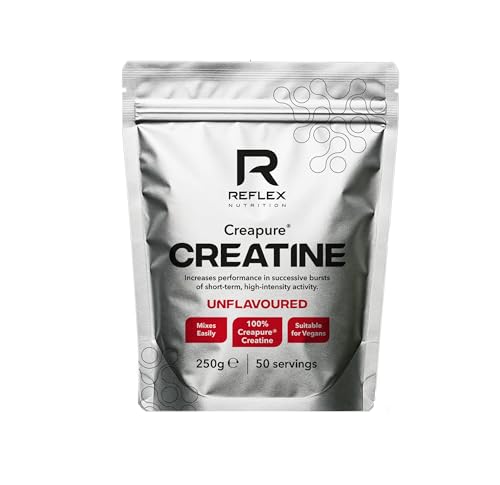
Creatine is the most-evidenced supplement in the category, and most of it is cheap. This is the argument for the version that isn't.
Creatine monohydrate is a commodity.
It is a single molecule, produced at scale, sold by dozens of brands in identical white tubs at broadly identical prices. There is very little to say about it and even less to differentiate.
Which makes the question worth asking directly: why pay more?
A Different Premise
The answer is not the brand. It is the raw material.
Reflex uses Creapure, a creatine monohydrate manufactured by AlzChem in Germany under a specific production and testing standard. It is not a proprietary form of creatine — it is the same molecule as any other monohydrate — but it is made and verified differently.
The distinction is purity. Creatine synthesis can leave behind by-products: creatinine, dicyandiamide, dihydrotriazine, thiourea. Creapure is manufactured and consistently tested to minimise these, with the traceability to demonstrate it.
That is the entire proposition. Same molecule, tighter process, verified.
Why That Matters
Creatine is one of the few supplements taken daily, indefinitely, often for decades.
Most supplements are seasonal or occasional. Creatine is not — the evidence supports continuous use, and people who take it seriously take it every day for years. That changes the calculation on trace contaminants. A small impurity in something consumed once a month is negligible. In something consumed every day for twenty years, the argument for tighter manufacturing standards gets stronger.
Supplement manufacturing is also lightly regulated relative to pharmaceutical production, and independent testing has repeatedly found products that do not match their labels. Verified sourcing is one of the few things a buyer can actually check.
The Product Itself
Unflavoured, tasteless, 100% creatine monohydrate. No fillers, no additives, no flavour system.
Five grams per serving. Fifty servings in the 250g tub, a hundred in the 500g.
Reflex publishes both protocols: a loading phase of 5g four times daily for five days, or simply 3–5g daily from the start. Both work — loading saturates the muscle faster, daily dosing gets there within a few weeks. The company's newer guidance leans toward the simpler version, which is the right call for most people.
It dissolves adequately. Monohydrate never fully dissolves in cold water and any brand claiming otherwise is describing a different compound.
Wider Context
Creatine is the most-researched supplement in sports nutrition, and one of very few where the evidence is genuinely strong rather than merely suggestive: increased strength and power output, improved training volume, and — more recently — a growing body of work on cognitive and brain-health applications.
It is also cheap. That combination is rare enough to be worth noting: a supplement that works, is safe over long periods, and costs pennies per serving.
The Creapure premium is modest in absolute terms. Around £29.99 for 500g — a hundred servings — puts it above the cheapest monohydrate on the shelf, but the difference over a year is small enough to be beside the point for anyone taking it seriously.
Why It Earns Its Place
Because there is nothing to it, and that is the point.
No proprietary blend, no absorption technology, no flavour engineering, no claims beyond what the molecule actually does. A single verified ingredient at the standard dose, from a manufacturer that can demonstrate what is in the tub.
In a category built on complexity that mostly exists to justify price, a product whose entire argument is this is the same thing, made properly is unusually easy to respect.
Vitae Lifestyle Scorecard
- Purity & sourcing9.7 / 10
- Simplicity9.6 / 10
- Mixability8.8 / 10
- Value9.1 / 10
Who it's for
- Anyone taking creatine daily and long-term, where manufacturing standards matter more than on an occasional supplement.
- Those who want a single verified ingredient without flavourings, blends or absorption claims.
- Less relevant for anyone taking creatine sporadically, where cheaper monohydrate does the same job.
Questions
What is Creapure and how is it different from other creatine?
Creapure is creatine monohydrate manufactured by AlzChem in Germany to a specific purity and traceability standard. It is the same molecule as any other monohydrate — not a different form of creatine — but it is consistently tested to minimise by-products of synthesis such as creatinine, dicyandiamide, dihydrotriazine and thiourea.
Is Creapure worth paying extra for?
It depends how you take it. For daily, long-term use — which is how creatine is best used — the argument for verified manufacturing is reasonable, and the premium is small in absolute terms. For occasional use, cheaper monohydrate delivers the same active compound.
Do you need to load creatine?
No. Loading with 5g four times daily for five days saturates muscle stores faster, but taking 3–5g daily from the start reaches the same saturation within a few weeks. Reflex publishes both protocols. For most people the simpler daily dose is preferable.
How much should you take?
3–5g daily, including on rest days, to keep muscle creatine stores saturated. Mix each gram with at least 100ml of liquid and consume shortly after mixing. It is tasteless and mixes into water, juice or a protein shake.
Does creatine only help with muscle?
No. The strongest evidence concerns strength, power output and training volume in high-intensity exercise, but a growing body of research examines cognitive and brain-health applications. It remains among the most-researched and best-supported supplements available.
This article appears in Edit No. 23 — Six Products, Measured Against Their Own Claims


