The Upper House: How a Hotel With No Lobby Became One of the World's Best
Living — The Upper House, Pacific Place
By James B. Stoney, Editor ·
No lobby, no pool, no spa, one restaurant — and a place in the World's 50 Best Hotels every year. André Fu's career-defining design above Pacific Place, explained.
No lobby, no pool, no spa, one restaurant — and a place in the World's 50 Best Hotels every year. André Fu's career-defining design above Pacific Place, explained.
There is a question that follows The Upper House around, asked by almost everyone who looks at it analytically rather than experientially. It has no swimming pool. No spa. No business centre, no club lounge, and barely a single restaurant. It does not, in any meaningful sense, even have a lobby. And yet it is routinely ranked among the ten best hotels in the world. So what, exactly, is going on?
The answer is that The Upper House removed almost everything a luxury hotel is conventionally expected to provide, and concentrated everything it had on the few things it decided actually mattered: space, light, design, and service. The result has been one of the most quietly influential hotels in Asia since it opened in 2009.
The Building
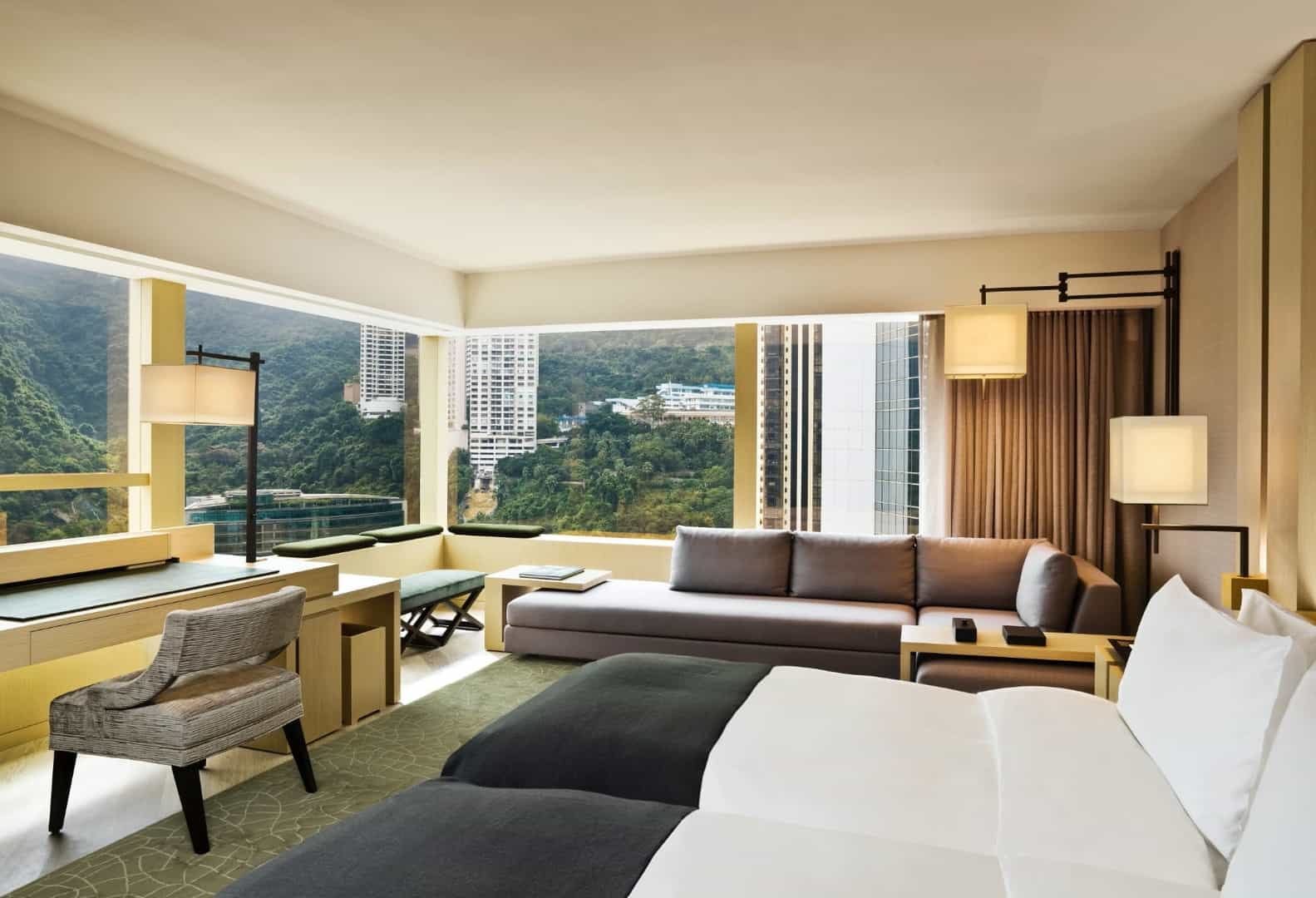
The Upper House occupies floors 38 to 49 of a tower above Pacific Place in Admiralty, stacked directly on top of the JW Marriott that fills the floors below it. The two hotels share a building and nothing else.
The tower was not originally built as The Upper House. It went up as a combined residential and hotel block, with serviced apartments occupying the upper floors. When those apartments were retrofitted into a hotel, the generous residential proportions came with them — which is why even an entry-level Studio at The Upper House measures around 730 square feet, the largest standard room in Hong Kong by a considerable margin, in a city where space is the rarest luxury of all.
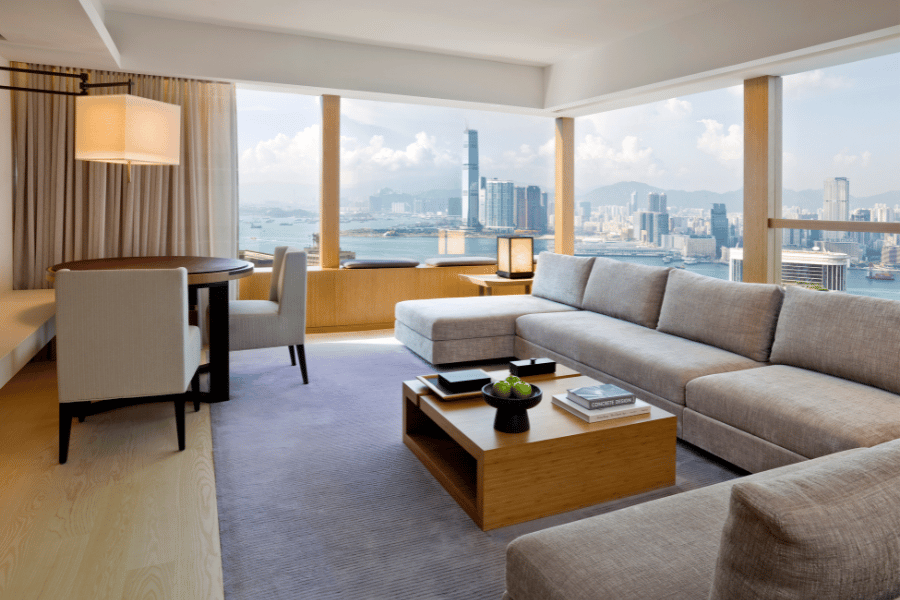
This is the first thing that explains the hotel's reputation. The rooms feel like apartments because they were designed as apartments. In a city of small, efficient hotel rooms with the bed pushed against the window, The Upper House offers something closer to the experience of briefly living somewhere very well-appointed.
André Fu
The hotel was the project that made André Fu's name. The Hong Kong-born, Cambridge-educated architect designed The Upper House early in his career, and the restrained, warm, light-filled aesthetic he created here became the template for a style that has since spread across luxury hospitality throughout Asia and beyond — the Waldorf Astoria Osaka, The Mitsui Kyoto, Capella Taipei, and others all carry his signature.
The Upper House is where it began. The palette is oak and bamboo, warm and subdued, with Asian-inspired detailing and tactile abstract art throughout. The design intention was explicitly residential rather than hotel-like — to make a guest feel they had arrived somewhere personal and calm rather than somewhere corporate and grand. The fact that the hotel opened in 2009 and still feels contemporary, having never undergone a full renovation, is the most direct possible testament to how well the original design was judged.
The Arrival
The absence of a lobby is not an oversight. It is the clearest expression of what the hotel is.
There is no reception desk in the conventional sense — no marble expanse, no queue, no formal threshold between street and stay. Instead, guests arriving are taken directly up to their room, where check-in is completed on an iPad while the room and its details are explained in person. The entire process, from entering the building to settling into the room, takes less than ten minutes. The hotel calls its guests' rooms part of "the House," and the welcome is a "welcome home" rather than a check-in.
This is service philosophy made architectural. By removing the lobby, the hotel removes the single most institutional moment of a hotel stay and replaces it with something that feels personal and unhurried. It is the kind of decision that sounds like a marketing line until you experience how completely it changes the tone of an arrival.
Salisterra and the View
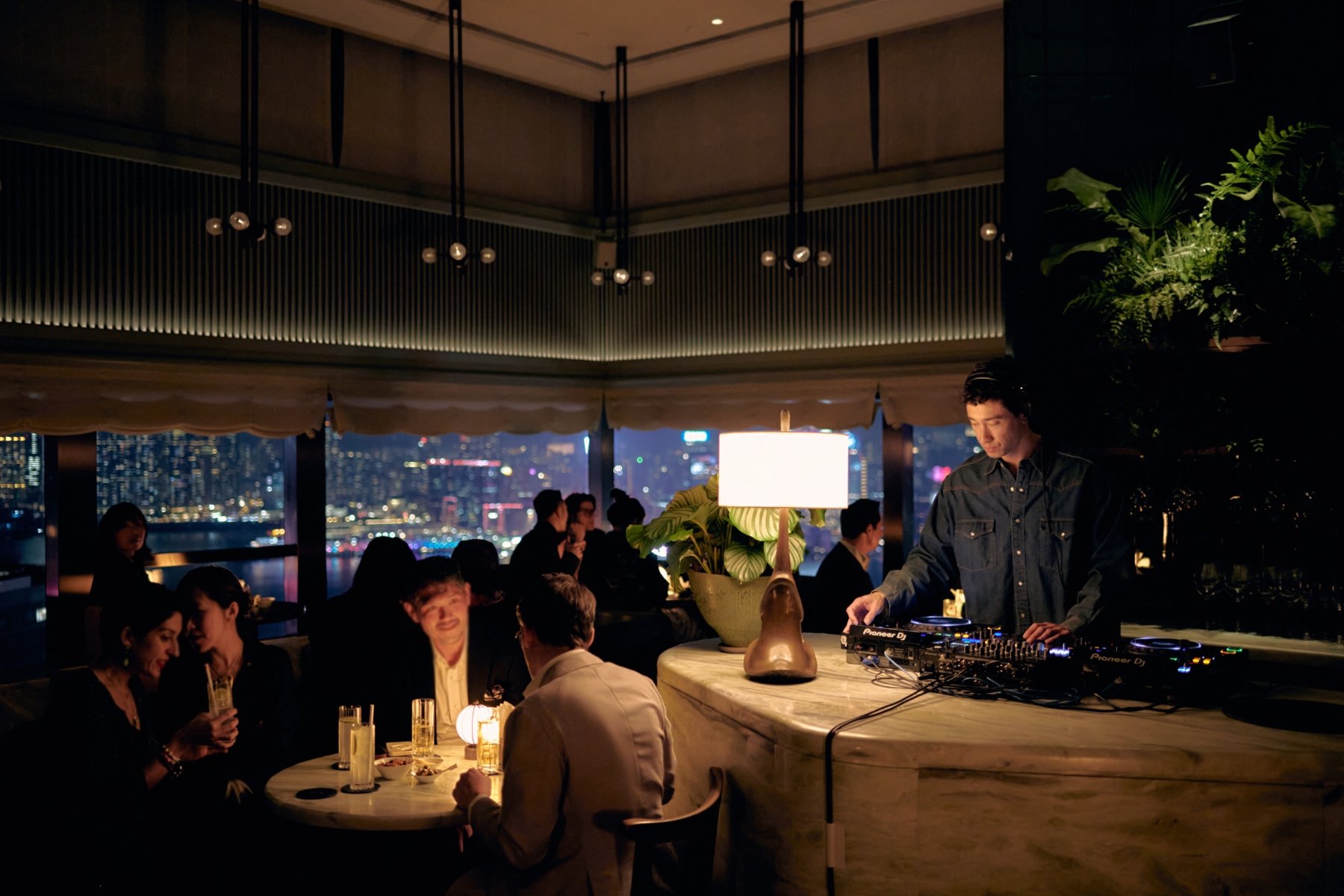
What facilities the hotel does have, it concentrates at the top. Salisterra, on the 49th floor, is the hotel's all-day restaurant — a Mediterranean kitchen in a light-filled room with wraparound views across Victoria Harbour and the mountainous greenery behind the building.
The restaurant has carried serious culinary pedigree: Jun Tanaka of London's Michelin-starred The Ninth consulted on the original menu, with Ricardo Chaneton of the Michelin-starred Mono more recently involved. The breakfast — an unlimited à la carte service rather than a buffet — is widely held to be among the best hotel breakfasts in the city. The adjoining Green Room bar and the rooftop garden bar, The Lawn, complete a compact set of social spaces that prioritise quality and atmosphere over quantity and scale.
The rooms themselves carry the same logic of considered generosity: complimentary minibars stocked with everything bar the wine and champagne, in-room water taps providing filtered water sustainably, free-standing bathtubs positioned for the view, and Bamford toiletries. The picture windows are angled specifically to maximise the harbour and skyline views, compensating, deliberately, for the absence of balconies.
What It Actually Is
The Upper House belongs to Swire Hotels' small "House" collection — alongside The Opposite House in Beijing, The Middle House in Shanghai, and The Temple House in Chengdu — a group defined by exactly this approach: intimate, design-led, residential in feeling, and deliberately stripped of the facilities that define larger luxury hotels.
The hotel's enduring presence near the top of the World's 50 Best Hotels list — fifth in 2024, tenth in 2025 — is the clearest evidence that the gamble it made in 2009 was the right one. It is a hotel built on subtraction: take away the pool, the spa, the lobby, and the sprawling facilities, and pour everything into space, design, and the quality of human attention. The result is a particular favourite of the design and creative industries, and one of the few hotels anywhere that a long-term guest will describe, without irony, as feeling like home.
Related reading: Hong Kong Country Club: The Club Built to Break Down Barriers · The Star Ferry: Hong Kong's Oldest Form of Public Transport · Ballynahinch Castle Hotel, Connemara: The Castle Where a Maharaja Summered
Vitae Lifestyle Scorecard
- The rooms9.6 / 10
- The design9.7 / 10
- The service9.6 / 10
- The restaurant9.2 / 10
Who it's for
- Travellers who value space, light, and design over the long facilities list of a conventional luxury hotel.
- Anyone in the creative or design industries, for whom this has long been the Hong Kong address of choice.
- Guests who would happily trade a swimming pool they will never use for the largest, calmest room in the city.
Questions
Why does The Upper House have no lobby?
By design. The hotel offers in-room check-in, completed on an iPad, so guests are taken directly to their room on arrival rather than processed at a reception desk. The absence of a lobby is a deliberate expression of the hotel's residential, personal philosophy — the arrival is framed as a "welcome home" rather than a formal check-in, and takes under ten minutes from door to room.
Who designed The Upper House?
Hong Kong-born architect André Fu, for whom it was a career-defining early project. His warm, restrained, light-filled aesthetic — oak and bamboo, residential in feeling — became hugely influential across luxury hospitality. The hotel opened in 2009 and, despite never undergoing a full renovation, still feels contemporary.
Where is The Upper House located?
On floors 38 to 49 of a tower above Pacific Place in Admiralty, on Hong Kong Island, at 88 Queensway. It sits directly above the JW Marriott Hong Kong, with which it shares a building but operates entirely independently. Admiralty is a natural hinge between Central, Wan Chai, and Causeway Bay.
How big are the rooms at The Upper House?
Even entry-level Studio rooms start at around 730 square feet — the largest standard hotel rooms in Hong Kong. This is because the building's upper floors were originally serviced apartments, later retrofitted into the hotel, so the generous residential proportions were retained.
Does The Upper House have a pool or spa?
No — it has neither a swimming pool nor a spa, and only a small 24-hour gym. The hotel deliberately concentrates its resources on space, design, and service rather than a broad facilities list. Its dining and social spaces — the Salisterra restaurant, Green Room bar, and rooftop garden, The Lawn — are clustered toward the top of the building.
What is Salisterra?
The hotel's all-day Mediterranean restaurant on the 49th floor, with wraparound views of Victoria Harbour. It has carried significant culinary pedigree, including involvement from Michelin-starred chefs, and its unlimited à la carte breakfast is regarded as among the best in Hong Kong. An adjoining bar, the Green Room, sits alongside it.
This article appears in Edit No. 19 — Hong Kong