The Star Ferry: Hong Kong's Oldest Form of Public Transport
Experience — The Star Ferry, Victoria Harbour
By James B. Stoney, Editor ·
Founded in 1888 by a Parsi baker who needed to move his bread across the harbour. 138 years, two world wars, and a near-closure later, it still costs less than the price of a coffee.
Founded in 1888 by a Parsi baker who needed to move his bread across the harbour. 138 years, two world wars, and a near-closure later, it still costs less than the price of a coffee.
The Star Ferry began as a logistics problem. Dorabjee Naorojee Mithaiwala, a Parsi cook living in Hong Kong, needed a way to get his bread across Victoria Harbour. He bought a steamboat, named it the Morning Star, and used it to move his baked goods between Kowloon and Central. The passenger service that followed was almost incidental — a way of covering the cost of a boat that already existed.
By 1888 the operation had a name, the Kowloon Ferry Company, and a schedule running at all hours between Pedder's Wharf and Tsim Sha Tsui, the crossing taking anywhere from forty minutes to an hour. Demand grew quickly enough that within a decade Mithaiwala had built a small fleet — the Morning Star, the Evening Star, the Rising Star, the Guiding Star.
In 1898, on his retirement, Mithaiwala sold the fleet to Sir Catchick Paul Chater, the British-Armenian businessman whose name is attached to a significant share of colonial-era Hong Kong infrastructure. Chater renamed the business the Star Ferry Company — a name that suited the fleet's existing pattern and, by most accounts, drew on Tennyson's "Crossing the Bar", with its line "Sunset and evening star, and one clear call for me." Every vessel the company has built since has carried "Star" somewhere in its name. The company has not changed hands since.
What Survived
A harbour crossing that began as a bread delivery route has now operated continuously, in one form or another, through typhoons, a currency dispute, two world wars, a riot, multiple periods of civil unrest, a pandemic, and — as recently as 2022 — a genuine threat of permanent closure.
The list of specific crises is longer and stranger than the general idea of "history" suggests. In 1906, before any organised typhoon warning system existed, several ferries were caught out by a storm too severe to outrun; one pier was destroyed entirely. In 1912 the company announced it would no longer accept Canton currency alongside Hong Kong dollars, despite both being legal tender at the time — a decision that caused genuine public anger. In 1933 it introduced the Electric Star, the first diesel-electric passenger ferry of its kind anywhere, a quiet but real piece of maritime engineering history.
The Japanese occupation of Hong Kong, from 1941 to 1945, was the darkest chapter. Two of the company's vessels, the Golden Star and the Meridian Star, were commandeered to transport prisoners of war from the camp at Sham Shui Po to Kai Tak. In 1943 the Golden Star was bombed and sunk in the Canton River by American forces; the Electric Star was sunk separately in the harbour itself. Both were recovered once the war ended and returned to service, repaired rather than replaced, which is as good a one-line summary of the company's whole ethos as exists.
In 1966, a proposed fare increase led to a hunger strike at the Central pier, an arrest for obstruction of a passageway, and a wave of public anger that escalated into the Hong Kong riots of that year — a genuinely significant moment in the territory's political history, with the Star Ferry, improbably, at its centre. The 2022 crisis was quieter and less dramatic but no less real: falling passenger numbers, rising fuel and maintenance costs, and a fleet with an average vessel age of around sixty years brought the company close enough to the edge that closure was openly discussed. It was resolved, in the end, through a fare increase and continued government and public support, at the point where it would have been administratively simplest to let the service wind down.
The harbour itself has narrowed considerably since 1888. Decades of land reclamation on both shores have pushed the waterline further out into water that used to separate Hong Kong Island and Kowloon by a noticeably wider gap. The crossing today is shorter than it was. The boats making it are largely unchanged in spirit.
The Crossing
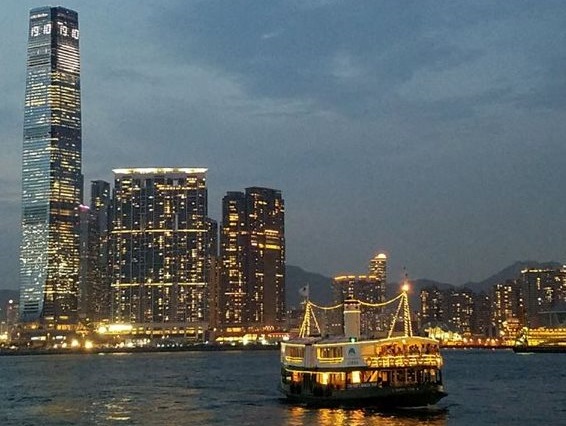
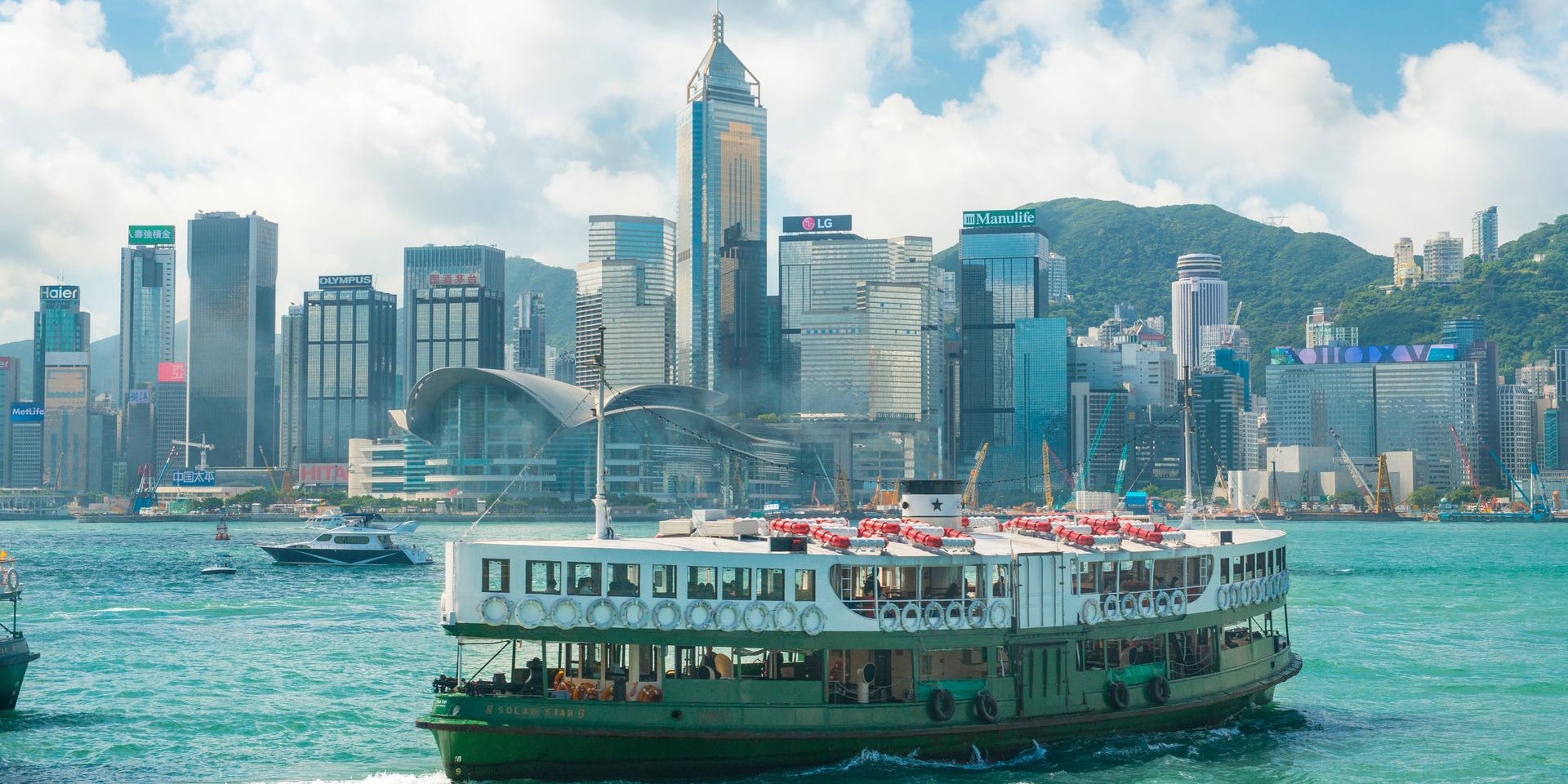
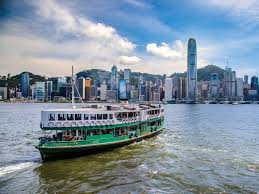
The main route now runs between Central and Tsim Sha Tsui, a journey of roughly eight to ten minutes depending on the tide and the specific vessel in service. A second route connects Wan Chai to Tsim Sha Tsui. A fleet of double-ended, bottle-green-and-ivory ferries operates across the two routes, carrying more than 70,000 passengers a day and roughly 26 million a year — a figure that has held up reasonably well even with the MTR's cross-harbour lines and two road tunnels offering faster alternatives.
The fare sits between HK$3 and HK$5, depending on deck and day. In real terms this has barely moved across most of the ferry's recent history, even as almost everything around it — rent, food, transport generally — became considerably more expensive. The view it delivers in exchange is the full sweep of Victoria Harbour: the Hong Kong Island skyline rising directly ahead on the northbound crossing, the Kowloon waterfront doing the same in reverse, the light shifting noticeably depending on the hour and the season. Other cities charge considerably more for private boat tours that offer a roughly comparable view.
National Geographic Traveler named the crossing one of fifty places of a lifetime. By most independent measures it is also among the best value sightseeing experiences anywhere in the world — a slightly odd distinction for a service whose primary purpose has never been sightseeing. People take the Star Ferry to get somewhere. The view is a byproduct of the route, not the reason for it, which is precisely what makes it work.
Why It Still Matters
There is a particular kind of civic object that earns its place not through grandeur but through persistence — the thing that has simply continued, reliably, while everything around it changed completely.
The Star Ferry is this kind of object for Hong Kong. It predates the territory's transformation into a global financial centre by the better part of a century. It predates the MTR, the road tunnels, and most of the buildings now lining either shore. It has crossed roughly the same stretch of water, with roughly the same name on the bow, since before almost anything else currently operating in Hong Kong existed in its present form.
What it offers a visitor is not nostalgia exactly, though there is some of that built in. It is something closer to scale: a slow eight minutes on open water, the city arranging itself on either side as the boat moves, at a price that asks nothing of the decision to take it.
Related reading: The Diving Bell, Dublin Docklands: The Engineering That Built a City · Birr Castle Demesne: The Estate That Built a Telescope · Garuda Wisnu Kencana: The Statue That Took 28 Years to Build
Vitae Lifestyle Scorecard
- The history9.7 / 10
- The crossing8.8 / 10
- The value9.8 / 10
- The setting9.2 / 10
Who it's for
- First-time visitors who want the clearest possible orientation to the harbour and the two shorelines it separates.
- Anyone who appreciates infrastructure that has earned its longevity rather than simply accumulated it.
- Locals and regular visitors who still take the crossing deliberately, rather than defaulting to the tunnel or the MTR.
Questions
How much does the Star Ferry cost in Hong Kong?
Between HK$3 and HK$5 depending on the route, deck, and day of travel. It remains one of the cheapest sightseeing experiences in Hong Kong and one of the cheapest harbour crossings anywhere in the world.
How old is the Star Ferry?
The service traces back to 1888, when it operated as the Kowloon Ferry Company under founder Dorabjee Naorojee Mithaiwala. Some accounts date its informal origins to 1880, when Mithaiwala first used a steamboat to move his own bread across the harbour. It was renamed the Star Ferry Company in 1898 after being bought by Sir Catchick Paul Chater.
What route does the Star Ferry take?
The main and most popular route runs between Central, on Hong Kong Island, and Tsim Sha Tsui, in Kowloon. A second route connects Wan Chai to Tsim Sha Tsui. The crossing takes roughly eight to ten minutes.
Is the Star Ferry still in operation?
Yes. It came close to ceasing operations in 2022 due to falling passenger numbers, an ageing fleet, and rising costs, but was preserved through a fare adjustment and continued public support. It currently carries more than 70,000 passengers a day and around 26 million a year.
Who founded the Star Ferry?
Dorabjee Naorojee Mithaiwala, a Parsi cook living in Hong Kong, started the service informally to transport his own bread across Victoria Harbour aboard his steamboat, the Morning Star. The Kowloon Ferry Company was formally established in 1888 and sold to Sir Catchick Paul Chater in 1898, who renamed it the Star Ferry Company.
Why is it called the Star Ferry?
The original fleet of vessels were each named with "Star" in the title — the Morning Star, the Evening Star, the Rising Star, and the Guiding Star among them. When Sir Catchick Paul Chater bought the company in 1898, he renamed the business after this pattern, often linked to Tennyson's poem "Crossing the Bar," and every vessel built since has continued it.
Did the Star Ferry survive the Second World War?
Yes, though not without losses. During the Japanese occupation of Hong Kong, two ferries were commandeered to transport prisoners of war, and two vessels were sunk in 1943 — one bombed by American forces in the Canton River, the other sunk in the harbour itself. Both were recovered after the war and returned to service.
This article appears in Edit No. 19 — Hong Kong