Hong Kong Country Club: The Club Built to Break Down Barriers
Place — Hong Kong Country Club, Deep Water Bay
By James B. Stoney, Editor ·
Conceived in 1947, opened in 1962, built specifically so that all nationalities could meet without discrimination. Members only — you'll need one to take you. The lawn still runs down to Deep Water Bay.
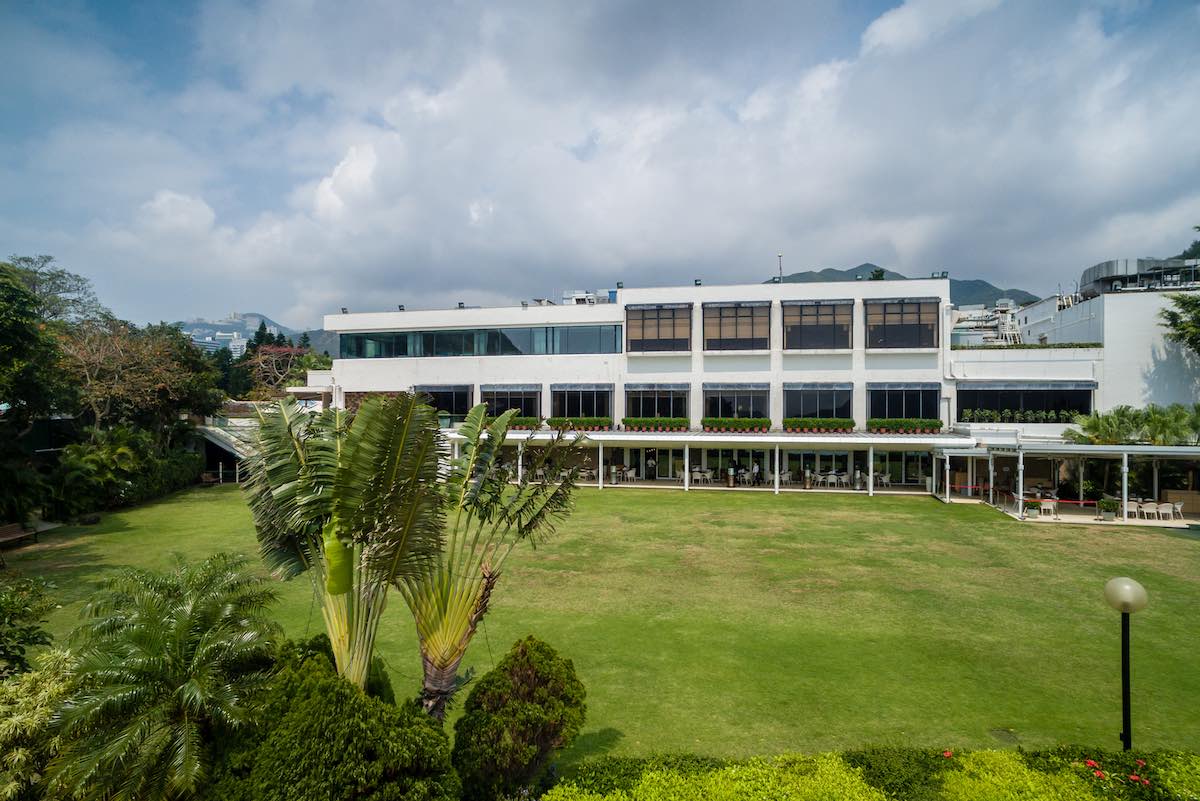
Conceived in 1947, opened in 1962, built specifically so that all nationalities could meet without discrimination. The lawn still runs down to Deep Water Bay.
Most of the private clubs that define Hong Kong's social landscape were built around exclusion of one kind or another — colonial-era institutions whose membership reflected the racial and social hierarchies of the period that produced them. Hong Kong Country Club exists specifically because a group of residents in the late 1940s decided they wanted the opposite.
The principal advocate was J. R. Jones, a legal adviser to the Hong Kong and Shanghai Banking Corporation, who began working toward the idea as early as 1947. From before the Second World War and well into the 1960s, membership of most Hong Kong social clubs was restricted to a particular racial or ethnic group. Jones and the residents who joined him wanted to build something different: a social and family club, with proper amenities, where people of any nationality could meet socially without fear of discrimination.
It took fifteen years to happen. The club's first general committee held its inaugural meeting in April 1961. The main building opened on 29 January 1962. The South China Morning Post's report the following day called it "the happy fulfilment of a 15-year-old dream come true," noting that the political turmoil of the 1949 Chinese revolution and the economic pressures of the Korean War had put the project on hold through most of the 1950s.
The Opening
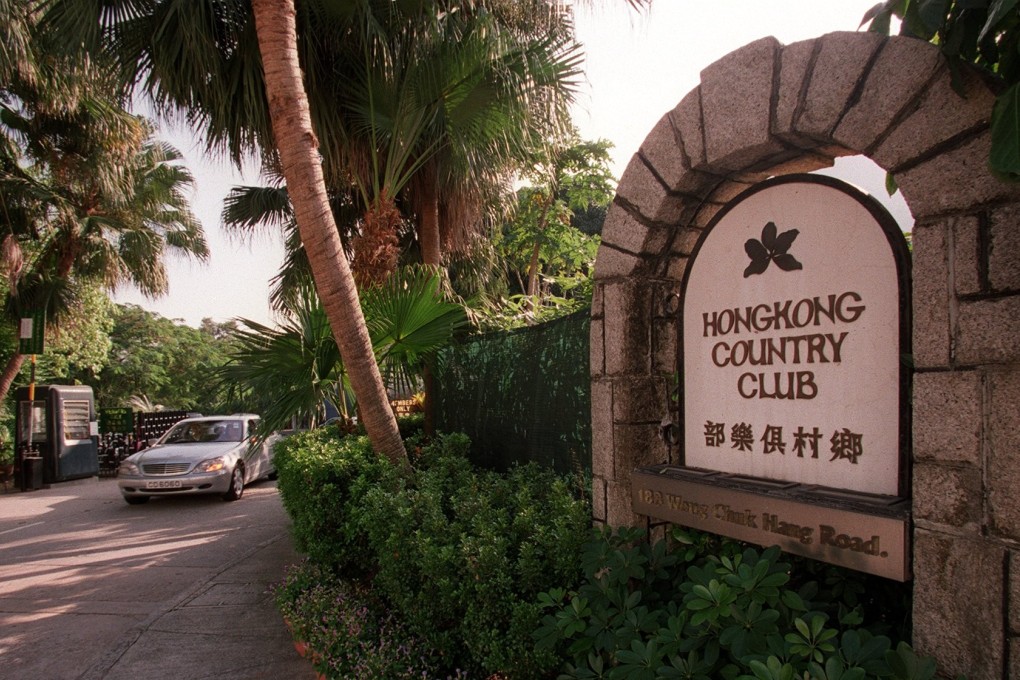
Hong Kong's chief justice at the time, Sir Michael Hogan, spoke at the inauguration. His description of the club's purpose has been quoted ever since: "This club will be a place where all nationalities and communities can meet. Ideas can be interchanged, views expressed and arguments deployed in an atmosphere conducive to goodwill."
It was, by the standards of the period and the place, a genuinely unusual proposition. The club admitted women as members from the outset — a detail Hong Kong commentators have specifically contrasted with the male-only establishments still operating in London at the time. The membership structure that exists today, built around a nationality quota system, descends directly from that founding ambition: no single nationality is permitted to dominate the club's character, a structure designed from day one to keep the original promise intact rather than letting it quietly erode.
The Lawn
The club sits at 188 Wong Chuk Hang Road, on the southern side of Hong Kong Island, where the land slopes down toward Deep Water Bay. The original 1962 newspaper report noted "the priceless view from the verandah," and not much about that view has changed in the six decades since.
The lawn is the single feature every account of the club returns to. A wide stretch of green, running from the clubhouse down toward the water across what amounts to roughly two hectares of grounds — genuinely unusual in a territory where flat land at sea level is among the most contested and expensive resources in the world. The clubhouse itself has been renovated more than once since 1962. The lawn has needed comparatively little intervention to remain the thing people remember.
What's There
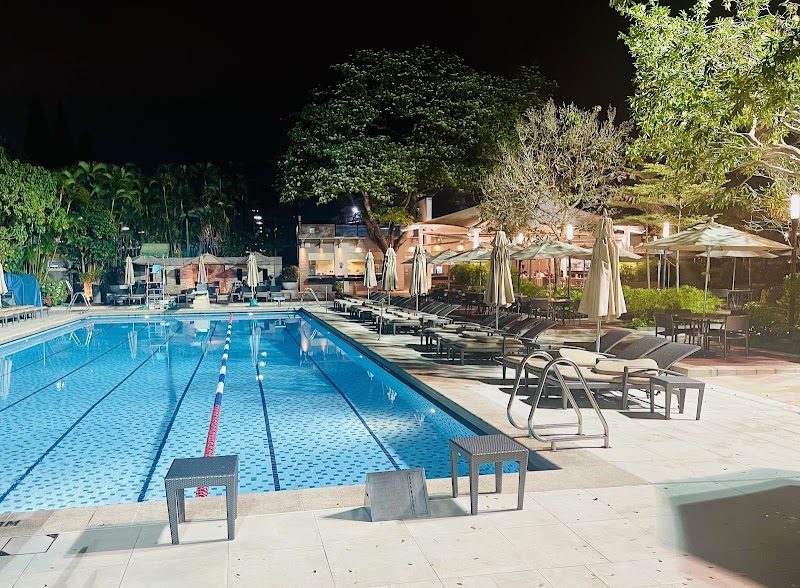
The facilities accumulated over decades rather than arriving all at once: a swimming pool, a putting green, a health club, tennis and squash courts, a snooker room, a bowling alley, a golf simulator, a teens' room, an adventure playground with wooden climbing frames beside the lawn, and an indoor playroom with full-time supervision for younger members. Dining runs across several distinct registers — a French-inspired Grill Room, the Island Room for Chinese cuisine, the more relaxed Garden Room with an extensive à la carte menu, and outdoor Italian dining on the Foreshore Deck. A proper wine cellar sits in the lower ground floor, an unusual feature even among Hong Kong's private clubs.
None of this reads as remarkable in isolation. Across six decades of steady addition, it amounts to something closer to a small, self-contained world — the kind of place a family can spend an entire weekend inside without feeling any need to leave.
The staff are the other detail that consistently comes up. People tend to stay a decade or more, which produces a particular texture: the server bringing a meal, or the instructor running a class, has often been doing exactly that since well before most current members joined. The club's own description of its philosophy — "quality people, offering quality service to quality members" — sounds like a slogan until you account for how literally the staff retention has borne it out.
A Note on Access
The Hong Kong Country Club is not open to the public. It is a private members' club in the fullest sense — there is no day-pass, no walk-in dining, and no public access to the grounds or facilities.
Entry is possible only as the guest of a member, who must accompany you. Membership itself is by sponsorship from an existing resident member and governed by the nationality quota system, with an entrance fee and monthly subscription that place it firmly among the city's more exclusive institutions. For a visitor, in other words, the club is somewhere you experience through a connection rather than a booking — which is consistent with what it has always been. This is not a destination you can simply decide to visit. It is one you need to be taken to.
What It's For
Hong Kong Country Club occupies a different register from the city's older private institutions — the Hong Kong Club, founded in 1846 as a gentlemen's club for British merchants and civil servants, or the colonial-era establishments whose membership rules openly reflected the assumptions of empire well into the twentieth century.
This club exists because, by the late 1940s, a specific group of Hong Kong residents had decided the city needed an institution organised around mixing rather than separating — and then spent fifteen years making sure it happened on those terms. It has continued, largely unchanged in its founding principle, while almost everything else around it was rebuilt at least once.
Related reading: The Star Ferry: Hong Kong's Oldest Form of Public Transport · Ballynahinch Castle Hotel, Connemara: The Castle Where a Maharaja Summered · Garuda Wisnu Kencana: The Statue That Took 28 Years to Build
Vitae Lifestyle Scorecard
- The lawn9.4 / 10
- The facilities8.8 / 10
- The service9.3 / 10
- The concept9.0 / 10
Who it's for
- Members and their families seeking a genuinely multinational social environment with the room and facilities to spend a full day.
- Anyone fortunate enough to be invited as a member's guest, which remains the only way to experience the club.
- Long-term residents weighing membership against the city's other private clubs, particularly those founded on more exclusionary terms.
Questions
When was Hong Kong Country Club founded?
The idea was first advanced in 1947 by J. R. Jones, a legal adviser to HSBC. The club's first general committee met in April 1961, and the main clubhouse opened on 29 January 1962 — fifteen years after the original proposal.
Why was Hong Kong Country Club founded?
To create a social and family club open to residents of all nationalities and races at a time when most Hong Kong clubs restricted membership to a single ethnic or national group. Chief Justice Sir Michael Hogan described its purpose at the 1962 opening as a place "where all nationalities and communities can meet."
Can the public visit Hong Kong Country Club?
No. The club is private and not open to the public — there is no day-pass or walk-in access. The only way to visit is as the guest of a member, who must accompany you. Membership itself is by sponsorship from an existing resident member and is governed by a nationality-based quota system.
Where is Hong Kong Country Club located?
At 188 Wong Chuk Hang Road, Deep Water Bay, on the southern side of Hong Kong Island. The club's signature lawn runs from the clubhouse down toward the bay.
What facilities does Hong Kong Country Club have?
A swimming pool, putting green, health club, tennis and squash courts, a snooker room, bowling alley, golf simulator, a teens' room, an adventure playground, an indoor supervised playroom, several restaurants including a French-inspired Grill Room and a Chinese restaurant, and a dedicated wine cellar.
What makes Hong Kong Country Club different from the city's other private clubs?
Many of Hong Kong's older private clubs, including the Hong Kong Club founded in 1846, originated in the colonial era with membership reflecting the racial and social hierarchies of that period. Hong Kong Country Club was conceived in 1947 and opened in 1962 specifically to do the opposite — to build a genuinely multinational club where no single nationality could dominate, and to admit women as members from the outset.
This article appears in Edit No. 19 — Hong Kong