Tradition, at Scale: Cheltenham Racecourse — National Hunt at Its Pinnacle
Experience — Cheltenham Racecourse
By James B. Stoney, Editor ·
Four days in March that organise the entire Cotswolds social calendar — Cheltenham is not incidental to the region. It defines a week of it.
Four days in March that organise the entire Cotswolds social calendar — Cheltenham is not incidental to the region. It defines a week of it.
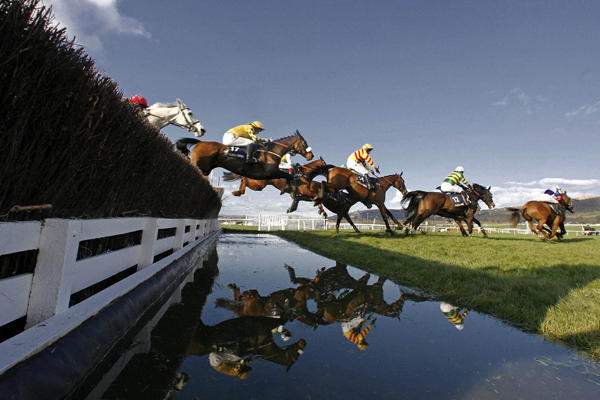
Cheltenham Racecourse is a National Hunt racing venue set at the foot of Cleeve Hill on the edge of Cheltenham, Gloucestershire. It hosts the annual Cheltenham Festival each March — widely regarded as the pinnacle of jump racing — drawing crowds of over 250,000 across four days and a significant annual Irish contingent of owners, trainers, jockeys and spectators.
Much of the Cotswolds operates quietly.
Cheltenham Racecourse does not.
Set beneath Cleeve Hill, the natural escarpment that forms its backdrop, the course introduces a different dimension to the region — one defined not by stillness but by concentration. For most of the year it sits within the landscape. For four days in March it becomes something else entirely.
The Festival
The Cheltenham Festival is not one event among many.
Held each March since 1860, it is the defining moment of the National Hunt season — four days across which the sport's best horses, trainers and jockeys compete for races that have accumulated enough history to carry genuine weight. The Gold Cup. The Champion Hurdle. The Queen Mother Champion Chase. These are not interchangeable fixtures. They are the point.
The structure is fixed, the programme established, and the significance understood well in advance. What builds is not anticipation of the unknown but of the familiar at its highest level.
The Irish Dimension
What distinguishes Cheltenham from comparable events is its relationship with Ireland.
The Festival draws a larger Irish contingent than almost any other sporting event held on British soil — owners, trainers, jockeys and spectators crossing in significant numbers, with Irish-trained horses consistently dominating the results. That presence is visible throughout the week and shapes the atmosphere in ways that go beyond numbers. The competition is Anglo-Irish in the deepest sense — not as a marketing frame but as a structural reality of how the sport operates.
The Setting
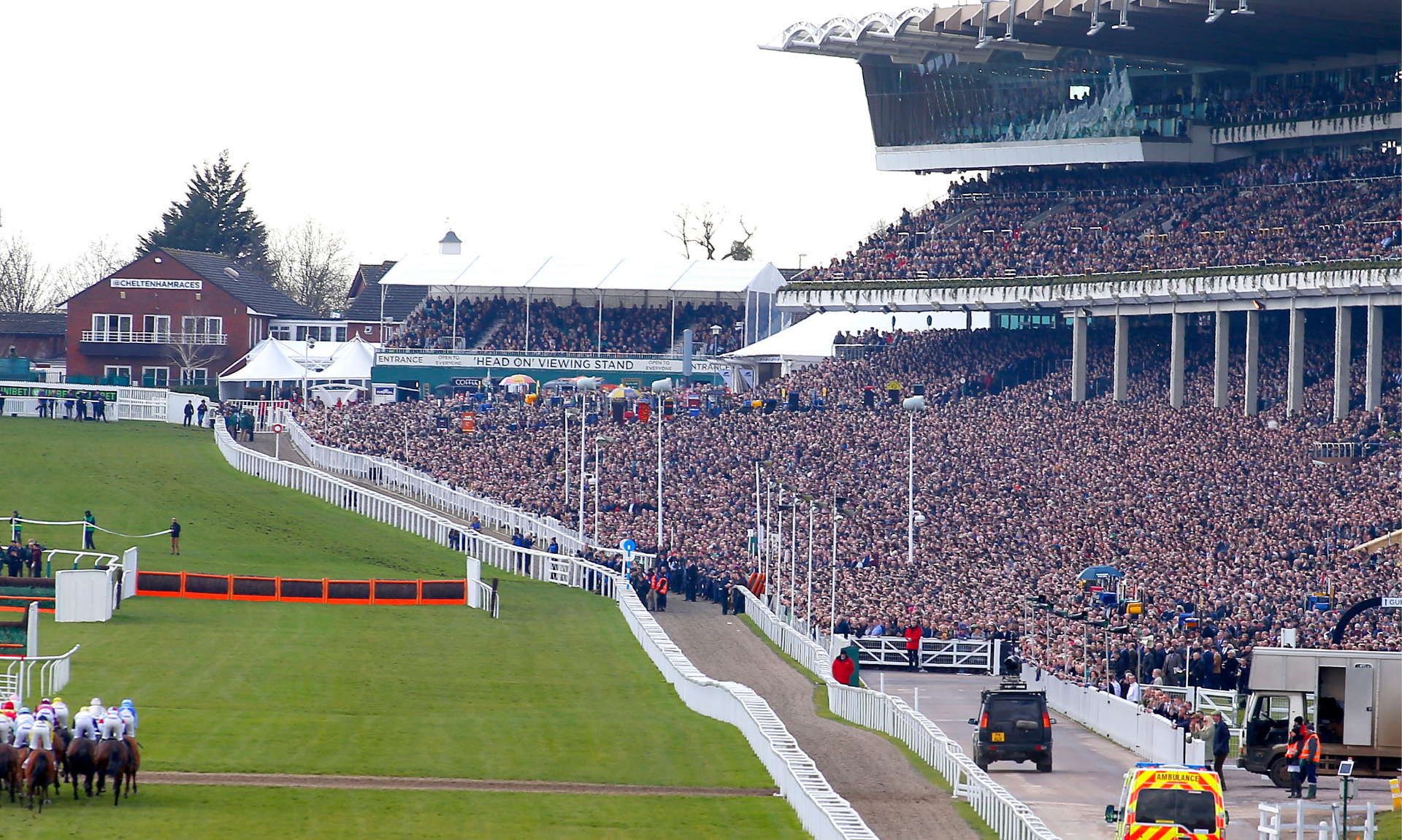
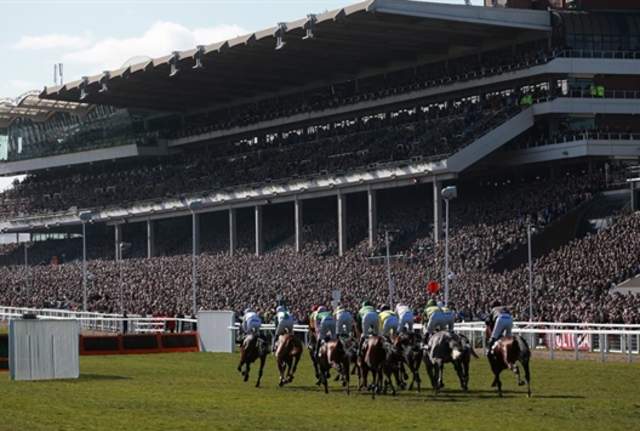
The course sits in a natural amphitheatre formed by the Cleeve Hill escarpment.
This is not a designed feature. It is geography — and it gives every vantage point a quality of backdrop that no architect could have planned. The Cotswold stone grandstands are maintained rather than modernised, which contributes to a sense that the venue understands its own history without being consumed by it.
The crowd fills the hill behind the course on major race days, creating a density of atmosphere that builds across the week rather than peaking and declining.
Beyond March
Outside the Festival, Cheltenham operates on a different register.
The course runs a year-round programme of National Hunt fixtures that are easier to attend, quieter and, for those who want to understand the racing rather than the occasion, more legible. The same setting. The same backdrop. Considerably fewer people.
It is a venue built for peaks — but it holds its quality between them.
Why It Earns Its Place
There are many racecourses in the United Kingdom.
Few carry this concentration of meaning. Cheltenham earns its place in this edit not as a regional attraction but as a genuinely distinct experience — one shaped by geography, a century and a half of history, and a crowd that knows exactly what it has come for. In a region defined by continuity, it represents a different expression of it. One that performs that continuity at scale, every March, without adjustment.
Vitae Lifestyle Scorecard
- Setting & atmosphere9.6 / 10
- Event quality9.5 / 10
- Food & hospitality8.3 / 10
- Overall experience9.4 / 10
Who it's for
- Those who want to understand British and Irish sporting culture at its most concentrated.
- Anyone visiting the Cotswolds in March who has not yet been to the Festival.
- Guests looking for an event with genuine atmosphere rather than a constructed occasion.
Questions
What is the Cheltenham Festival?
The Cheltenham Festival is a four-day National Hunt racing event held each March at Cheltenham Racecourse in Gloucestershire. It is widely regarded as the pinnacle of jump racing, featuring races including the Gold Cup, the Champion Hurdle and the Queen Mother Champion Chase. It draws crowds of over 250,000 and a significant Irish presence each year.
When is the Cheltenham Festival?
The Festival takes place across four days in mid-March each year. Dates vary slightly but Gold Cup day — the final and most significant day — falls on the Friday of Festival week.
How do I get to Cheltenham Racecourse?
Cheltenham Racecourse is located on the northern edge of Cheltenham, Gloucestershire, approximately two hours from London by road or train. Cheltenham Spa station is served by direct trains from London Paddington. Shuttle buses run from the town centre to the course during race meetings.
Why do so many Irish people go to Cheltenham?
The Festival has a long and deep connection with Irish racing. Irish-trained horses, trainers and jockeys have historically dominated the results, and the event functions as much as an Anglo-Irish sporting occasion as a British one. The Irish contingent — owners, racing professionals and spectators — typically numbers in the tens of thousands across the week.
Is Cheltenham worth visiting outside the Festival?
The course runs National Hunt fixtures year-round. Outside March the experience is quieter and more accessible, with the same setting and quality of racing without the scale of the Festival crowd. For those interested in the sport rather than the occasion, non-Festival meetings are often preferable.
This article appears in Edit No. 12 — The Cotswolds