Happy Valley: The Racecourse Hong Kong Built on a Swamp
Experience — Happy Valley Racecourse
By James B. Stoney, Editor ·
Racing since 1846 on reclaimed malarial swampland in the middle of the city. The Wednesday night meeting at Happy Valley is one of the great urban spectacles anywhere.
Racing since 1846 on reclaimed malarial swampland in the middle of the city. The Wednesday night meeting at Happy Valley is one of the great urban spectacles anywhere.
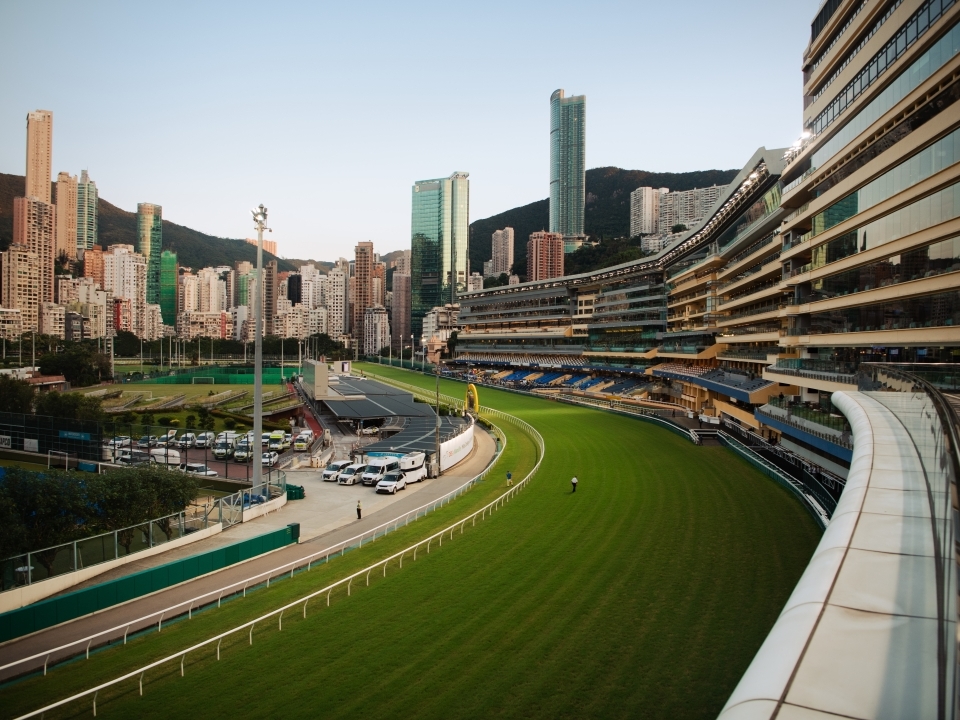
There is a green oasis in the middle of Hong Kong Island, surrounded on every side by a wall of illuminated towers, where thoroughbreds race under floodlights on a Wednesday night while tens of thousands of people watch from stands wedged between the track and the skyline. That it exists at all is improbable. That it has existed, more or less continuously, since 1846 is genuinely remarkable.
Happy Valley is one of two racecourses operated by the Hong Kong Jockey Club, and the older and more atmospheric of the two by some distance. Sha Tin, in the New Territories, is larger and hosts the major international races. Happy Valley is the one in the middle of the city — and the one that feels, on a race night, like nowhere else.
The Swamp
The land Happy Valley sits on was, for a long time, considered uninhabitable.
Known to locals as Wong Nai Chung — a reference to the yellow-mud stream that ran through it — the valley was a marshland that the British Army initially used as a military camp in the early 1840s, before abandoning it when soldiers began dying in significant numbers from a then-unexplained fever. The fever was malaria, though nobody knew it at the time. The valley's reputation as a place of death preceded its reputation as a place of sport: it became an early colonial burial ground, and the name "Happy Valley" is itself a Victorian euphemism, the kind once commonly applied to cemeteries.
It was, however, the only substantial piece of flat ground on a mountainous island — and flat ground is what horse racing requires. In 1846 the colonial government drained the marsh, redirected the Wong Nai Chung stream into a canal, and prohibited rice farming in the surrounding area to make way for a racecourse. The first races were held that December. Thoroughbreds have run on roughly the same ground, where rice once grew, ever since.
What It Survived
A racecourse operating continuously for nearly 180 years in the centre of a city accumulates history of every kind, including the tragic.
On 26 February 1918, during Chinese New Year race meetings, a temporary bamboo-and-matshed grandstand collapsed, knocking over the food stalls beneath it and setting the structure ablaze. At least 590 people died in the fire — one of the worst disasters in Hong Kong's history. A memorial to the victims was later built in the nearby Chinese cemetery. The catastrophe led directly to far stricter rules governing the construction of the stands, and it remains a sombre part of the racecourse's long record.
Racing was halted only once for any sustained period: during the Japanese occupation of Hong Kong in the early 1940s, when the surrounding district saw some of the fiercest fighting of the battle for the territory. The Hong Kong Jockey Club resumed racing in 1947, and the sport's popularity among Hong Kong's Chinese residents — for much of the early colonial period a pastime reserved largely for the wealthy expatriate elite — grew steadily through the post-war decades into the mass enthusiasm it is today.
Happy Wednesday
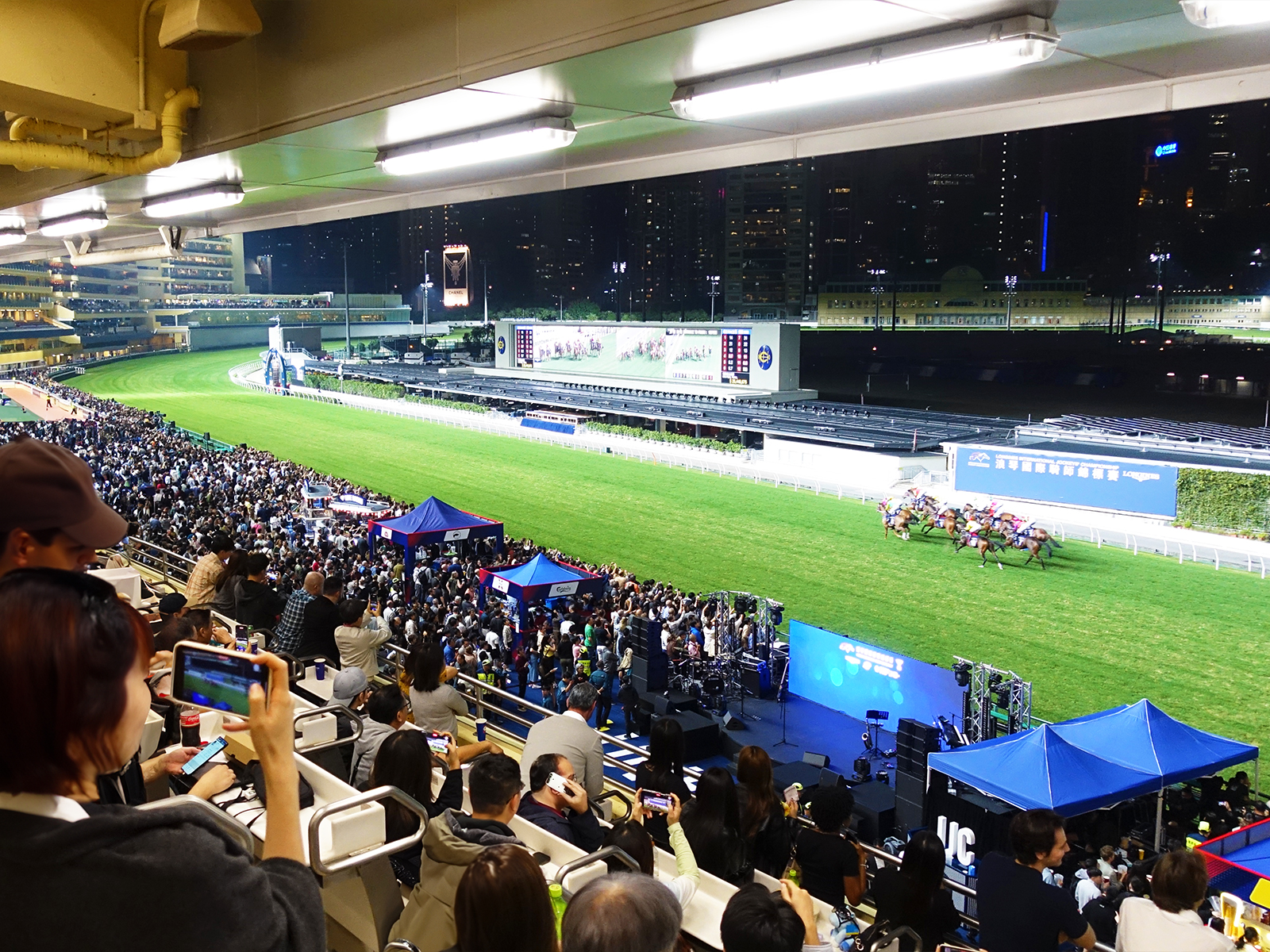
The defining feature of modern Happy Valley arrived in 1973, when the Jockey Club introduced floodlit night racing. The inaugural evening meeting was an immediate success, drawing office workers who could come after work in a way the old daytime schedule had never allowed.
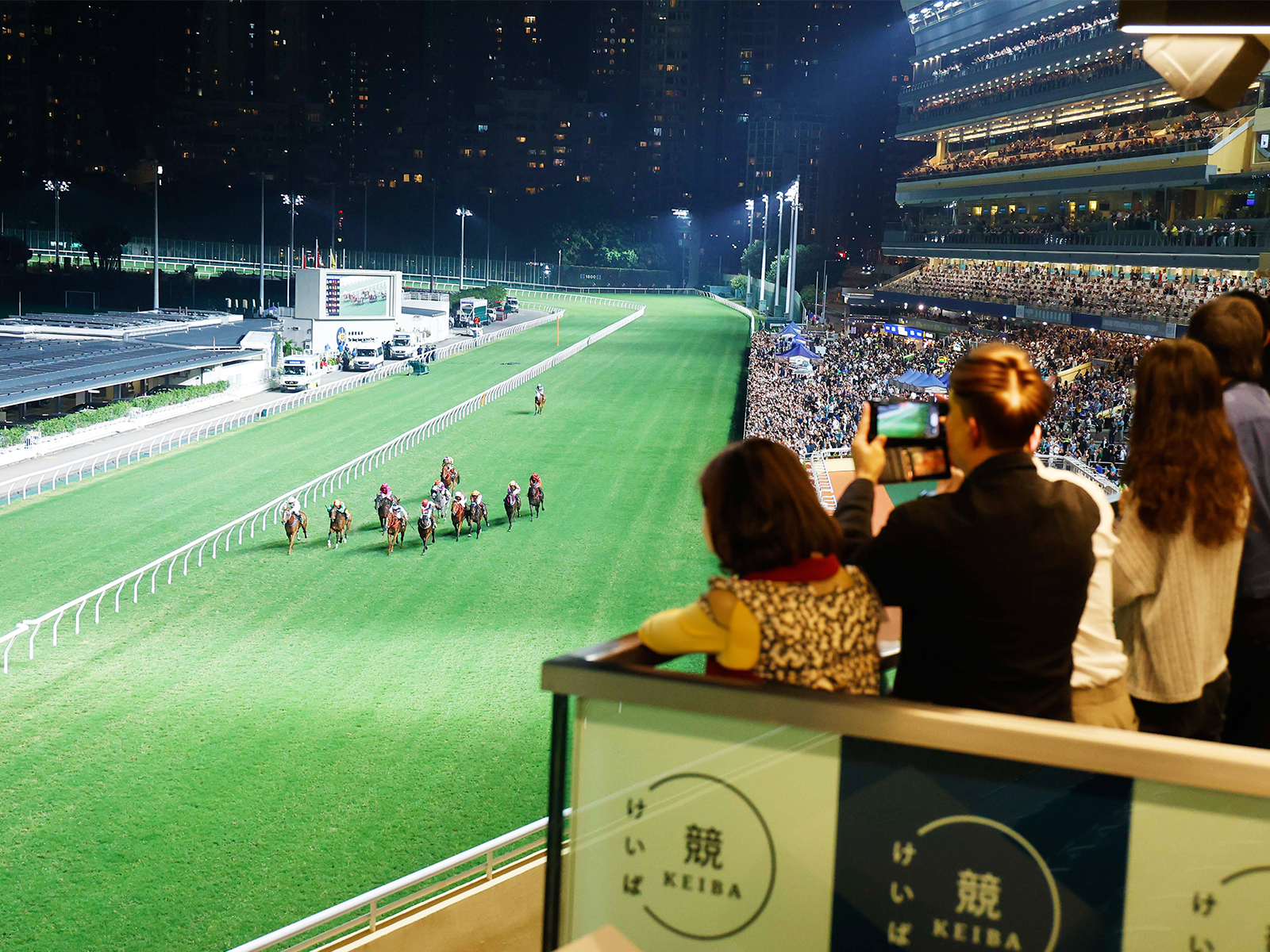
Night racing became the model, and Wednesday became its night. The weekly "Happy Wednesday" meeting is now one of the most distinctive things to do in the city — live music, beer gardens, and food stalls surrounding the track, drawing a crowd of locals, expatriates, and visitors in roughly equal measure. Gates open in the early evening; the first race goes off around 6.40pm; eight to ten races follow across the night, the horses running a tight, right-handed circuit barely 1,450 metres around, hemmed in on every side by the towers of Causeway Bay and Wan Chai.
The minimum bet is HK$10. Admission to the public stand is HK$10 more. For the price of a coffee, in other words, a visitor can stand trackside at one of the oldest and most atmospheric racecourses in the world, in the middle of one of the densest cities on earth, and watch the whole spectacle unfold under lights.
The Spectacle
What makes Happy Valley extraordinary is not the racing alone — Sha Tin hosts the more prestigious fixtures — but the setting.
The track sits in a natural amphitheatre, the seven-storey stands rising on one side and the residential and commercial towers of Hong Kong Island rising on every other. The floodlights are bright enough to illuminate the surrounding buildings even when those buildings are themselves dark. The contrast — manicured green turf, thoroughbreds at full gallop, and the vertical city pressing in from all directions — is the image that defines the place. It is sport, but it is also one of the great urban scenes anywhere: a piece of nineteenth-century leisure that the twenty-first-century city simply grew up around and never displaced.
For those interested in how the swamp became the arena, the Hong Kong Racing Museum on site traces the full history across several galleries, including the skeleton of the champion horse Silver Lining.
Related reading: The Star Ferry: Hong Kong's Oldest Form of Public Transport · Hong Kong Country Club: The Club Built to Break Down Barriers · Garuda Wisnu Kencana: The Statue That Took 28 Years to Build
Vitae Lifestyle Scorecard
- The history9.6 / 10
- The atmosphere9.7 / 10
- The setting9.6 / 10
- The value9.5 / 10
Who it's for
- Anyone in Hong Kong on a Wednesday during the September-to-July season, regardless of whether they have ever cared about horse racing.
- Visitors who want one genuinely local, genuinely electric night out rather than another rooftop bar.
- Anyone interested in the improbable history of how a malarial swamp became the oldest sporting institution in the city.
Questions
What is Happy Valley Racecourse?
One of two horse racing tracks operated by the Hong Kong Jockey Club, located in the Happy Valley district in the middle of Hong Kong Island. It has hosted racing since 1846 and is best known for its weekly floodlit "Happy Wednesday" night meetings, which combine racing with live music, food, and a famously electric atmosphere.
When is racing at Happy Valley?
The season runs from September to July, with meetings held predominantly on Wednesday evenings and occasional weekends. Gates typically open around 5.15pm and the first race goes off around 6.40pm, with eight to ten races across the evening.
How much does it cost to go to Happy Valley Racecourse?
General admission to the public stand is HK$10, and the minimum bet is also HK$10. It is one of the most affordable major sporting and social experiences in Hong Kong. Visitors staying fewer than 21 days can also purchase a member guest badge for access to the Members' Stand.
Why is it called Happy Valley?
The name is a Victorian-era euphemism. The valley, originally known as Wong Nai Chung, was a malarial swamp that became an early colonial burial ground — and "Happy Valley" was a common genteel euphemism for a cemetery. The name persisted after the marsh was drained and the racecourse built in 1846.
How do you get to Happy Valley Racecourse?
The most characterful route is by tram — board any tram marked "Happy Valley" for the terminus beside the entrance. Alternatively, take the MTR to Causeway Bay station, Exit A, followed by a 15-to-20-minute walk along Wong Nai Chung Road, or take a short taxi or bus.
What was the Happy Valley fire?
On 26 February 1918, during Chinese New Year race meetings, a temporary bamboo grandstand collapsed and caught fire, killing at least 590 people — one of the worst disasters in Hong Kong's history. It led to much stricter rules governing the construction of the racecourse's stands. A memorial to the victims stands in the nearby Chinese cemetery.
This article appears in Edit No. 19 — Hong Kong